
Acwa signs Indonesia desalination and salt deal

12 August 2026
The facility will produce 62,500 cubic metres a day of desalinated water and 500,000 tonnes a year of industrial salt

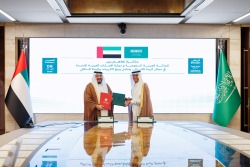
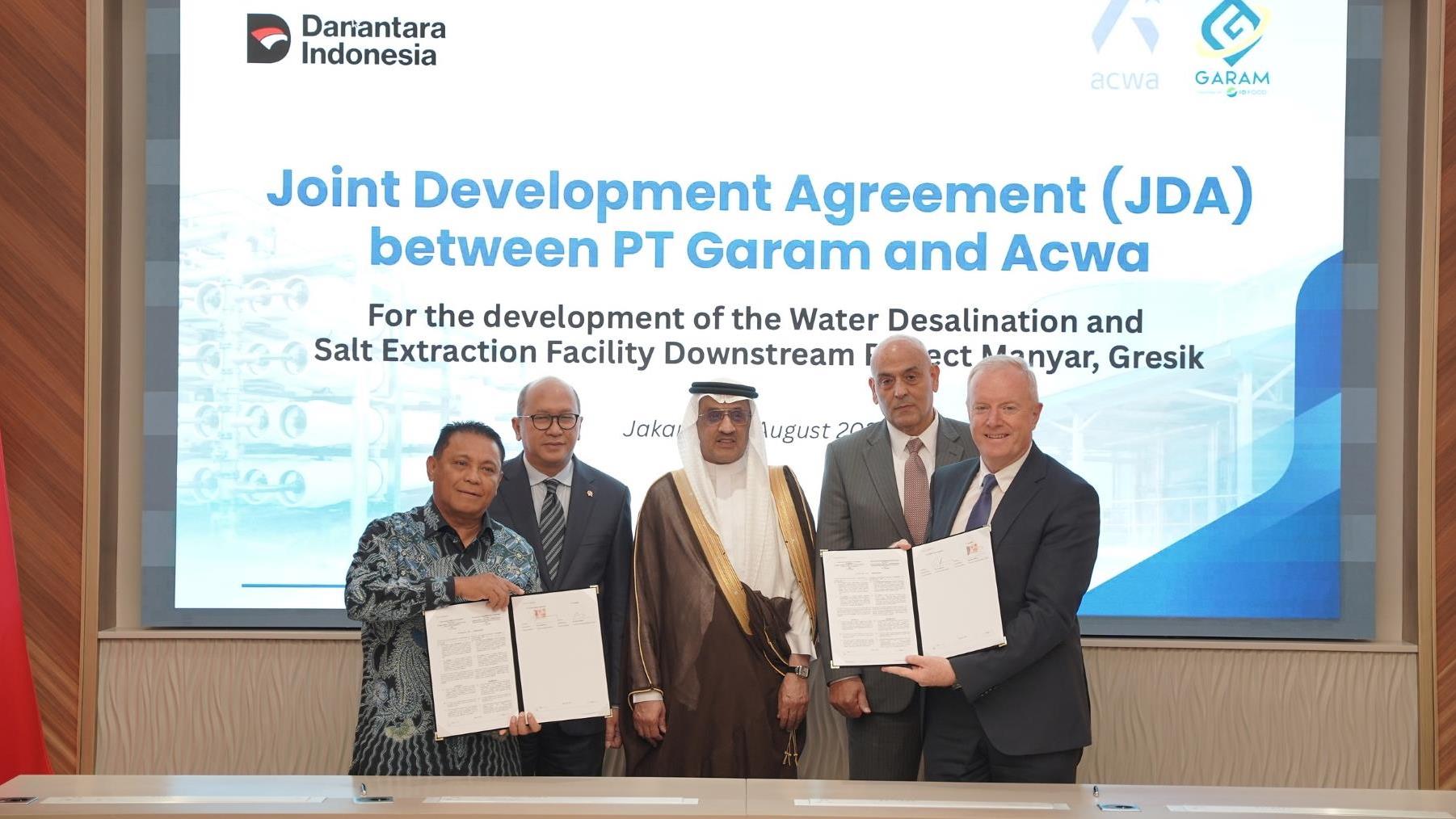
Saudi Arabia's Acwa has announced it has signed a joint development agreement (JDA) with Indonesia’s state-owned salt producer PT Garam to develop an integrated seawater desalination and industrial salt project.

The agreement was signed in Jakarta by PT Garam president director Abraham Mose and Tim Anderson, chief executive of PT Acwa Power Indonesia. The project is planned for Manyar in Gresik, East Java, and is valued at about $400m, the developer said.

It will comprise a seawater reverse-osmosis (SWRO) plant and an integrated salt production line. The facility is designed to produce about 62,500 cubic metres a day of desalinated water and 500,000 tonnes a year of high-purity industrial salt.

The project would be Indonesia’s first utility-scale integrated seawater desalination and industrial salt production facility.

Indonesia’s national salt requirement was about 4.9 million tonnes in 2024 and 2025, with demand expected to rise by 2.5% a year, according to the Ministry of Marine Affairs and Fisheries (KKP).

In May 2025, KKP revealed that Indonesia was short of almost 600,000 tonnes of salt for the food and pharmaceutical industries and 2.3 million tonnes for the chemical industry.

The project will be developed on a build-own-operate basis through an Indonesian project company. It is expected to use a limited or non-recourse project financing structure based on the project’s cash flows.

Under the agreement, Acwa will provide expertise in desalination project development, technology selection, technical design, financing, engineering, procurement and construction. It will also support long-term operations and maintenance.

PT Garam will lead site readiness and project access, permitting and stakeholder coordination. It will also be responsible for developing markets and commercial channels for the project’s output.

The project is intended to recover high-purity salt as a co-product of the desalination brine-management process. It could also recover additional marine minerals, subject to feasibility. It will also include knowledge and technology transfer, training and the sharing of operating protocols with PT Garam and the project company.

The Indonesian government said last year it was targeting salt self-sufficiency by 2027 and is seeking to increase domestic production through higher capacity and the use of new technology.

Southeast Asia plans

The Saudi utility developer has been expanding its presence in Southeast Asia. MEED reported in June that Acwa had signed two agreements in the Philippines to support the development of renewable energy and power infrastructure projects.

The first was a joint development agreement with Emerging Power Inc (EPI), the clean energy arm of Philippines-based Nickel Asia Corporation, to pursue up to 5GW of renewable energy and gas-fired generation capacity by 2030.

The second involved a contract of lease with the Bases Conversion and Development Authority (BCDA) for a 500-hectare site in New Clark City in Tarlac province, north of Manila. The company plans to use the site develop an integrated solar photovoltaic (PV) and battery energy storage system facility with a capacity of up to 500MW.

The agreements come as the Philippines seeks to increase the share of renewable energy in its power mix to 35% by 2030.

A MEED Subscription...

Subscribe or upgrade your current MEED.com package to support your strategic planning with the MENA region’s best source of business information. Proceed to our online shop below to find out more about the features in each package.

Take advantage of our introductory offers below for new subscribers and purchase your access today! If you are an existing client, please reach out to your account manager.