

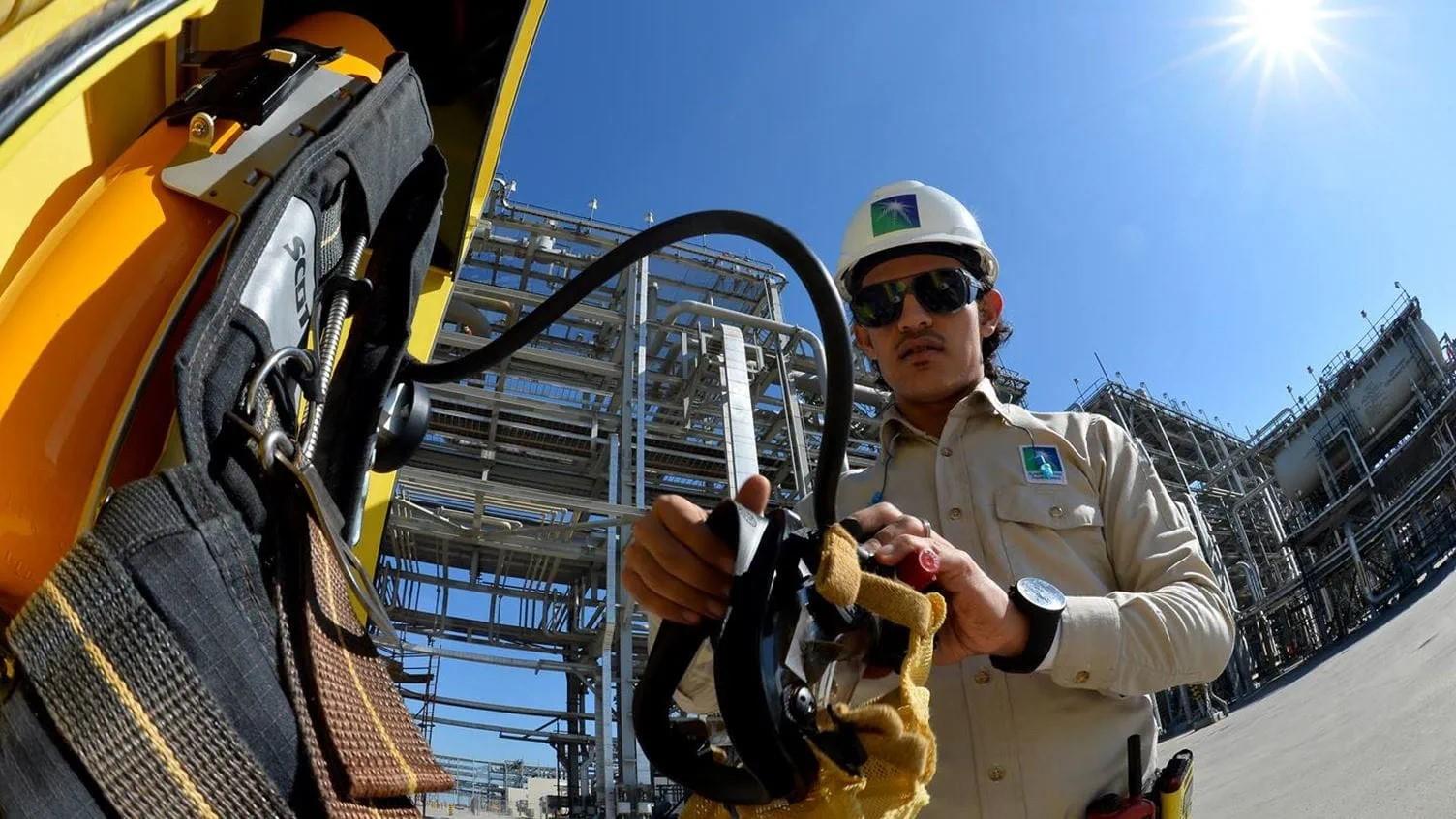
The Saudi energy giant had earlier offered a capital expenditure guidance of $50bn to $55bn for this year, having spent a total of $52.2bn in 2025
Saudi Aramco registered capital expenditure of $12.094bn in the first quarter of 2026, which it said “supports growth objectives”. The Saudi energy giant had earlier offered a capex guidance of $50bn to $55bn for this year.
Aramco’s capex in Q1 2026 is down 4% from its spending level in the same period last year. The company spent $13.37bn in the fourth quarter of 2025 and a total of $52.2bn for the full year.
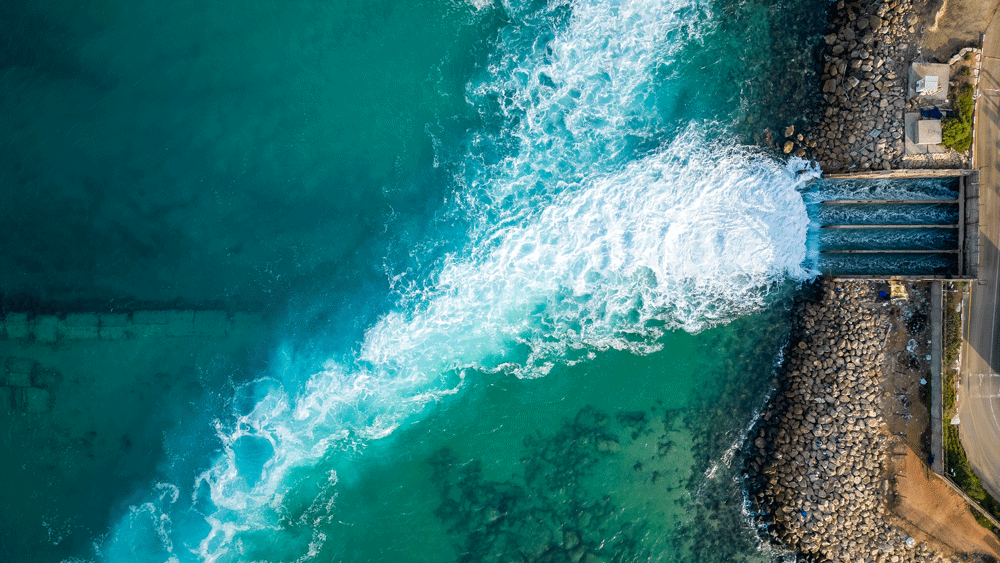
Offshore oil and gas projects are understood to have accounted for a chunk of Aramco’s capex in the first quarter of the year.
MEED in January this year reported that Aramco had selected US-based McDermott International for Contract Release and Purchase Order (CRPO) number 166. The scope of work on the tender is understood to have been carved out of the major $15bn Marjan offshore field development project, as part of which Aramco awarded contracts for 20 engineering, procurement, construction and installation (EPCI) packages in 2019. McDermott won the largest share of work on the project, with an estimated $4.5bn-worth of contracts secured for two packages.
The contract for CRPO 166 was single-sourced to McDermott without a competitive tendering process, and issued as a change order, sources told MEED.
Aramco then awarded its second offshore contract of this year, CRPO 156, to Italian contractor Saipem. The scope of work on the contract covers the EPCI of a 48-inch trunkline, covering a distance of roughly 65km offshore and 12km onshore, from the Safaniya offshore oil field to the onshore processing facility, plus associated structures such as subsea hook-ups.
CRPO 156, valued at about $500m, comprises the third package in Aramco’s latest expansion phase at Safaniya – the world’s largest offshore oil field, with a production capacity of nearly 1.2 million barrels a day (b/d). Discovered in 1951, the field is located in the Gulf waters, approximately 265 kilometres north of Aramco’s headquarters in Dhahran.
Saipem also won the other two contracts for the Safaniya field expansion project – CRPOs 154 and 155 – with the Milan-headquartered firm declaring their combined value to be approximately $400m.
Upstream projects dominate capex
The upstream oil and gas sector dominated Aramco’s spending last year, accounting for $37.75bn, or about 72%, of the company’s total capex in 2025.
In its financial statement for full-year 2025, Aramco announced the commissioning of the Marjan crude oil increment programme and the Berri increment programme, “supporting flexibility and ability to respond to changing market conditions”, as it strives to maintain its oil spare production capacity at 12 million b/d over the long term.
Aramco awarded a total of 34 contracts in 2019, cumulatively worth $18bn, for its multibillion-dollar Marjan and Berri oil and gas field development projects. The objective of the two schemes is to boost the combined production capacity of the Marjan and Berri offshore field developments by 550,000 b/d of Arabian Crude Oil and 2.5 billion cubic feet of gas a day (cf/d).
In its 2025 financial results, Aramco also said “progress continues towards sales gas production capacity increase of approximately 80% by 2030, from 2021 production levels,” which would help the company reach approximately 6 million barrels of oil equivalent per day of total gas and associated liquids production.
The world’s largest-listed company announced the start of gas production from the massive Jafurah unconventional resource base, located in Saudi Arabia’s Eastern Province, in December last year.
The greenfield Jafurah gas processing plant online, with a production capacity of 450 million cf/d, represents the first phase of Aramco’s estimated $100bn capital expenditure programme to produce gas from the Jafurah basin – the largest liquid-rich shale gas play in the Middle East, spanning around 17,000 square kilometres. The reserve is estimated to contain 229 trillion cubic feet of gas and 75 billion stock-tank barrels of condensate.
Also in December, Aramco said it began operations at its Tanajib gas plant, which is part of the Marjan crude increment programme. The plant has a capacity to process 2.6 billion cf/d of associated raw gas feedstock from the Marjan, Safaniya and Zuluf offshore fields.
“The Tanajib gas plant is a key component of Aramco’s strategy to increase gas processing capabilities and diversify its energy product portfolio, helping to support long-term economic growth. The plant features digital integration, enhanced operational efficiency, complex project delivery and maximum resource utilisation,” the world’s largest oil exporter said in an earlier statement.

You might also like...

Egypt explores next phase of nuclear projects
31 August 2026
Kuwait qualifies firms for residential PPP projects
31 August 2026
Contractors prepare bids for Ajman power plant project
31 August 2026
New Murabba replaces CEO
31 August 2026
A MEED Subscription...
Subscribe or upgrade your current MEED.com package to support your strategic planning with the MENA region’s best source of business information. Proceed to our online shop below to find out more about the features in each package.
Take advantage of our introductory offers below for new subscribers and purchase your access today! If you are an existing client, please reach out to your account manager.