



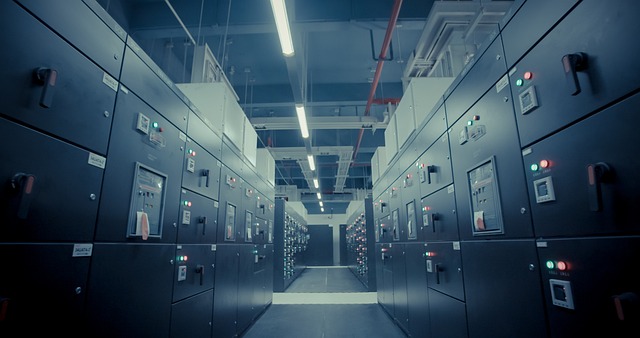
This year has become a stress test for AI enabled data centre commitments around the world
There was a sharp increase in the volume of announcements of new artificial intelligence (AI) data centre projects by Big Tech in 2025. Most came with headline-grabbing capacity promises. With an AI-enabled data centre typically taking two to three years (or more) to permit, power, and build, 2026 has become a stress test of those commitments.
According to GlobalData’s Construction Projects Database, hundreds of recently announced projects are stuck in the pre-execution stage, and only a small share of those announced in 2025 are rated as highly likely to progress to execution. This suggests that the headline-grabbing promises overstate the likelihood of data centre project delivery.
In 2025, Big Tech entered a mega-announcement phase around AI-enabled data centres, pitching unprecedented projects to raise capital and address the costs (and complexity) of AI infrastructure. AI now requires not just tens of thousands of servers but also large amounts of electricity and land, as well as advanced cooling and specialised AI compute hardware. As a result, tech companies began collaborating and announcing headline-grabbing capacity targets for upcoming data centre projects.

Stargate projects
An emblematic example was Stargate, announced in early 2025 as a $500bn joint venture of OpenAI, Oracle, Abu Dhabi investment fund MGX, and Japan’s SoftBank to finance and build dedicated data centres for OpenAI’s use. Initially, the group aimed to lock in 10 gigawatts (GW) of capacity, roughly equivalent to 10 nuclear power plants. In 2026, the narrative is shifting from promises to constraints, including permitting timelines, grid fatigue, energy costs, and hardware bottlenecks, coupled with rising concerns about a potential AI bubble. The Stargate plan is being reworked, and some aspects have been abandoned. For instance, the group halted planned data centers in the UK and Norway, and declined to expand its flagship site in Abilene, Texas. This example signals a move away from a build-everywhere approach toward more selective, phased deployments.
In December 2025, Oracle pushed several OpenAI data centre delivery timelines back from 2027 to 2028. In May 2026, a $1bn geothermal-powered data center in Kenya, planned by Microsoft and the UAE-based AI company G42, was delayed after talks over capacity-payment guarantees from the African government broke down; the project may be scaled back.
Delivery challenge
According to GlobalData’s Construction Projects Database, not all announced projects will materialise. Among the 583 parent projects announced in 2025, 526 (90%) remain in the pre-execution stage. Of these, only 6% (31 projects) are assessed by GlobalData as having a high likelihood of progressing into execution, while 74% (387 projects) are medium likelihood, and 21% (108 projects) are low likelihood.
Although the announced project value has risen sharply from $304.4bn in 2023 to $955.5bn in 2024 and $1.4tn in 2025, driven by accelerating demand for AI, cloud, and digital infrastructure, many projects are still not under construction or completed. For example, 387 projects announced in 2024 and 149 projects announced in 2023 have not yet begun construction. This highlights that the headline pipeline is substantial, but conversion into actual delivered projects is difficult.
Many large-scale AI data centre projects are encountering bottlenecks that make delivery timelines and final capacity increasingly uncertain. The first constraint is time: issues around permitting, environmental reviews, land acquisition, and grid availability often take years to resolve, not months. Secondly, the availability of critical materials (such as copper, lithium, and steel) and hardware (from cooling systems to specialty components like advanced chips) is a serious limitation to data center build-outs. Another common issue is the 24/7 power requirements of megawatt (MW) and GW campuses, which put additional pressure on already-stressed grids and raise energy costs.
Scarce labour availability is also a growing issue, as builders compete for electricians, heating and air conditioning specialists, engineers, and grid-construction workers. Data centre projects require highly specialised labour across electrical installation, mechanical systems, cooling, and facilities management—and these skills are already in short supply in many markets. In the US, for example, around 41% of the current construction workforce is projected to retire by 2031, and nearly one in five electricians is aged 55 or older. This creates additional pressure on project costs, procurement, phasing, and delivery schedules, especially when data centers compete with other major infrastructure projects for the same labour pool.
Finally, and crucially, local opposition to vast new data centres—focused around concerns over power and water use, noise, and land use—can cause additional delays and attract negative publicity.
By Martina Raveni, Senior Analyst, GlobalData Strategic Intelligence, and Nicolas Psaroudis, Senior Economist, GlobalData Construction
You might also like...

Algeria tenders 310km Tamanrasset railway
16 October 2026
Joint venture wins $246m RCRC bridges contract
16 October 2026
McDermott cuts steel on Adnoc’s Sarb gas project
16 October 2026

Humain tenders 100MW Riyadh AI data centre
16 October 2026


A MEED Subscription...
Subscribe or upgrade your current MEED.com package to support your strategic planning with the MENA region’s best source of business information. Proceed to our online shop below to find out more about the features in each package.
Take advantage of our introductory offers below for new subscribers and purchase your access today! If you are an existing client, please reach out to your account manager.