


Qatars football World Cup plans are driving infrastructure spending
Traditionally regarded as a slow market, firms have tended to dip into Qatar, deliver a project and leave. Since 2010, however, when the country won the right to host the 2022 football World Cup, companies have started taking a much longer-term view as Doha begins its serious business of infrastructure investment. Qatars construction industry awarded more projects in the first half of 2013 alone than it did in the whole of 2012.
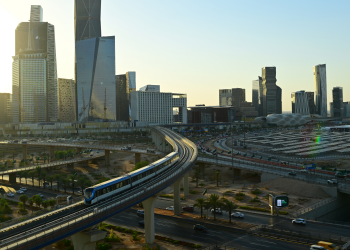
One of the most important pieces of infrastructure for the World Cup is the Doha Metro, which will transport thousands of fans attending the 64 matches. Unlike other metro projects, which are typically constructed line-by-line, Qatar is seeking to build three lines of its network simultaneously in order to ensure that by 2019 it has 111 kilometres and 37 stations in place, including the Education City station, which will link with the new national rail line. A further 152km of lines are set to follow, with 56 stations by 2026, in accordance with the countrys Vision 2030 development plan.
| Qatar top 10 projects owners* | |
|---|---|
| ($m) | |
| Qatari Diar | 47,888 |
| Public Works Authority | 45,728 |
| Qatar Railways Company (Qatar Rail) | 40,200 |
| Barwa | 25,899 |
| New Doha International Airport Steering Committee | 17,540 |
| Qatar Foundation | 8,749 |
| New Port Project Steering Committee | 7,400 |
| United Development Company | 6,702 |
| Msheireb Properties | 5,500 |
| Supreme Committee for Delivery and Legacy | 4,150 |
| *=By value of work planned and under way. Source: MEED Projects | |
Dohas new airport, Hamad International is nearing completion, and the New Doha Port project is another major infrastructure scheme under way in Qatar.
Although all these projects were planned or under way before the World Cup win in 2010, the announcement has accelerated their development, as well as of the Lusail real estate development, which had lost momentum during the 2008-09 global financial crisis. Qatar awarded just $9.8bn of contracts in 2009 and $11.4bn in 2010. But in 2011, awards jumped to $16bn as the economy rebounded. The market remained at this level in 2012, before climbing another 21 per cent in 2013 to $19.4bn. Qatar has $15.5bn of schemes in the prequalification phase and $35bn in design, meaning this year and 2015 should also see a continued strong level of awards.
Founded: 2004
Group CEO: Khaled al-Sayed
Web: www.qataridiar.com
Tel: (+974) 4 497 444
Qatari Diar was established by sovereign wealth fund Qatar Investment Authority to invest in and develop property projects and social and community schemes. It has built up assets of more than $35bn through investments in the real estate and banking sectors, including strategic stakes in other developers and facilities management firms.
It has a portfolio of 50 projects in 29 countries, of which one of the largest is the Lusail real estate development in Qatar, designed to house up to 200,000 residents when completed in 2020. The $45bn city is being built 22km north of Doha and covers 35,000 square km. It will house the 80,000-seat Lusail Iconic Stadium, which will stage the opening and closing matches of the 2022 Fifa World Cup.
Progress stalled in 2008 when the regions real estate market collapsed, but the project was revived after Qatar won the right in December 2010 to host the event. Lusail will feature residential clusters, commercial districts, shopping and leisure facilities, 22 hotels and two golf courses. Most of the project will be developed by private organisations, with the infrastructure provided by Lusail Real Estate Development Company, a subsidiary of Qatari Diar.
Qatari Diar is also developing the $1bn Doha Convention Centre & Tower, close to the existing Sheraton Doha hotel. Its centrepiece will be a 400-metre, 104-storey tower containing a hotel, apartments and retail units. An important local subsidiary is Barwa Real Estate Company, in which Qatari Diar holds a 45 per cent stake. Barwas business activities include property development, brokerage, appraisal, property management and property investment. One of its largest projects was the Barwa Financial District, located in the West Bay area of Doha, which it sold to Qatar Petroleum in 2011 for about $3bn.
In 2009, Qatari Diar formed a joint venture with Germanys Deutsche Bahn to establish the Qatar Railways Development Committee (QRDC). Under QRDC, Qatar Railways Company (Qatar Rail) is overseeing the development of Qatars $35bn rail network.
Qatari Diar has been raising its international profile in recent years, taking on several high-end real estate schemes in prime locations. The $5bn development of Londons former Chelsea Barracks is an example. It has also expanded into new markets, notably with its estimated $700m investment in the CityCenterDC project in Washington. In London, it is developing East Village from the Olympic Athletes Village, in a joint venture with the UKs Delancey. Qatari Diar is also developing schemes in Egypt, Yemen and Vietnam.
Public Works Authority
Founded: 2004
President: Nasser bin Ali al-Mawlawi
Web: www.Ashghal.gov.qa
Tel: (+974) 4 495 000
Qatars Public Works Authority (Ashghal) was established in 2004 as an autonomous government body to coordinate the design, construction and maintenance of public infrastructure in Qatar. It is headquartered in Doha and has a workforce of about 1,200.
The authoritys president is Nasser bin Ali al-Mawlawi, who reports to the minister of municipality and urban planning, a position currently held by Sheikh Abdul Rahman bin Khalifa bin Abdulaziz al-Thani.
Ashghal is organised into five main departments: infrastructure; building; technical support; assets; and joint services.
The department responsible for the construction and maintenance of public infrastructure is the most active, with Ashghal awarding more than $18bn-worth of contracts over the past seven years. Although mainly focused on roads and drainage projects, this department also oversees other infrastructure schemes, such as the rehabilitation of Al-Ruwais port.
Ashghals building division manages the construction of social infrastructure, including schools, hospitals and health centres.
The assets department is in charge of the operations and maintenance of drainage and road systems, while the technical support unit comprises a contracts department, an engineering business and a quality and safety team.
In 2010, Ashghal set out plans to invest $20bn in building and upgrading roads and drainage infrastructure up to 2015. With many thousands of visitors expected to descend on the peninsula for the football World Cup in 2022, Ashghals road-building programme will be one of Dohas main priorities over the coming years.
When bidding for the World Cup, Qatar unveiled plans to build nine new stadiums, more than 50,000 hotel rooms and a $35bn integrated rail network. These ambitious projects will require adequate road access during and after the construction stage. Ashghal will be in charge of ensuring road schemes are executed on time.
Ashghal will also oversee several sewerage and drainage projects, one of which is the estimated QR8bn-10bn ($2.2bn-2.8bn) Inner Doha Re-sewerage Implementation Strategy programme. Meanwhile, Ashghals building department is undertaking a series of social infrastructure projects, including the 600-bed Hamad bin Khalifa Medical City scheme, which is scheduled to open this year.
A roll-out of new schools will continue during 2014. Last July, Ashghal announced the start of construction work on 44 schools for all ages, located across the country.
Qatar Rail
Founded: 2011
Managing director: Abdullah bin Abdulaziz Turki al-Subaie
Chief executive officer: Saad Ahmed al-Mohannadi
Web: www.qr.com.qa
Tel: (+974) 4 497 7886
Qatar Railways Company (Qatar Rail) was founded in 2011 to support and coordinate the growth of a national rail industry. It is fully owned by Qatar Railways Development Company (QRDC), a joint venture created in 2009 between Qatari Diar and Germanys Deutsche Bahn. QRDC remains the overall developer of the $35bn Qatar Integrated Rail Programme and is planning to complete several rail projects by 2022, when the country will host the Fifa football World Cup. Qatar Rail is tasked with implementing the plans. A quarter of all Qatars infrastructure spending will be dedicated to rail projects in the coming years.
Abdullah bin Abdulaziz Turki al-Subaie is managing director of Qatar Rail. Its chief executive officer is Saad Ahmed al-Mohannadi, who took up the position in July 2011, a month after Qatar issued an Emiri decree to set up a committee to supervise the development and implementation of the railway programme. Prime Minister and Interior Minister Sheikh Abdullah bin Nasser bin Khalifa al-Thani is chairman of the committee, and Qatar Rail implements its recommendations.
Qatar Rails mission is clear: it will plan, design and implement the integrated rail programme. It is responsible for the design, construction, commissioning, operations and maintenance of the network and its systems. Planned projects in the programme include the Doha Metro, a freight line linking the countrys east coast ports with Doha, a high-speed passenger line and light railways in the Lusail City and Education City developments.
The freight and passenger rail network will span 350 kilometres when complete. The high-speed passenger line will run at up to 350km an hour from Hamad International Airport, through Doha city and on to Ras Ashairij in the northwest of the peninsula the start of the proposed Qatar-Bahrain Causeway.
The freight railway will run from the industrial city of Ras Laffan in the northeast to the New Doha Port at Mesaieed in the southeast. The line will also have a spur that runs to the gas processing facilities in Dukhan in the west. When complete, it will have the capacity to transport 11 million tonnes of cargo a year.
The 354km Doha Metro will consist of four lines Red, Gold, Green and Blue and 93 stations are currently planned. The Red Line will be the first to be developed and will run from Hamad International airport to West Bay in central Doha.
Barwa
Founded: 2005
Chairman: Salah bin Ghanim al-Ali
Web: www.barwa.com.qa
Tel: (+974) 4 408 8888
Barwa was established in December 2005 and listed on the Doha Securities Market in February 2006. As of the end of 2013, its asset base was worth QR44.9bn ($12.3bn) and it held investment properties worth QR9.8bn.
Barwa is 45 per cent owned by Qatari Diar, which is wholly owned by the Qatar Investment Authority, the countrys sovereign wealth fund. Its total equity is valued at QR14.3bn.
The companys seven-member board of directors is led by Salah bin Ghanim al-Ali, who is also Qatars sports minister.
Barwa began as a real estate developer, but, like many other state-backed entities, it has diversified into new sectors. Some are directly related to real estate, such as construction materials, facilities management, hotels and resorts, while other new businesses are less closely tied to the sector, such as banking, finance, communications and investment in new technologies. Although the groups main activities remain in Qatar, Barwa has an array of investments and operations in 13 other countries.
Qatars real estate developers have struggled in recent years with oversupply, and Barwa is no exception. The company remains profitable, however. It made QR1.4bn in 2013, up from QR1.1bn a year earlier. Barwa reported debts of QR30.6bn at the end of 2013, down from QR36.9bn at the same point a year before.
To reduce its liabilities, Barwa recently sold its 37.34 per cent stake in Barwa Bank to Qatari Diar for about QR2.4bn. The deal is part of an existing agreement that will see Qatari Diar buy QR20bn-worth of assets from Barwa.
Other assets being bought by Qatari Diar include the Barwa Commercial Avenue project and Barwa al-Sadd.
It is not the first time the government has stepped in to support the developer. In 2011, state carrier Qatar Airways reportedly agreed to rent the entire Barwa City real estate development in a deal worth an estimated QR7.1bn. Also in 2011, Qatar Petroleum signed a framework agreement with Barwa that would see Barwa Financial District become the state energy firms headquarters complex.
Barwa is also pushing ahead with a $1bn development in the industrial area called Barwa al-Baraha, known as Workers City. The project is planned to be the largest labourer settlement in the Gulf region, accommodating 53,000 workers.
New Doha International Airport Steering Committee
Founded: 2002
Chairman: Abdulaziz Mohammad al-Noaimi
Web: www.ndiaproject.com
Tel: (+974) 4 010 6666
The New Doha International Airport Steering Committee was set up in 2002 to plan, implement and oversee the construction of a new airport for Doha. The steering committee is headed by Abdulaziz Mohammad al-Noaimi, who is also chairman of the Qatar Civil Aviation Authority. The steering committee was tasked with managing the design and procurement of the airport.
After a series of delays, the airport now called Hamad International airport (HIA) is scheduled to open in May.
HIA will have an 85-metre-high control tower and two of the longest runways in the world. The eastern runway, at 4.8km, is the longest commercial runway at sea level, while the western runway is 4.2km long. At 60 metres wide, both are designed for the Airbus A380 super jumbo, due to enter state carrier Qatar Airways fleet in June.
The new airport will help support the continued growth of Qatar Airways. In 1997, the carrier had just four aircraft; today, it serves more than 130 destinations with almost as many planes. A further 300 aircraft, worth more than $50bn, are on order. In 2012/13, Qatar Airways carried more than 18 million passengers.
At HIA, a 69,000-square-metre, four-storey catering facility will be able to produce 90,000 meals a day, and the airports maintenance facilities will feature the worlds largest free-span door opening. Two driverless trains will transport up to 6,000 people an hour between sections of the terminal. An Emiri terminal, for the use of the ruler, his family and guests, has also been built, designed to look like the sails of dhows.
Ten discount airlines, including the UAEs Flydubai, will start using the new airport on 30 April. All other airlines, including Qatar Airways, will start using HIA from 27 May, once the business and first-class lounges are finished.
An Airport City freezone is planned next to HIA. The 10-square-kilometre development has been masterplanned by Dutch architecture firm Office for Metropolitan Architecture (OMA) and will eventually accommodate 200,000 people. According to OMA, phase 1 of the 30-year plan will be mostly complete in time for the 2022 Fifa World Cup.
This part of the development will include airside and landside facilities for business logistics, retail outlets, hotels and residences. The masterplan and one major building the new headquarters of Qatars Civil Aviation Authority, designed by the UKs Grimshaw Architects have been approved so far.
You might also like...

Oman steps up hydrogen plans
08 May 2026

A MEED Subscription...
Subscribe or upgrade your current MEED.com package to support your strategic planning with the MENA region’s best source of business information. Proceed to our online shop below to find out more about the features in each package.
Take advantage of our introductory offers below for new subscribers and purchase your access today! If you are an existing client, please reach out to your account manager.