

Baghdads plans to nearly double refining capacity by the end of the decade look to be a long way off track
Iraqs ambitious refinery expansion programme looks to be running significantly behind schedule as the hydrocarbons sector is hit by conflict, low oil prices and bureaucratic delays.
Baghdad had planned to increase the countrys refining capacity to 1.45 million barrels a day (b/d) by the end of the decade, up from the current installed capacity of about 886,000 b/d.
Over recent years, plans have been drawn up to renovate several existing refineries and build new ones at Nasiriyah, Karbala, Missan, Kirkuk and Qayyarah. The new refineries would provide much higher yields of gasoline than existing facilities to meet the countrys rapidly growing demand for vehicle fuel.
Karbala refinery
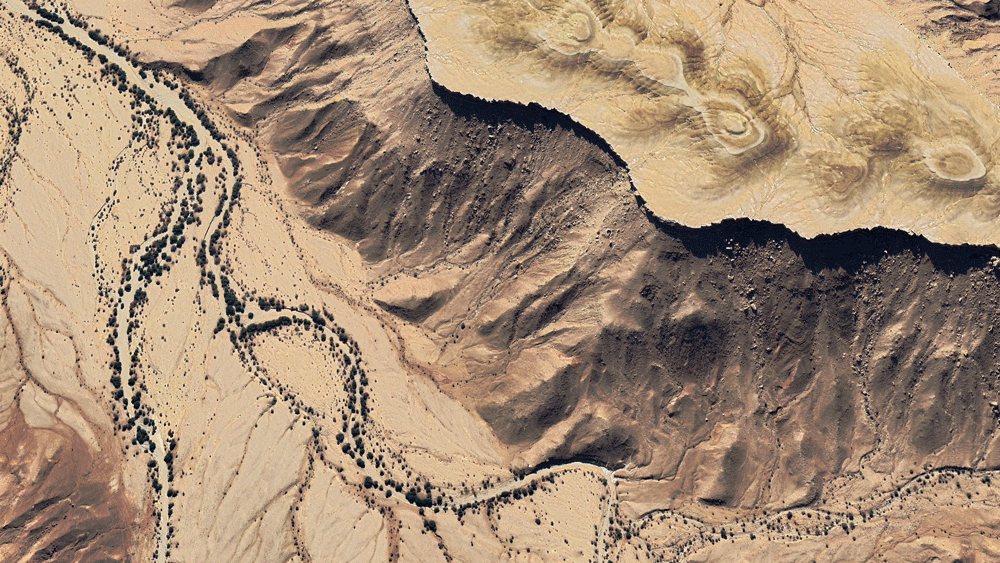
The only one of these projects to have entered the execution phase is the refinery at Karbala, located about 100 kilometres southwest of Baghdad. The government approved a $6.04bn engineering, procurement and construction (EPC) contract award to South Koreas Hyundai Engineering & Construction in January 2014 for what will be Iraqs first new refinery in three decades.
It is unclear whether the project is progressing on schedule, given the conflict with the jihadist group Islamic State in Iraq and Syria (Isis) across much of the country. Reports in October 2014 suggested construction work had yet to start and that the 140,000-b/d refinery scheme was facing delays due to unrest.
While the Karbala refinery is being funded by the government, it will be more difficult to attract financing for other refineries in the current climate.
Nasiriyah delay
The largest refinery scheme proposed is part of the Nasiriyah integrated project, which involves developing a 300,000-b/d facility next to the 4-billion-barrel oil field 400km southeast of Baghdad. The Oil Ministry extended the bid deadline for the construction deal twice, before announcing an indefinite delay in June 2014.
The reason for the postponement is to complete technical and administrative preparations for the auction, the ministry said in a statement, without giving a timeline for the project.
According to reports, there are five companies prequalified to bid on the scheme: Indian groups Essar and ONGC; South Koreas GS Engineering & Construction; France-based Maurel et Prom; and Russias Rosneft.
Key fact
The Karbala refinery is the only one of Iraqs expansion projects to have entered the execution phase
Source: MEED
The front-end engineering and design (feed) on the refinery was completed by the UKs Amec Foster Wheeler. The scope of the refinery facilities includes 27 process units of two identical trains and a common fluid catalytic cracker catalyst complex.
New companies
Earlier this February, Iraqs Oil Minister Adel Abdul Mahdi announced the establishment of three new oil companies. One of the groups, named Dhi Qar Oil Company, has been set up to develop the oil fields in the Dhi Qar province, under the direct supervision of the people of the province. The province contains both the Nasiriyah and the Gharraf fields, which indicates the Nasiriyah integrated project may eventually be tendered by the new entity.
The ministrys plans to build a 150,000-b/d refinery at Missan in the southeast of the country also appear to have hit a roadblock. In October 2013, Iraq signed a $6bn contract with Swiss company Satarem to build the refinery, but the deal was cancelled by the Oil Ministry in early 2014 due to a breach of the contract terms. The current status of the refinery is unclear, with the ministry yet to reveal plans to retender the deal.
Isis factor
The refinery projects planned in northern Iraq, in Kirkuk and Qayyarah, are currently out of the question due to the continued conflict with Isis.
Both projects are planned for areas where there is heavy fighting between Isis and Kurdistan Regional Government (KRG) forces. Meanwhile, Iraqs largest existing refinery, Baiji, has been under siege for much of the time since the conflict broke out in June 2014.
The Baiji complex has an installed refining capacity of 310,000 b/d, but was producing 75,000 b/d when it was shut down as Isis moved into the area on 10 June. Iraqi security forces recaptured the facility in November, breaking a siege where parts of the complex were defended by a small garrison of government troops and Shia militia.
Baiji restart
However, fighting over the complex has continued and there is no clear schedule for the restart of the countrys most important downstream facility. Baiji had been
supplying refined products to northern Iraq, including the KRG territory, and as far afield as Turkey and Jordan before the conflict with Isis began.
Despite the countrys installed pre-conflict refining capacity of 886,000 b/d, according to Veterans of Iraq Concerned Engineers, the average operating capacity is estimated at 540,000-600,000 b/d due to shortages in the delivery of oil, stoppages due to operational problems and the accumulation of fuel oil or naphtha at small refineries.
As things stand, the governments strategy to expand Iraqs downstream sector looks a long way off track.
You might also like...

Dubai seeks consultants to develop drainage strategy
18 March 2026
Oman awards power purchase agreements
18 March 2026
DP World awards Jafza warehouse construction deal
18 March 2026
A MEED Subscription...
Subscribe or upgrade your current MEED.com package to support your strategic planning with the MENA region’s best source of business information. Proceed to our online shop below to find out more about the features in each package.
Take advantage of our introductory offers below for new subscribers and purchase your access today! If you are an existing client, please reach out to your account manager.