


Price renegotiations on major oil and gas projects are maintaining momentum in the Gulf market, but MEED’s annual survey of contractors highlights uncertainty over some planned projects.
The results of MEED’s exclusive survey of oil and gas firms working in the GCC appear to show the sector in full recovery from the slowdown in major contract awards that began in mid 2007.
According to research by MEED and data from Gulf projects tracker MEED Projects, total contract awards for engineering, procurement and construction (EPC) work in the period April 2008 to March 2009 totalled $28bn, compared with $15bn for 2007-08.
But the figures mask massive uncertainty and potential project delays and cancellations.
One example of a major scheme engulfed by such uncertainty is the fourth refinery project in Kuwait, on which five contracts worth $12.5bn were awarded in 2008. These awards are now on hold pending a parliamentary review of the tender process and, if abandoned, would leave the total value of work awarded at $15.9bn.
Kuwait’s fourth refinery is just one of a series of major projects where costs are under review, but even if all the projects awarded do go ahead, total EPC awards over the past 12 months still fail to match the levels of 2006 and 2007, when contract awards reached $35bn and $45bn respectively.
Top performers
The US’ Fluor Corporation and UK-based Petrofac are the strongest performers in this year’s survey in terms of contract award value, each netting work worth more than $3bn. But most striking is the performance of South Korean contractors, which account for a third of contract awards by value. SK Engineering & Construction, Hyundai Engineering & Construction, GS Engineering and Daelim Industrial are all in the top 10 of MEED’s rankings of companies by total EPC contract value.
Two European companies also make the top 10. Italy’s Saipem and Snamprogetti - considered as one company for the purposes of the survey - return to the list having been ranked first in 2007 but dropping out in 2008. Saipem and Snamprogetti have been ranked as a single company because of their close links: Italy’s oil and gas giant Eni has a 42 per cent stake in Saipem, while Saipem bought Snamprogetti from Eni in 2006.
The other European company, Spain’s TR, makes the list for the first time since 2005. Meanwhile, France’s Technip drops out of the contractor rankings for the first time since the survey began in 2005, having won about $8bn worth of EPC work in the previous three years in total.
The top 10 is completed by Japan’s JGC Corporation and the UAE’s J Ray McDermott, bringing the share in major contracts awarded to companies from Asia and the Middle East to 56 per cent of the total of $28.4bn.
Awards to Middle East companies amount to $2.7bn. While eight of the 12 companies from the region confine themselves to working in their home market, contract awards to the four firms that have sought work elsewhere - the UAE’s Valentine Maritime and J Ray McDermott, Kuwait’s Gulf Petrochemical Services & Trading and Egypt’s Petrojet - amount to more than $1.6bn.
With the future of Kuwait’s fourth refinery project in doubt, the inclusion of the awards now under scrutiny threatens to skew the results of awards to contractors from Asia. South Korean companies won a total of $9bn worth of work on the project, while more than half of the $2.55bn worth of work won over the past year by Japan’s JGC Corporation is on the delayed refinery. The $3.5bn award of the offsites and utilities package to Fluor without recourse to a tender process was the largest contract awarded to a single company in 2008 and accounts for all of the firm’s major EPC work over the past year.
The overall slowdown in contract awards in the oil and gas sector comes as no surprise. By early 2008, there was already a shortage of experienced personnel to man the project teams working on the jobs awarded over the previous two years, and rapidly rising contracting and materials costs were leading developers to think twice before going ahead with large downstream infrastructure schemes.
Over the past six months, the argument for further hydrocarbons capacity building has been eroded by the collapse in the oil price /and the implications for short and medium-term demand in the wake of the global economic downturn. In such circumstances, it is understandable that Gulf developers have chosen to slow down new project awards and announcements in recent months.
Price negotiations
The effects of this caution are striking. Of the six contracts worth more than $500m awarded over the past six months, just one, a $550m gas pipeline contract awarded by Kuwait Oil Company, was agreed between the beginning of October 2008 and the end of January 2009.
Since October last year, Saudi Arabia has launched a review of its projects that has led to the Dammam field development being cancelled, a further capacity increase to the Shaybah field being shelved, and contractors being asked to submit new prices for the Karan gas field development and Manifa crude oil field development. In Abu Dhabi, bidders for onshore work on the Sahil, Asab and Shah (Sas) fields have also been asked to re-enter price negotiations.
Kuwait National Petroleum Company has assured contractors in recent weeks that the estimated $18.5bn programme to upgrade the country’s existing facilities, known as the Clean Fuels Project, is still moving ahead and that an integrated project management consultancy and engineering tender will be issued in the next couple of months.
But the combination of difficult market conditions, an ongoing parliamentary review of contract awards on the fourth refinery, and a new Oil Minister, Sheikh Ahmad al-Abdullah al-Sabah, has left local industry sources pessimistic about the prospects for major contract awards in 2009. “The Kuwait oil industry is closed for business until further notice,” says one local oil analyst.
“They are telling international oil companies that the projects they are looking at must be delayed for at least a year.
“There is no way there will be any EPC work on either the fourth refinery or the Clean Fuels Project contract before 2010 at the earliest,” says a senior contracting source.
Downstream projects throughout the region are likely to remain particularly susceptible to further delays. Over the past 12 months, rising costs and falling oil prices have made the economics of major downstream infrastructure investment less attractive.
The two major export refinery projects in Saudi Arabia have already been pushed back. The deadline for bids for construction contracts on a facility at Jubail has been delayed from early November to 20 April, while Conoco-Phillips has suspended bidding for a similar plant at Yanbu that it plans to develop in partnership with state oil company Saudi Aramco.
“Conoco has demobilised its project team,” one source close to the project tells MEED. “I do not see anything happening until well into 2010.”
Growing concern
Despite the weakening of global oil demand, this dramatic fall in EPC activity has caused concern among oil-consuming countries. The International Energy Agency (IEA) expects global oil demand to reach 100 million b/d by 2030, an increase of 15 million b/d from current levels. Depreciation of existing reserves, however, means that as much as 60 million b/d of new capacity may be required over the same period, says the organisation.
In its 2008 World Energy Outlook report, the IEA warns that a failure to invest in oil infrastructure now could have “catastrophic” consequences for the supply/demand balance in the future.
But there are signs that this doomsday scenario will be avoided. Global economic difficulties, environmental considerations and potential changes to US energy policy might dampen demand growth, while on the supply side, there are strong reasons why the Gulf region is keen to preserve some momentum in the development of its oil and gas industry.
Hydrocarbons are the major driver of economic growth in the region, and downstream infrastructure has been targeted as a vehicle for job creation and economic diversification, particularly in Saudi Arabia.
The substantial cash reserves accumulated during the recent oil boom and the preponderance of state-led projects in the oil and gas sector have enabled GCC governments to pledge to continue their spending on key infrastructure projects in the coming year despite their falls in income.
“For the health of the marketplace, there is a need to bring in income, and pushing forward with major projects does this,” says one contractor based in Abu Dhabi. “Traders throughout Abu Dhabi benefit from a big contract going ahead.”
The Gulf region itself is increasingly short of gas to meet rapidly rising domestic demand. As most of the Gulf’s gas is associated with oil, this is a problem that has been thrown into sharp focus in recent months as Opec oil production cuts have come into force.
At the same time, oil production from existing fields is declining. Saudi Arabia needs to bring on stream an estimated 600,000 b/d of new production each year just to replace waning production, while Abu Dhabi Company for Onshore Oil Operations (Adco), for example, insisted early in the year that it had “no intention of postponing any of its strategic works”.
The recent delays to the award of upstream projects have been more down to producers’ desire to secure cheaper prices for their work to reflect falling contractor costs than a dramatic change in strategy.
According to local contractors speaking to MEED in late 2008, developers wanted to cut 20-30 per cent off contracting prices, but the fall in costs had not filtered through to contractors, making agreement on a price problematic. Even now, when materials costs savings are starting to reach the contracting market, firms are still saddled with high labour costs for existing projects.
Keen to continue to secure work, contractors have nevertheless proved willing to meet developers half way. “We have had some clients tell us our rates are too high, so we are talking to them,” says one contractor based at Al-Khobar in Saudi Arabia. “Now is not the time to say a deal is a deal, you work with your client. The mature contractors are willing to talk.”
In recent weeks, the negotiations have borne fruit. At the end of January, Adco awarded two contracts on the Sas project for $1bn less than the original bid estimates, but with more favourable terms.
In return for cutting their price, the winning bidders are understood to have been granted a six-to-eight-month extension to the project lifespan, along with greater upfront payments and less punishing compensation clauses for breaches of contract terms such as schedule over-runs.
“I think everyone was happy in the end,” says a source at one of the project contractors. “We are very happy with the client’s approach and we were happy to compromise.”
There is a sense of optimism that price renegotiations on the Sas contract show that the contracting market can now move forward from the impasse of the past few months.
“Abu Dhabi’s approach has stabilised the market,” says the project source. “From a political point of view, they have made a strong statement about their intentions. Everyone has a cooler head now, and all the major national oil companies are still in good condition. I think there is a political statement coming out of the Middle East that we are ok.”
At the end of February, a similar compromise was reached on the three main contracts for Saudi Arabia’s Karan field, and a deal is also understood to be close on renegotiations on the Manifa field. “We are expecting agreements on the first two packages - any time now,” says one source close to the project. “There is an understanding in principle.”
Like Sas, the contract duration is likely to be extended. Certain packages may also be ringfenced so that prices for key materials can be reassessed when they need to be ordered.
There are even signs of progress on some upstream projects. In late February, as many as 50 companies are understood to have submitted applications for prequalification for the estimated $8-10bn East Coast refinery expansion project at Ras Tanura in Saudi Arabia.
“I do not envisage there being any delay on the Ras Tanura expansion,” says one source close to the project.”
The first of a series of planned upgrades to another four of the kingdom’s refineries - at Yanbu, Jubail, Riyadh and Jeddah - is also moving ahead. The US’ WorleyParsons is in line for the combined front-end engineering and design/engineering, procurement and construction management contract, and mobilisation is under way, says one source close to the project.
According to figures from MEED Projects, a total of $180bn-worth of major oil and gas project work is currently planned by the six GCC nations. As in the past, only a small proportion of this will be realised in the medium term. But invitations to bid have already been released for $21bn worth of major oil and gas contracts in the GCC, and applications to prequalify have been invited for a further raft of projects worth almost $3bn.
It is unlikely that the next 12 months will deliver a substantial increase on the value of EPC contracts awarded over the past year. But assuming negotiations between developers and contractors continue to make headway, there is a realistic hope that the market will not grind to a halt.
Key fact
$28.4m - The value of Gulf oil and gas contracts awarded in 2008-09.
You might also like...
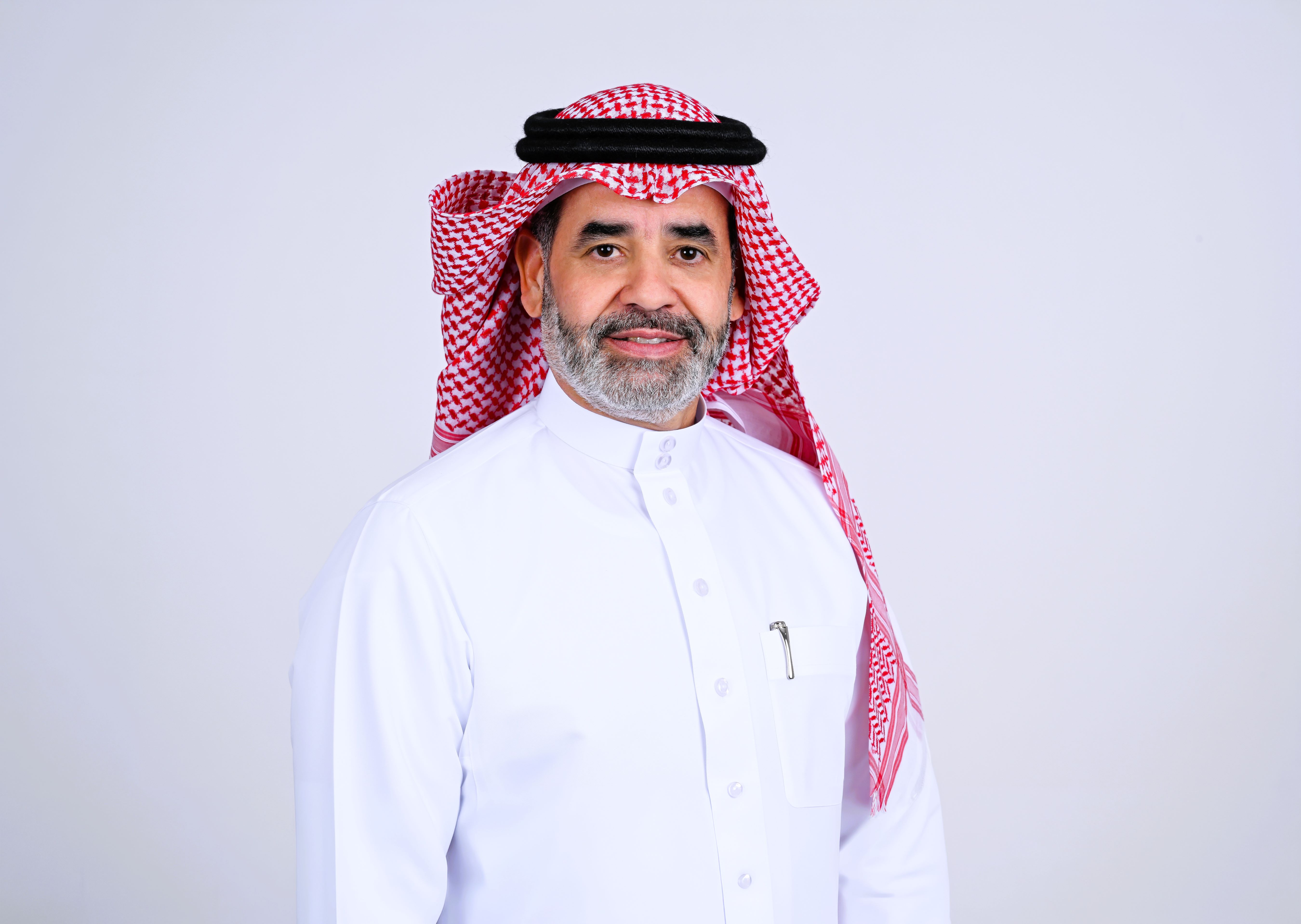
Faisal Mohammed Alfaqeer takes office as new Sabic CEO
01 April 2026
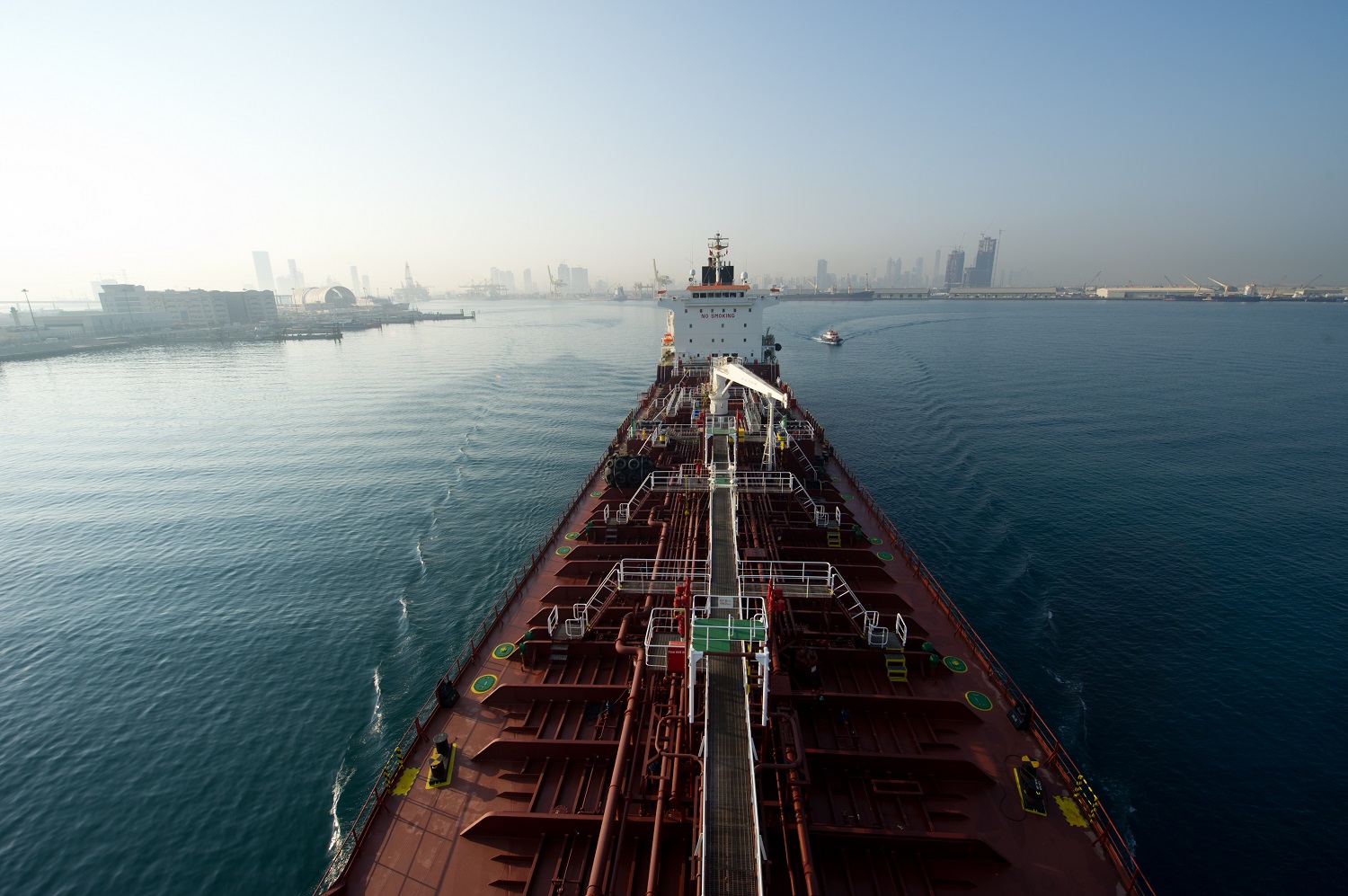
Iranian missiles hit Qatari and Kuwaiti fuel tankers
01 April 2026

One killed and one injured in drone attacks on the UAE
01 April 2026

A MEED Subscription...
Subscribe or upgrade your current MEED.com package to support your strategic planning with the MENA region’s best source of business information. Proceed to our online shop below to find out more about the features in each package.
Take advantage of our introductory offers below for new subscribers and purchase your access today! If you are an existing client, please reach out to your account manager.