


Continued rapid population growth and ambitious energy and industrial expansion projects will require the supply of additional capacity in the coming years
Egypt is set to continue with its ambitious programme to diversify its power sector in 2016, having made progress with plans for several generation technologies in 2015.
In late November, Cairo signed a contract with Russian nuclear provider Rosatom to build Egypts first nuclear power plant. The work will involve the construction of four reactors, each with a capacity of 1,200MW.
The award of the contract followed shortly after Egypts New & Renewable Energy Authority (NREA) issued a revised power purchase agreement (PPA) for its 4,300MW renewable energy feed-in tariff scheme.
Egypts Ministry of Electricity & Energy is set to further advance its energy diversification efforts in 2016, as it seeks to make progress with major renewables independent power projects (IPPs) and agreements for more than 19GW of coal-fired power plants, which it signed at the Egypt Economic Development Conference (EEDC) in Sharm el-Sheikh in March 2015.
Power shortages
One of Cairos greatest achievements in 2015 was the implementation of the fast-track power generation programme. This has started to solve the capacity shortage that had blighted the countrys electricity sector throughout 2013 and 2014, and had resulted in numerous power cuts during the summer and winter periods. The capacity deficit paired with chronic fuel shortages resulted in capacity deficits of up to 3,000MW during peak periods.
To tackle the problem, in late 2014, the electricity ministry devised an emergency programme to expand the capacity of existing plants by 3.6GW to cope with the peak summer period in 2015.

Under the emergency programme, contracts totalling $2.5bn were awarded between December 2014 and March 2015 to expand the capacity of existing plants, with most of the work completed within six months. The majority of the emergency capacity, 2.7GW, was installed by the US GE. The rest was provided by Germanys Siemens and Italys Ansaldo.
Combined with the completion of new power plants, an additional 6GW of capacity was slated to come online in 2015, bringing the total installed capacity in the country to 38,000MW.
More needed
However, while the emergency programme has alleviated pressure on Egypts electricity production, continued rapid population growth and ambitious energy and industrial expansion projects will require the supply of additional capacity in the coming years.
Demand for electricity in Egypt has risen significantly over the past decade or so, with the peak load rising from about 13,300MW in the 2001/02 period to 23,470MW in 2010/11, and reaching 27,700MW in August 2014.
While peak consumption grew by 2.6 per cent in 2014, it is expected to grow at an average rate of more than 6 per cent a year until 2022.
The rapid rise in demand can be attributed to several factors, including the increased size of the Egyptian middle class, changes in housing patterns and the prevalence of subsidies.
While the government took the bold move of reducing subsidies and increasing electricity prices in 2014, Egypts population growth and its efforts to boost industrial sectors with major projects, such as the Suez canal area redevelopment, will require significant electricity provisions.
Gas-fired plants
In 2015, the electricity ministry announced a target of procuring an additional 54GW of new generation capacity by 2022 to meet the expected peak demand growth.
Following the successful implementation of the fast-track programme in 2015, Egypt is undertaking several projects to build major gas-fired combined-cycle power plants to meet the 2022 target.
The largest deal ever awarded in Egypts power sector was signed with Germanys Siemens in May 2015. President Abdul Fattah al-Sisi travelled to Berlin to sign the $9bn contract with the power company in the German parliament, signalling the significance of the deal to both parties.
Under the contract, Siemens will supply and install an additional 16.4GW of power capacity, with the vast majority of this, 14.4GW, to come from three gas-fired power plants.
Siemens will build the new plants at Beni Suef, Burullus and the planned new capital city, each with a capacity of 4.8GW, with the first facility scheduled to come online in 2017.
In addition to the Siemens deal, Egypts government is pushing ahead with plans for several new major combined-cycle power plants, including the 1,800MW Damanhour and 1,950MW South Helwan power plants, both of which are in the tendering stage.
In late 2015, Egyptian Electricity Holding Company (EEHC) invited contractors to submit bids for a deal to build a gas-fired power plant in the Suez area. The proposed plant will initially have simple-cycle technology with a capacity of 900-1,000MW, which will be converted to combined-cycle for the next phase. Bids for the gas-fired scheme are due in the first quarter of 2016.
Development banks
The majority of the publicly tendered power projects are being funded by international development banks.
The Washington-based World Bank, Saudi-based Islamic Development Bank and African Development Bank, supplemented by development banks from Kuwait, Saudi Arabia and Abu Dhabi, are all making significant contributions towards the capital funding costs of major new power schemes.
While gas-fired plants will continue to account for the largest proportion of electricity production, Cairo remains committed to pushing ahead with alternative energy schemes to diversify its power sector and boost energy security.
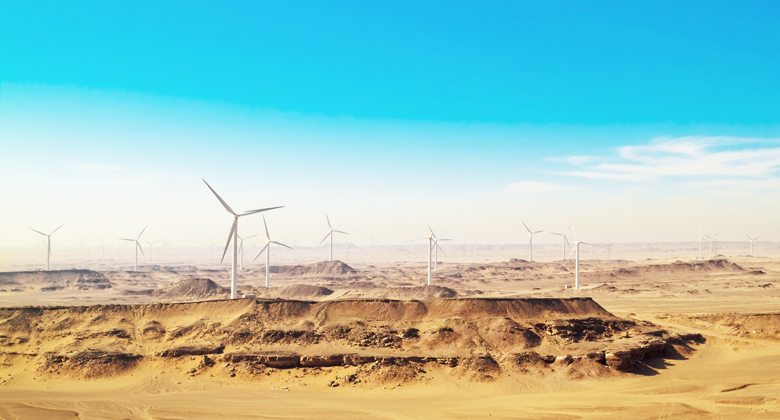
With work expected to begin in the coming year on the first nuclear power plant at El-Dabaa, renewables and coal projects will form a key focus for Egypts utility companies in 2016.
As part of efforts for renewables to contribute 20 per cent of the countrys power production by 2022, the authorities are pursuing two main strategies for procuring new projects.
Renewables focus
The first is the feed-in-tariff (FiT) programme, which is planned to account for 4,300MW of wind and solar capacity. Significant progress was made with the programme in 2015, with the NREA issuing revised power purchase agreements (PPAs) to developers for the initial schemes before the end of the year.
Cairo is planning to sign the first PPAs with developers in the first quarter of 2016.

With foreign investors still cautious on currency concerns and exchange risk, the bulk of the financing will fall to development banks such as the Washington-based International Finance Corporation and the European Bank for Reconstruction & Development.
While much work is still required before financial close is reached on the first batch of schemes, the assistance from multilaterals and local banks should ensure the first deals are closed before the end of 2016.
Cairo is supplementing the FiT programme with some large-scale renewables IPPs.
UK/French Engie (formerly GDF Suez) is in final negotiations for a 250MW wind IPP in the Gulf of Suez area, following the submission of bids in April 2015. The tariff price of $0.041 a kilowatt hour (kWh) was one of the lowest ever submitted for a large-scale wind project.
The NREA is also moving ahead with plans for three major renewables IPPs in the West Nile area.
In October, the client received prequalification entries for a 250MW wind project, a 200MW photovoltaic (PV) solar project and a 50MW concentrated solar power (CSP) scheme. All three will be developed under build-own-operate (BOO) contracts, and tender documents are expected to be issued in the first half of 2016.
Coal plans
In addition to its atomic and renewables ambitions, Egypt is seeking to implement large-scale coal projects to reduce reliance on gas for power production. Cairo is planning to award contracts for 12.5GW of coal-fired generation schemes by 2022, as part of a programme that will have an estimated cost of $18bn.
This is an ambitious target, with the Egyptian parliament having only passed legislation to enable coal to be used for large-scale power generation for the first time in 2014. At the EEDC conference last March, memorandums of understanding (MoUs) and agreements were signed for about 19GW of coal-fired power plants. Little progress has been made since, with none of the MoUs having led to contract signings.
The most advanced coal scheme is the $3bn project planned by a joint venture of the local Orascom Construction and Abu Dhabi-based International Petroleum Investment Company (Ipic), which signed a development contract for the 3,000MW IPP at the EEDC.
Currency concerns
As with other power projects planned in Egypt, the main challenge facing companies that have signed initial agreements for coal projects is securing financing. While the multilateral development banks are providing support for selected conventional projects and the FiT programme, they do not have the capacity to provide all of the capital funding required.
Concerns over foreign exchange (forex) risk and the scarcity of foreign currency will provide the largest hurdle to Egypt delivering on its ambitious 54GW generation programme, with 70-80 per cent of the power schemes planned scheduled to be developed by the private sector.
The governments management of the currency crisis and provision of sufficient tariffs and guarantees for developers and international banks is crucial to the success of projects.
If Cairo is able to effectively navigate these potential stalling blocks, its power sector will offer one of the regions most exciting markets in 2016.
You might also like...
UAE GDP projection corrects on conflict
24 April 2026
April 2026: Data drives regional projects
24 April 2026


A MEED Subscription...
Subscribe or upgrade your current MEED.com package to support your strategic planning with the MENA region’s best source of business information. Proceed to our online shop below to find out more about the features in each package.
Take advantage of our introductory offers below for new subscribers and purchase your access today! If you are an existing client, please reach out to your account manager.