



The cost of refined products have also been increased for consumers
Egypt’s Petroleum & Mineral Resources Ministry increased the price of several petroleum products and natural gas for vehicles on 9 March, according to official statements.
The price of natural gas for vehicles has been put up by 30% to E£13 ($0.25) a cubic metre.
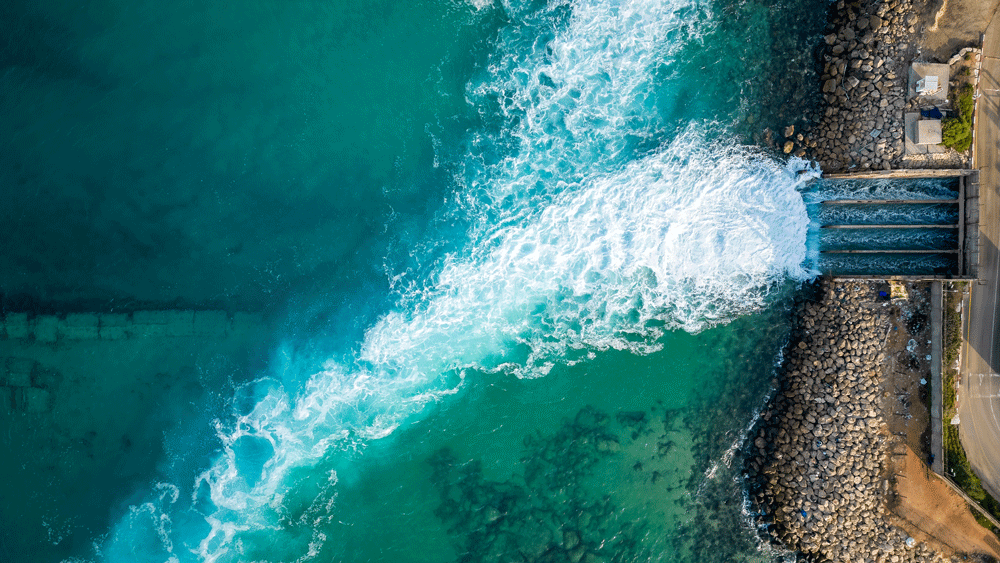
The price of diesel has gone up by 17% to E£20.5 a litre, while 95-octane petrol has been put up by 14.2% to E£24 a litre.
The new prices were put into effect early on 10 March and come amid soaring global energy prices in the wake of the US and Israel attacking Iran on 28 February.
Egypt’s Petroleum & Mineral Resources Ministry said: “This comes in light of exceptional circumstances resulting from geopolitical developments in the Middle East and their direct impact on global energy markets, which have led to a significant increase in import and domestic production costs.
“Disruptions in supply chains, increased risk levels and higher shipping and insurance costs have resulted in a substantial surge in global crude oil and petroleum product prices, levels not seen in energy markets for years.”
The statement also said that Egypt is continuing efforts to boost domestic production and reduce the country’s import bill.
Egypt, the Middle East and North Africa region’s biggest liquefied natural gas (LNG) importer, is facing uncertainty over its LNG supplies in coming months.
Between March 2025 and February 2026, Egypt imported 9,440 kilotonnes of LNG, with the majority of its imports purchased through short-term agreements, mainly with third parties like trading houses.
Last year, it was reported that Egypt had signed deals for around 150 cargoes through to the summer of 2026.
While much of Egypt’s LNG is likely to come from the US, and will not be directly impacted by the effective closure of the Strait of Hormuz, the recent surge in LNG prices could mean that the North African country will struggle to afford shipments.
Exacerbating the need for increased LNG imports, on 28 February, Israel shut down production from its offshore gas fields due to security concerns, cutting pipeline exports to Egypt.
Prior to the fields being taken offline, Egypt was importing about 1.1 billion cubic feet a day from the Tamar and Leviathan fields.
On 4 March, addressing concerns about energy supplies in the country, Prime Minister of Egypt Mostafa Madbouly said that Egypt had just concluded “several contracts” to procure gas shipments at “preferential prices”, in cooperation with several countries and international companies.
However, he did not provide details about the exact pricing of the deals.
On top of the LNG deals Egypt has with trading houses, in January, Cairo signed a memorandum of understanding with Qatar related to 2026 LNG imports.
The preliminary deal included plans for 24 LNG deliveries through the summer of this year, when energy demand typically peaks.
Now, the shuttering of Qatar’s export terminals and the effective closure of the Strait of Hormuz are casting a shadow over the deal and there is increased uncertainty over whether these deliveries will be executed.
You might also like...

Four habits behind the world’s best-run megaprojects
22 September 2026

Contractors prepare Morocco high-speed rail station bids
22 September 2026

Roshn’s Marafy project sparks North Jeddah investments
22 September 2026
Developers prepare bids for 730MW Petrokemya plant
22 September 2026

A MEED Subscription...
Subscribe or upgrade your current MEED.com package to support your strategic planning with the MENA region’s best source of business information. Proceed to our online shop below to find out more about the features in each package.
Take advantage of our introductory offers below for new subscribers and purchase your access today! If you are an existing client, please reach out to your account manager.