


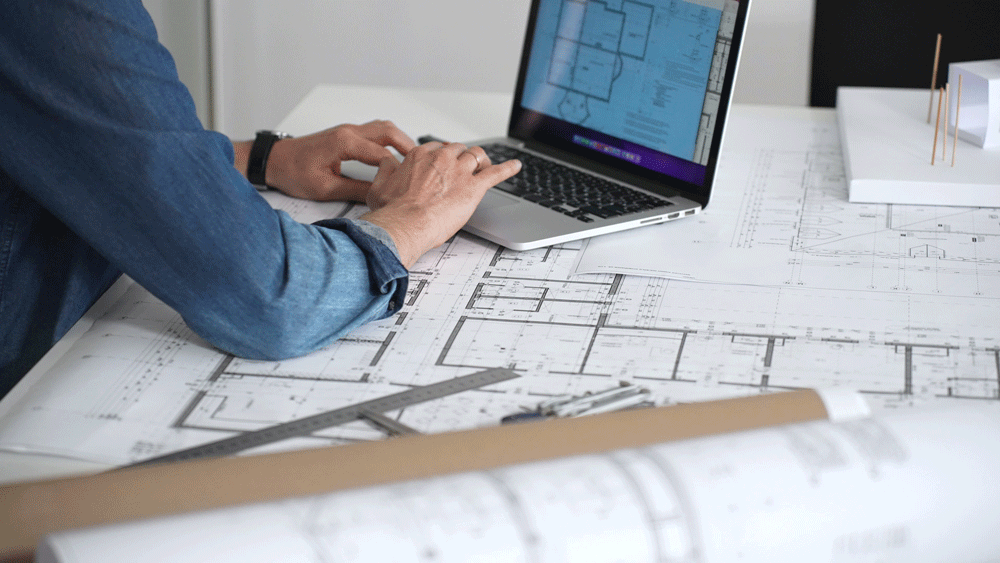
Moving past the lone-artist archetype requires architects to align creative ambition with balance sheets, delivery schedules and the commercial realities shaping the modern built environment, writes Rony Hobeika


For centuries, prominent architectural commissions came from monarchs, religious institutions, civic authorities and wealthy patrons seeking monuments to power and status. From Florence’s Duomo to the Taj Mahal, these masterworks reflected the ambition of patrons and the ingenuity of their master builders.
Beginning in the 19th century, rapid urbanisation, industrial growth and modern real estate finance introduced a very different client: the commercial developer. Today, developers are the pioneers of the built environment. They commission and shape suburban master plans, high-rise office towers, residential communities and retail hubs where modern life takes place.
Working with developers requires a different measure of success. These clients need financial viability alongside spatial and aesthetic quality. In How Real Estate Developers Think, Peter Hendee Brown defines good design as “what can be built at a cost, sold at a price, and for which there is a market of willing buyers”. Developers expect architects to share this holistic view. Managerial, legal, financial and operational realities are as important to a project’s survival as formal composition.
Throughout my career across both sides of the table, as designer and client representative, I have seen persistent friction caused by an unyielding attachment to the “architect-as-artist” archetype. When developers have pressing business needs and architects treat commissions purely as creative self-expression, both sides lose. The following five lessons offer practical guidance for architects working with commercial developers.
> The elevator pitch
Securing a commission is often the hardest hurdle. Business relationships rely on trust, and trust is hard to build when risk exposure is asymmetric. An architect is a service provider whose fee is paid regardless of whether an investment yields a profit. From the developer’s perspective, the designer has little direct financial skin in the game.
To win work in competitive markets, architects must articulate their value proposition concisely before the metaphorical elevator doors open. Developers value clarity and brevity; they have little patience for dense theory. When presenting an idea, prioritise the economic logic and the overarching vision before drowning in minute technical details. A simple diagram on a napkin that captures density, orientation and cost logic will persuade a commercial client much faster than a 60-page slide deck.
> Form follows market
Designers naturally appreciate the theoretical and spatial experiments of figures like Tadao Ando or Peter Eisenman. Real estate markets, however, answer to end-user preferences. Buyers and tenants vote with their capital, and their priorities are often grounded in domestic practicalities rather than academic fashion.
In commercial practice, design is less an isolated artistic pursuit than an iterative negotiation. The final scheme emerges from continuous dialogue between architectural ambition and the commercial team’s data on room dimensions, daylight, parking ratios and unit configurations. Architects must accept that high-stakes commercial projects rarely permit radical departure from what has proven marketable. Real innovation often happens in the details that protect yields and user satisfaction: durable surface finishes, efficient layouts and energy-saving mechanical systems.
> Time is money
Developers hold interest in time and quite literally by their balance sheets. Most commercial projects rely on debt financing subject to interest rates, loan covenants and strict repayment schedules. Holding costs accumulate every day a scheme sits idle in design review or permitting.
Discipline and schedule management are non-negotiable. Endless revisions in pursuit of perfection for its own sake carry costs that someone must pay. An architect working in this environment needs an entrepreneurial mindset that balances creative quality against strict delivery schedules. Learn the developer’s core financial milestones, avoid trying to resolve every variable at once, and focus design effort on ideas that add measurable value. Agility, prompt turnarounds and tight feedback loops build credibility faster than any design manifesto.
> What will it cost?
“Design costs money” remains a developer’s central axiom. Complex cantilevers, double-curved facades, or rare imported stone can erode profit margins and render a project unviable before ground is broken. Operational and maintenance costs matter just as much: a striking glass atrium that drives up cooling bills and requires custom cleaning rigs creates a permanent liability for future owners and tenants.
Architectural training rarely covers commercial modelling, yet working successfully with developers requires fluency in numbers. Architects must understand how design choices alter area schedules, net-to-gross ratios, basement parking efficiencies and structural spans. Early collaboration with cost consultants, general contractors and facility managers helps identify cost drivers before drawings are finalised, ensuring that high-value design features survive value engineering intact.
> Design to bend
Real estate is inherently volatile. Developers contend with fluctuating interest rates, shifting building laws, supply chain bottlenecks and sudden swings in buyer demand. A design that is too rigid to accommodate these shifts risks cancellation midway through development.
Flexibility is an architect’s best risk-mitigation tool. In Buildings Must Die, Stephen Cairns and Jane M Jacobs observe that completed structures lead dynamic lives, adapting and repurposing over time. Buildings designed for developers must not be ‘cast in stone’; they must incorporate this adaptability. Open structural grids, flexible core-and-shell layouts and demountable interior partitions give developers leeway to reconfigure floor plates when market conditions demand a different tenant mix.
The 19th-century ideal of the architect as a detached visionary operating under the benevolence of a patron bears little resemblance to contemporary realities. Today’s nexus of power sits firmly in the market.
Architects need not abandon design ambition to work with developers, but they must connect that ambition to commercial reality. A truly successful building is not just one that looks compelling in a portfolio. It is one that tenants enjoy using, that delivers its promised economic returns, and that remains adaptable and useful long after the original project team has moved on.

You might also like...
Localisation keeps Gulf projects on schedule
26 November 2026
Contractor wins $381m Palm Jebel Ali villas contract
26 November 2026
Algeria tenders refinery gas recovery project
26 November 2026
Libya ends agreement with oil contractor Alfan
26 November 2026



A MEED Subscription...
Subscribe or upgrade your current MEED.com package to support your strategic planning with the MENA region’s best source of business information. Proceed to our online shop below to find out more about the features in each package.
Take advantage of our introductory offers below for new subscribers and purchase your access today! If you are an existing client, please reach out to your account manager.