


Starting with the establishment of Jebel Ali Free Zone (Jafza) in Dubai in 1985, special economic zones have spread across the GCC as an effective means of encouraging foreign investment and boosting trade
Today, there are up to 100 free or special economic zones across the six GCC states, with more than 40 located in the UAE alone, each specialising in a different sector or type of trade.
In a region with often restrictive trading laws, free zones can be attractive propositions for businesses of any size, with 100 per cent foreign ownership, exemptions from import or export duties, and often easy access to sea ports or airports all on offer. But along with these inducements, companies looking at establishing themselves in a free zone should be aware of the restrictions they will face.
Free zones allow 100 per cent ownership, but that is within the free zone, says Amir Ahmad, partner at Pinsent Masons law firm in the UAE. Lets take the Dubai International Financial Centre (DIFC) as an example: if you are in the DIFC, as a licensed entity, then you should conduct your business within the DIFC, and not outside it. A lot of companies dont really realise that; they think they can set up their business in a free zone and then they can march around the GCC and conduct their business. That is not what a free zone is intended to do.

He adds: So thats one restriction; the other is that some of the free zones are restricted in the sort of activity you can conduct. There are free zones that look at trading, there are free zones that are more logistics-based, and there are free zones that are more for financial institutions. So you do need to bear those two restrictions in mind.
The rules about what types of businesses can legally operate from a free zone vary widely between different zones and countries, and should be examined in detail. Some, such as Qatar Science & Technology Park (QSTP) currently the countrys only full free zone require all resident companies to be involved in the advancement of technology; the majority of staff must be working to this end.
Others, such as the free zones that make up Tecom in Dubai, are more flexible. For example, while Tecoms Dubai Media City free zone is nominally designated for media-focused organisations, it lists a much wider range of permitted business segments. However, there may still be restrictions on what specific activities are permitted, such as certain consultancy operations being prevented from engaging in any on-site activities at their clients places of business.
One significant disadvantage of operating within free zones, particularly the more well-established zones, can be the high cost of offices and facilities, often accompanied by a restricted choice of office types and locations. SMEs should check carefully to ensure that suitable and suitably priced facilities are available, before starting the process of setting up within a free zone.
Free zones by country
Bahrain
Despite being the most economically open of the GCC states, Bahrain has only one full free zone: Bahrain Logistics Zone, focused on logistics, storage and distribution. The Bahrain International Investment Park, while not technically a free zone, offers many of the advantages of one, including 100 per cent foreign ownership, duty-free import of equipment and materials, and unlimited repatriation of capital.
Kuwait
Kuwait only has one free zone: the Kuwait Free Trade Zone (KFTZ), based at Shuwaikh port. Along with import-export businesses, KFTZ also offers facilities to service-oriented organisations.
Oman
Oman has four full free zones at Sohar, Salalah, Duqm and Mazunah. Each offers 100 per cent foreign ownership, but Freezone Sohar and Mazunah Free Zone both require companies based there to employ a certain number of Omani citizens. However, Mazunah allows goods imported into the free zone to be sold in the wider Omani market. In addition to the free zones, Oman also offers nine industrial estates. While not free zones, these offer 100 per cent foreign share capital, five years of tax-free operation and exemption from customs duties. Some businesses operating in specific industries within these estates may also be eligible for special terms on loans for joint government projects.
Qatar
QSTP is currently the countrys only free zone, although three more are in development. QSTP has strict requirements for prospective companies, which must be dedicated to the advancement of science. An alternative option for many services-focused businesses is the Qatar Financial Centre, which offers 100 per cent foreign ownership, a 10 per cent tax on profits and double-taxation agreements with more than 35 countries.
Saudi Arabia
Saudi Arabia boasts six economic cities enormous new developments designed to act as business-focused hubs, operating on less restrictive rules than the rest of the country. Many of the economic cities are focused on very large petrochemical and basic industries operations but King Abdullah Economic City, based north of Jeddah, is open to businesses in a wider range of segments.
The kingdom also offers the Saudi Industrial Property Authority (Modon) Industrial Cities, which offer many of the advantages of a free zone operation, including low rent and utility costs, import tax exemptions and finance with extended repayment options. Modon currently operates 28 industrial cities across the country, with more planned.
UAE
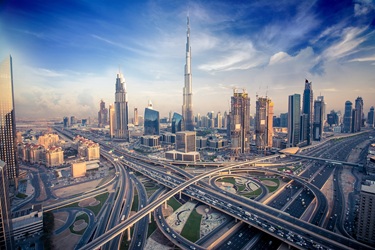
Of all the GCC states, the UAE offers by far the widest range of full free zones, from the venerable Jafza to newcomers such as Abu Dhabis Twofour54. The UAEs free zones are often highly rated, with the Dubai Multi Commodities Centre (DMCC) winning the Global Free Zone of the Year for SMEs award from FDI magazine.
Dubai hosts the majority of the UAEs free zones, but also has some of the highest costs for rents and utilities, as well as long waiting lists for the more popular free zones. In exchange, the emirate offers one of the most open economic environments in the GCC. Jafza, the Tecom free zones, Dubai Airport Free Zone, DIFC and DMCC all offer SME-appropriate packages.
Following Dubais lead, the six other emirates of the UAE have set up their own free zones. Abu Dhabi now offers Al-Ain Industrial City; Khalifa Industrial City; Masdar, designed to be a eco-friendly development, but now little-used; and Twofour54, focused on media organisations.
Sharjahs Hamriya Free Zone dates from 1995, and explicitly targets SMEs focused on light manufacturing and trading; the emirate also offers Sharjah Airport International Free Zone. The other northern emirates of Ajman, Fujairah, Ras al-Khaimah and Umm al-Quwain also offer free zones, with Ras al-Khaimah Free Trade Zone, Fujairah Free Zone and Ajman Free Zone open to a wide range of businesses.
Bahrain
Bahrain Logistics Zone
Tel: (+973) 1 735 9608
Web: www.mot.gov.bh
Bahrain International Airport
Tel: (+973) 1 735 3397
Bahrain International Investment Park
Tel: (+973) 1 746 7373
Web: www.biip.com.bh
Kuwait
Kuwait Ports Authority
Tel: (+965) 2 484 8483
Web: www.kpa.gov.kw
Oman
Freezone Sohar
Tel: (+968) 2 685 2700
Salalah Free Zone
Tel: (+968) 2 321 2999
Web: www.sfzco.com
Qatar
Qatar Financial Centre
Tel: (+974) 4 496 7777
Web: www.qfc.com.qa
Qatar Science & Technology Park
Tel: (+974) 2 254 7070
Web: www.qstp.org.qa
Doha Industrial Area
Mirage International Property Consultants
Tel: (+974) 4 444 4431
Saudi Arabia
Royal Commission for Jubail & Yanbu
Tel: (+966) 1 479 4445
Web: www.rcjy.gov.sa
Saudi Industrial Development Fund
Tel: (+966) 1 477 4002
Web: www.sidf.gov.sa
Saudi Arabian General Investment Authority (Sagia)
Tel: (+966) 1 203 5555
Web: www.sagia.gov.sa
King Abdullah Economic City Riyadh sales centre
Tel: (+966) 2 615 9999
Web: www.kaec.net
King Abdullah City for Atomic & Renewable Energy (KA-Care)
Tel: (+966) 1 808 5555
Web: www.kacare.gov.sa
Saudi Industrial Property Authority (Modon)
Tel: (+966) 92 000 0452
Web: www.modon.gov.sa
UAE
Abu Dhabi Airport Free Zone
Tel: (+971) 2 505 5000
Web: www.adac.ae
Ahmed bin Rashid Free Zone
Tel: (+971) 6 765 5882
Ajman Free Zone
Tel: (+971) 6 701 1555
Web: www.afza.gov.ae
Dubai Airport Free Zone
Tel: (+971) 4 202 7000
Web: www.dafz.ae
Dubiotech
Tel: (+971) 4 390 2222
Web: www.dubiotech.ae
Dubai International Academic City
Tel: (+971) 4 360 2060
Web: www.diacedu.ae
Dubai International Financial Centre
Tel: (+971) 4 362 2222
Web: www.difc.ae
Dubai Internet City
Tel: (+971) 4 391 1111
Dubai Knowledge Village
Tel: (+971) 4 390 1111/ 390 2221/367 2221
Web: www.kv.ae
Hamriya Free Zone
Tel: (+971) 6 526 3333
Web: www.hfza.ae
You might also like...

Contractor wins Oman water network contract
02 March 2026

Riyadh selects three teams for King Salman airport ECI
02 March 2026
UAE air defences repel Iranian attacks
02 March 2026
A MEED Subscription...
Subscribe or upgrade your current MEED.com package to support your strategic planning with the MENA region’s best source of business information. Proceed to our online shop below to find out more about the features in each package.
Take advantage of our introductory offers below for new subscribers and purchase your access today! If you are an existing client, please reach out to your account manager.