


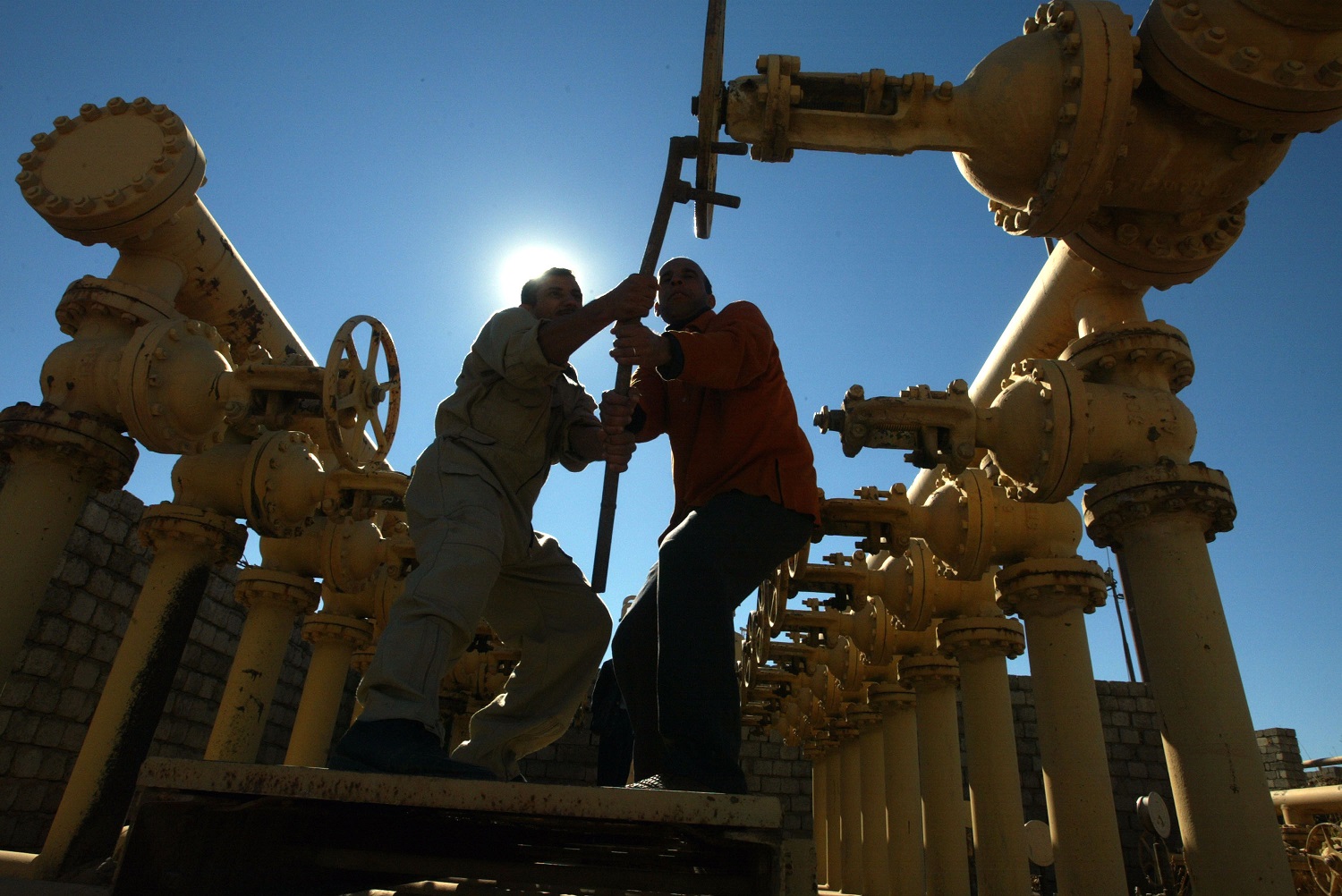
The Syrian government took control of the Rmeilan oil fields earlier this year



US-based HKN Energy is starting operations on the ground at Syria’s Rmeilan fields in Al-Hasakah Governorate, according to industry sources.
The development comes as Syria is trying to fast-track the conversion of memorandums of understanding (MoUs) signed with oil companies to concrete contracts.
Speaking at a conference in Washington on 9 June, the chief executive of state-owned Syria Petroleum Company (SPC), Youssef Qablawi, said that HKN had recently converted an MoU into a finalised deal and was preparing to start operations in Syria.
Qablawi did not mention which assets HKN would be operating in Syria, but sources say it is starting operations on the ground at the Rmeilan fields.
Some work related to the company’s activities in Syria is currently being carried out in HKN’s office in Erbil, in the Kurdish region of Iraq, sources said.
The Syrian government took control of the Rmeilan oil fields earlier this year after a military operation.
The group of fields is considered to be one of Syria’s largest oil assets and contains more than 1,300 oil wells.
The field is said to have produced up to 120,000 barrels a day (b/d) before civil war broke out in Syria in 2011.
Output later fell by nearly 85% after hundreds of wells went offline, either due to war damage or lack of maintenance.
Prior to the military operation by Syria’s army earlier this year, the field was held and administered by the Kurdish-led Syrian Democratic Forces (SDF).
Foreign interest in Syria’s oil and gas sector is growing as the government moves to revive the industry and elevated global energy prices improve the economics of new developments.
A series of agreements signed in recent months has attracted some of the world’s largest energy companies, raising expectations that investment and production could accelerate.
New deals
Speaking at the conference in Washington earlier this month, Qablawi said he was planning to sign a contract with ConocoPhillips today, 16 June.
He said it would be the largest contract signed by SPC since its establishment in October last year.
Qablawi also said he hoped to convert an MoU with the US-based oil company Chevron into a signed contract before the end of July.
Qablawi said the country was forecasting increases in both oil and gas production and predicted it would produce 1 million b/d by 2030.
The chief executive said that previously unexplored blocks in the country held “huge” reserves that could be developed.
Chevron is interested in making investments in onshore production in the country, according to Qablawi.
Downstream projects
Syria is planning several downstream projects.
Under current plans, the country’s Baniyas refinery will be shut down for major maintenance in July.
The maintenance will dramatically increase the refinery’s capacity to 130,000 b/d, according to Qablawi.
Currently, it is operating at a rate of 90,000-95,000 b/d.
The refinery is expected to be brought back online in October this year.
Syria is also planning to develop a new refinery, which will produce more than 200,000 b/d, and is expected by SPC to come online within four years.
Under current plans, the front-end engineering and design (feed) for the new refinery will start in the fourth quarter of this year.
“Syria will be exporting refined products within three years [of starting the feed],” Qablawi said. “After we have finished the construction of the new refinery.”
Gas development
In April, SPC signed a formal contract with Saudi Arabia’s ADES to increase gas production in central Syria.
The contract is focused on developing five central gas fields:
- Abu Rabah
- Qamqam
- North Al-Faydh
- Al-Tiyas
- Zumlat Al-Mahar
The deal aims to increase Syria’s domestic gas production by up to 50% within a year.
Speaking on 9 June, Qablawi said that ADES was mobilising for that project.
Pipeline planning
Syria is involved in several major pipeline projects, including plans to restore the pipeline from Kirkuk in Iraq to Baniyas in Syria.
Qablawi said that under current plans, the contracts for this pipeline would be tendered using the build-operate-transfer (BOT) contract model.
“We are going to pick the best company for Syria to construct this pipeline,” he said.
Syria has awarded an engineering, procurement and construction contract for an extension to the existing Arab Gas Pipeline.
The new section extends 185 kilometres from Aleppo to Homs and is being fully funded by SPC.

You might also like...

Dubai Inc steps in as developers turn cautious
21 September 2026
Ras Al-Khaimah’s Stevin Rock selects Irish firm for limestone quarry
21 September 2026
MEED announces national winners of 2026 project awards
21 September 2026

Contractors line up for $1bn Jumeirah Islands residences work
21 September 2026
A MEED Subscription...
Subscribe or upgrade your current MEED.com package to support your strategic planning with the MENA region’s best source of business information. Proceed to our online shop below to find out more about the features in each package.
Take advantage of our introductory offers below for new subscribers and purchase your access today! If you are an existing client, please reach out to your account manager.