


Oil Ministry cuts bonuses for West Qurna-1 and Zubair fields
Iraq’s Oil Ministry has agreed to slash signatory soft-loan bonuses on two of its signed oil field deals, turning them instead into unrecoverable signing-on fees, Reuters reports.
The US’ ExxonMobil and UK/Dutch Shell Group initially signed a $400m soft-loan for the technical services agreement for the giant West Qurna-1 field. This has now been cut to $100m.
A second soft-loan from the consortium developing the Zubair field, led by Italy’s Eni has also been cut, from $300m to $100m. Both loans have now been changed to signatory bonuses, according to Sabah Abdul Kadhim, head of the legal section at Iraq’s Petroleum Contracts and Licensing Directorate.
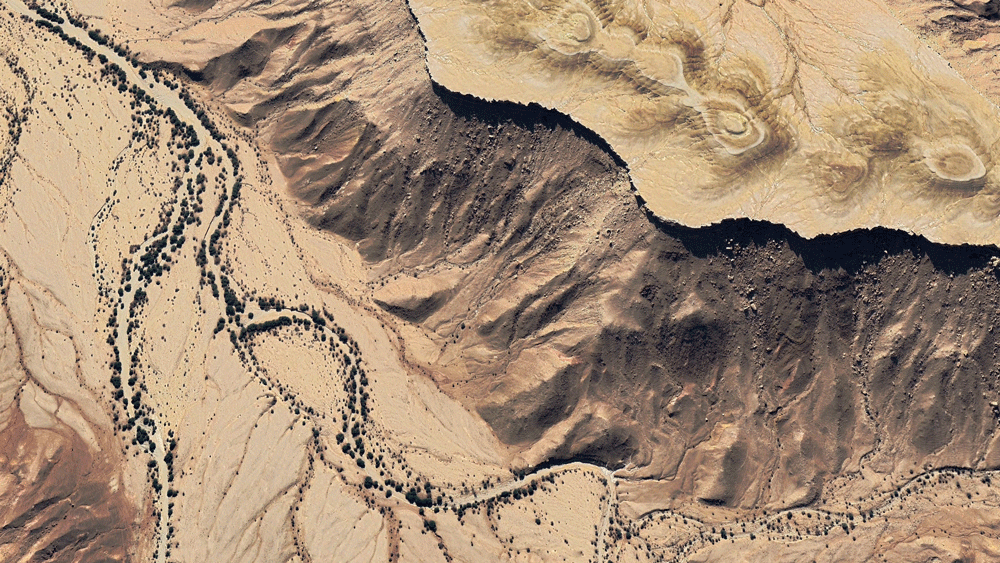
Iraq signed a preliminary 20-year deal on 2 November with Eni and its consortium partners, the US’ Occidental Petroleum and Korea Gas Corporation to develop the 4 billion barrel Zubair field near Basra.
On 5 November, the ministry awarded a 20-year contract to ExxonMobil Corporation and Shell to develop the 8.7 billion barrel West Qurna-1 oil field, also in Basra province.
ExxonMobil and Shell will receive $1.90 for each additional barrel of oil produced over a certain level. Eni and its consortium will receive $2 a barrel. In addition to the remuneration fees, some 25 per cent of the production revenue goes their state oil partner.
The signing on bonuses have been an unpopular feature of the licensing rounds for the international oil companies, requiring massive capital outlays to gain a foothold in the country during decidedly unpredictable times in Iraq.
The ministry did not explain the reason for the change. The signing on bonuses have been an unpopular feature of the licensing rounds for the international oil companies, requiring massive capital outlays to gain a foothold in the country during decidedly unpredictable times in Iraq.
“Scrapping them, or lowering them significantly, was always going to have a huge impact on the companies’ risk exposure,” says Samuel Ciszuk, Middle East analyst at IHS Global Insight.
“For the Iraqi government and Oil Ministry, political considerations were always at the heart of their financial negotiations, and the need for secrecy surrounding the concessions that would make deals possible were always clear – and impressed upon their counterparties”.
You might also like...
Safety and security matters
03 April 2026
Saudi forecast remains one of growth
03 April 2026


A MEED Subscription...
Subscribe or upgrade your current MEED.com package to support your strategic planning with the MENA region’s best source of business information. Proceed to our online shop below to find out more about the features in each package.
Take advantage of our introductory offers below for new subscribers and purchase your access today! If you are an existing client, please reach out to your account manager.