


For Saudi Arabia, the next chapter is no longer about ambition – it is about execution
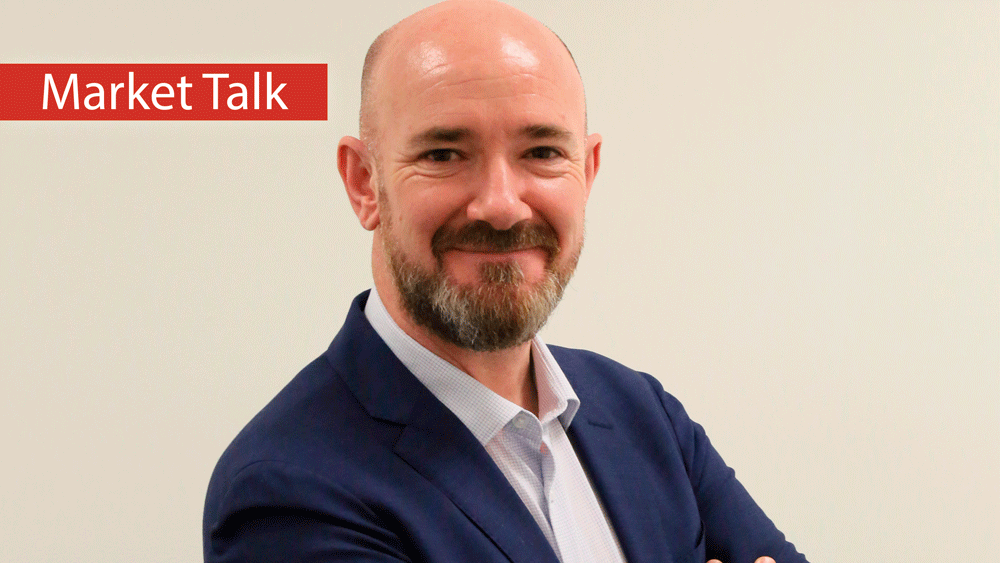
In conversation with Andy Stevenson, Regional Development Director at Mott MacDonald
 Saudi Arabia has already proved it can think bigger than almost any market in the world. The next challenge isn’t ambition; it’s execution. The opportunity now is to deliver and operate programmes that match the scale of the vision that created them.
Saudi Arabia’s giga and megaprojects are entering a new phase of delivery. In your view, what are the biggest shifts taking place as projects move from ambitious masterplans towards execution, activation and long-term operations?

Five years ago, much of the conversation was about ambition and vision. Today, the conversation is increasingly about delivery, integration and operational success. That's a natural sign of a maturing market. The challenge is no longer defining what could be built; it's delivering multiple complex programmes at scale whilst maintaining quality, cost certainty and programme outcomes.
We’re also seeing a shift from projects being viewed individually to being considered as part of wider economic systems. Delivering a transport system, utility network or development on its own is only part of the challenge. The real value lies in how they come together to create places that attract people, businesses and investment.
As projects become larger and increasingly interconnected, what does successful collaboration between developers, consultants, contractors and technology partners look like, and how can the industry strengthen these delivery ecosystems?
The reality is that no single organisation has all the answers. The complexity of Saudi Arabia’s gigaprojects means success depends on how effectively developers, consultants, contractors and technology partners work together around a common objective.
Too often globally, projects lose momentum at organisational boundaries. The most successful projects I’ve been a part of are those where people stop focusing on protecting their piece of the programme and start focusing on delivering the overall outcome. Collaboration sounds simple, but on projects of this scale it becomes a critical delivery capability.
The Kingdom is placing greater emphasis on localisation, innovation and digital transformation. How are these priorities changing the way infrastructure and major developments are planned and delivered, and where do you see the greatest opportunities over the next five years?
What’s encouraging is that Saudi Arabia isn’t just building projects; it’s building capability and markets. The focus on localisation is creating opportunities to develop Saudi talent, strengthen local supply chains and leave a legacy that extends well beyond the current programme pipeline. For me, developing future Saudi leaders and professionals is one of the most rewarding aspects of working in the Kingdom today.
Digital transformation is accelerating that journey. As projects become larger and more interconnected, data is becoming one of the industry's most valuable assets. Organisations that can turn data into better decisions, whether through AI, digital twins or smarter asset management, will have a significant advantage over the next five years.
With Expo 2030 Riyadh and Fifa World Cup 2034 creating fixed delivery milestones, what lessons should the industry be applying now to ensure projects are delivered efficiently while maintaining quality, resilience and long-term value?
Major events bring immovable deadlines, but they also create discipline. The key lesson is that the difficult decisions need to be made early. In my experience, issues that cause the greatest delays are often visible much earlier than people would like to admit. The longer risks, scope changes and interfaces remain unresolved, the harder and more expensive they become to manage later.
Equally important is avoiding the temptation to optimise solely for opening day. The projects that will ultimately be judged most successful are those that continue creating economic, social and environmental value long after the event itself. Legacy planning should be happening from the outset, not towards the end of the programme.
As many of Saudi Arabia’s first gigaprojects transition from construction into operation, how important is it to design and deliver assets with their full lifecycle in mind, and what practical changes does this require from project teams?
The industry has become very good at delivering assets. The next challenge is delivering assets that are easy to operate, easy to maintain and continue creating value for decades. As the market matures, success will increasingly be measured by operational performance and customer experience rather than construction milestones.
Many of us will have seen examples where an asset is handed over successfully from a construction perspective, only for operators to inherit avoidable challenges because maintainability wasn’t adequately considered during design. Saudi Arabia has an opportunity to be different. By involving operators, maintainers and end users from the outset, projects can avoid costly redesigns, reduce whole-life costs and create a better experience for the people who ultimately use them. That’s where the real measure of success lies.
Looking ahead, what do you believe will define the next chapter of Saudi Arabia’s infrastructure and development story, and what advice would you offer to organisations looking to play a meaningful role in the Kingdom’s future growth?
The next chapter of Saudi Arabia’s story won’t be defined by the scale of projects announced. It will be defined by the quality, resilience and long-term value of the projects successfully delivered and operated.
Saudi Arabia has already demonstrated extraordinary ambition and has fundamentally changed perceptions of what is possible in the region. The opportunity now is to translate that ambition into operationally successful cities, infrastructure networks and communities that create lasting value.
Having worked in the region for many years, my advice is simple: take a long-term view. The organisations that will succeed are those that invest in local capability, understand what matters to their clients and contribute to the Kingdom's objectives rather than simply chasing the next opportunity. Saudi Arabia is increasingly rewarding organisations that contribute to the Kingdom's long-term ambitions, not just those seeking to participate in its current opportunities.
Published in partnership with

Don’t miss Saudi Mega Projects 2026, where Mott MacDonald joins as a Consulting Partner.
👉 Secure your place as an attendee or request the sponsorship deck by clicking here or email us at meedevents@meed.com.
You might also like...
Chinese contractor wins Damac Riverside apartments deal
16 October 2026

Morocco begins prequalification for 350MW solar projects
16 October 2026

Algeria tenders 310km Tamanrasset railway
16 October 2026
Joint venture wins $246m RCRC bridges contract
16 October 2026


A MEED Subscription...
Subscribe or upgrade your current MEED.com package to support your strategic planning with the MENA region’s best source of business information. Proceed to our online shop below to find out more about the features in each package.
Take advantage of our introductory offers below for new subscribers and purchase your access today! If you are an existing client, please reach out to your account manager.