


Muscat is using advanced technology to get the most of out of its oil fields, while assessing alternative energy sources such as nuclear and solar power. But its main concern is the approaching shortfall in gas.
Last year was a familiar story for Oman’s energy sector. As in the previous six years, oil output declined, hitting an average of 710,000 barrels a day (b/d). And while the production of gas and condensates increased, it was not fast enough to cope with the sultanate’s soaring energy needs.
As yet, there is no crisis in the Oil & Gas Ministry. Muscat hopes that an investment programme of up to $7bn a year will result in the fall in output being stemmed in 2008.
While it may achieve this, the impending shortfall in gas supply could have an even greater effect on its hopes for economic diversification.

Nasser Khamis Ali al-Jashmi, undersecretary at the Oil Ministry, is supervising the push to increase oil and gas production. Since his appointment in 2002, he has sought to stem falling output by supervising several new field developments, and is confident that the situation is changing for the better.
Hitting targets
“Our [oil] target for the coming year is to hit 780,000-790,000 b/d, up from about 710,000 b/d today,” he says. “The increase will mainly come from Mukhaizna and also from the Qarn Alam and Harweel evelopments. The results of these projects are already starting to show. Long term, we are aiming for about 800,000 b/d.”
Instrumental to the changing fortunes of Oman’s oil production was the decision in 2005 to split off several new concessions from acreage controlled by Petroleum Development Oman (PDO). While PDO, in which the UK/Dutch Shell Group is the main foreign shareholder, still produces more than 80 per cent of the sultanate’s oil and nearly all its gas and condensate, the move is paying off.
More than a dozen foreign oil companies are exploring and developing the sultanate’s hydrocarbons assets. This is most notable on the Mukhaizna field, where work is being carried out by the US’ Occidental Petroleum. The multi-billion-dollar enhanced oil recovery (EOR) scheme will increase capacity from 8,000 b/d currently to 150,000 b/d by 2011. The increase will come through the use of thermal injection techniques, one of several advanced oil production technologies being used in the upstream sector.
However, speculation has increased in recent months that Mukhaizna is falling behind schedule. Worse still, there have been suggestions that it will, at best, have a peak output of 100,000 b/d, rather than the target of 150,000 b/d.
However, Al-Jashmi rejects this. “Every project has its own challenges but there is no change in Mukhaizna’s original targets,” he says. “There has been a delay in some project milestones because of contracting difficulties, and the [initial production] rate was not as high as we wished. But Occidental plans to make up for it.”
EOR schemes like the one at Mukhaizna are essential in a country where the output from oil fields is declining. PDO forecasts that about one-third of its oil production will be produced with EOR techniques by 2016, compared with almost none currently.
In contrast, primary extraction techniques, which rely on the pressure in the well and account for more than half of total output, will drop to about one-third over the same period. Secondary extraction, which relies on techniques such as water injection or gas reinjection, will account for the remainder.
PDO has more than 20 EOR projects planned using a host of different techniques. Some have been successfully used before, while others are at the cutting edge of petroleum science. As a result, Oman has one of the most advanced upstream programmes in the world.
Spurred on by its experience on the Mukhaizna field, the government is determined to continue with its policy of securing foreign investment by opening up new onshore and offshore oil and gas exploration and development concessions.
“We have about six new blocks coming up this year,” says Al-Jashmi. “We have seen a substantial increase in the number of oil companies investing in Oman to about 20. It is not only about PDO and Occidental. We are seeing a number of new entrants, such as RAK Petroleum, [India’s] Reliance and [the UK’s] BP coming in too, and that is an achievement.”
Fast-tracking schemes
BP’s concession, won in early 2007, covers the long-term development of tight gas reserves from the central Khazzan and Makarem fields. With the two reservoirs estimated to contain 20 trillion cubic feet (tcf) of gas - more than 55 per cent of the sultanate’s total proven gas reserves of 35 tcf - the project is an integral part of Oman’s plan to ramp up its gas production.
The fast-track scheme is crucial. While falling oil output has long been a problem for Muscat, the gas situation is now of even greater concern. Like other Gulf states, Oman has experienced unprecedented growth in demand for gas over the past five years. The approval of various gas-based industrial projects and a jump in electricity demand has resulted in the amount of spare gas being reduced to a minimum.
Despite a deal to import gas from Qatar through the Dolphin Energy pipeline, the government is struggling to keep up with demand.
Added to this, the sultanate is being forced to export more than half the gas it produces to the Far East through its liquefied natural gas (LNG) programme, launched in the late 1990s.
What seemed like sound commercial logic at the time increasingly looks like poor strategic planning. Muscat promised more than it could deliver but cancelling these long-term contracts is not an option.
“We are managing gas well,” says Al-Jashmi. “There is no gap between supply and demand currently. But demand is set to be higher than supply in the long term and there will be a shortage if we let all this demand be met. We are not in a crisis situation but we have to plan for the worst. So the objective is to delay the time when demand will exceed supply.”
As part of this plan, the government has employed Cambridge Energy Research Associates (Cera) to outline the sultanate’s options in the event of a shortfall in supply. The Electricity & Water Authority is looking at several energy sources such as solar and wind, while PDO is considering developing coal-burning power plants, which would use imported coal to meet energy requirements.
Nuclear energy is also an option, albeit one that is being undertaken as part of a regional initiative. “There is a GCC-wide study being carried out and Oman is part of that,” says Al-Jashmi. “But there is no independent local study being done.”
The other obvious option for Oman is to import more gas to meet the shortfall. After some delay, 200 million cubic feet a day is scheduled to be delivered from Qatar via the Dolphin pipeline from the summer. However, with a moratorium on any further development of Doha’s North field in place until 2011 at the earliest, further gas supplies from Qatar are unlikely in the medium term.
Instead, Muscat has looked to Iran as a potential supplier of gas. In 2007, it signed a memorandum of understanding with Tehran for gas from the offshore West Bukha-Hengam fields in the Strait of Hormuz, although progress has been slow.
“We have not yet reached a final agreement,” says Al-Jashmi. “There is a team discussing the issue, but we still do not know what the Iranians will say as we want to import all the gas from the fields, which are not that big. We are also talking to different parties and looking at gas pipelines from neighbouring countries.”
Securing supplies
However, with demand for gas so strong every-where in the Middle East, it will be difficult for Muscat to secure supplies from any country beyond Iran and Qatar. Presumably, LNG imports would be out of the question, so either Muscat will have to find a way to rapidly increase its own gas production or seek ways to curtail demand.
Already, the gas shortfall is having a knock-on effect on downstream development. A lack of gas means there is almost no feedstock avail-able for petrochemicals plants, and little for any new gas-fired power plants for industrial use. “We have not closed the door completely,” says Al-Jashmi. “If a project is proposed that has a lot of social benefit and consumes only a little gas, then it may be considered, but for now we have stopped accommodating new projects [that require gas] as part of our initiative.”
Muscat is instead encouraging industrial development further downstream. This includes the promotion of existing industries such as aluminium extrusion and plastics moulding, using the raw material produced at the upstream plants. However, it can be hard to attract investment in these areas when the advantages of cheap feedstock and energy are substantially diluted.
An alternative to gas feedstock is to use crude oil. Muscat has long touted an integrated refinery and naphtha-based petrochemicals complex at Duqm as the centrepiece of an economic rejuvenation programme in the central region of the country. Under the plans, which are expected to be approved soon, the 300,000-b/d refinery will be supplied with 200,000 b/d of imported oil, most likely from Saudi Arabia, and 100,000 b/d of crude from Oman’s own fields.
The oil will be refined and exported, but the by-products will be used as feedstock for base chemical and plastics production. The $10bn-plus project still has to be approved. Al-Jashmi says the government is set to make a decision soon, although much will hinge on economic factors such as the price of feedstock.
Muscat may ultimately decide that the reduced margins it will have to accept on such a project are a price worth paying in return for economic and social development.
Given the nature of its hydrocarbons assets, it is the type of decision that it could have to make several more times in the future.
You might also like...

Butec wins Casablanca waste-to-energy contract
27 August 2026
Alfanar confirms Riyadh Expo substation contract
27 August 2026

Contractors appointed for Group 1 battery storage projects
27 August 2026
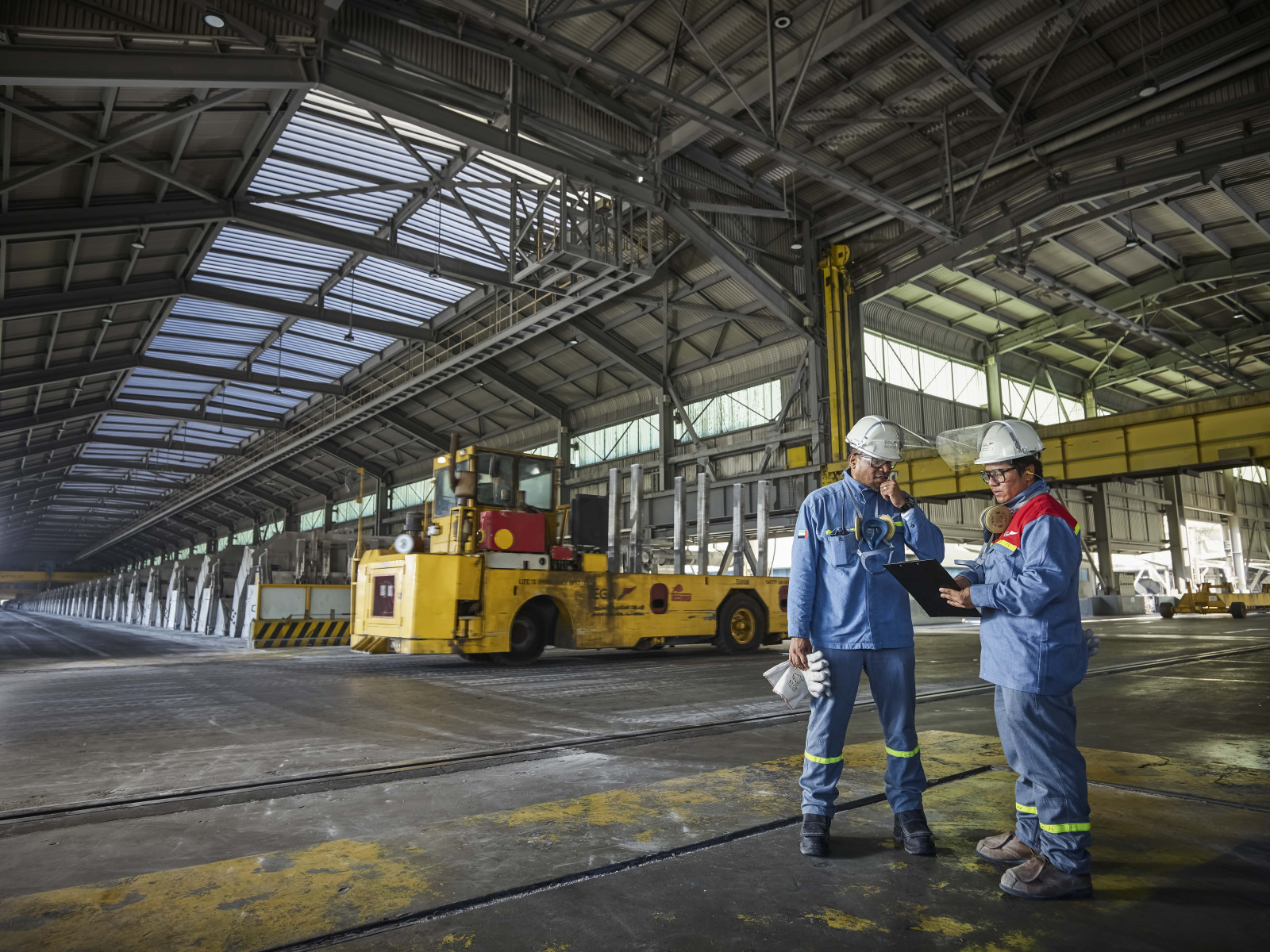
EGA’s Al-Taweelah restoration reaches 25% completion
27 August 2026
A MEED Subscription...
Subscribe or upgrade your current MEED.com package to support your strategic planning with the MENA region’s best source of business information. Proceed to our online shop below to find out more about the features in each package.
Take advantage of our introductory offers below for new subscribers and purchase your access today! If you are an existing client, please reach out to your account manager.