

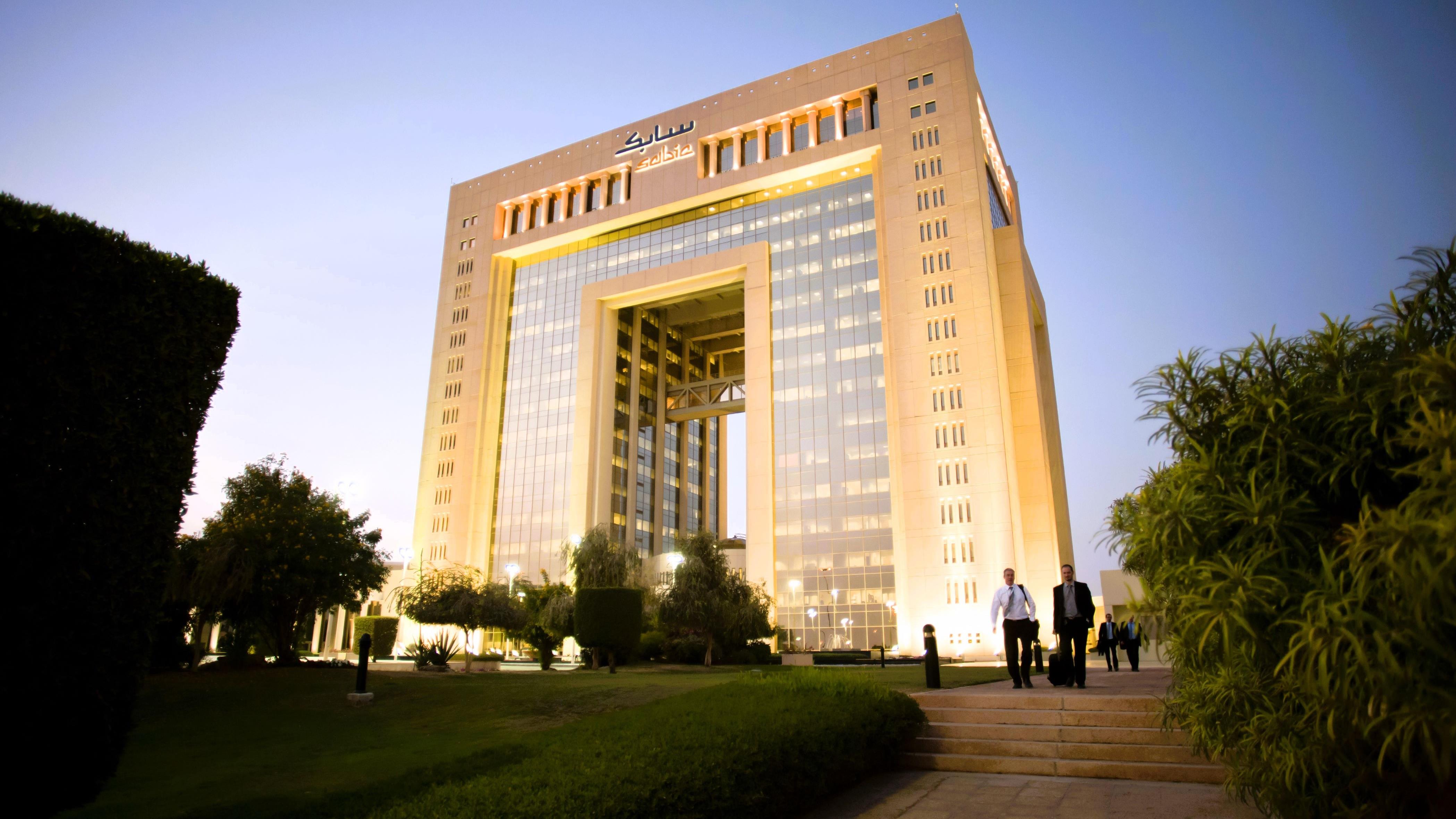
The Saudi petrochemicals giant also said second-quarter revenue fell 5% year-on-year to $6.62bn, due to geopolitical uncertainty, supply disruptions and elevated energy prices
Saudi Basic Industries Corporation (Sabic) has reported a net loss of $100m for the second quarter of 2026, which it attributed to the impact of the Iran-US regional conflict on its business.
The company had only returned to profit in the first quarter, registering a net income of $3.52m, after posting a full-year 2025 loss of $6.87bn.
The Saudi petrochemicals giant also said Q2 2026 revenue fell 5% year-on-year to $6.62bn.
Sabic posted adjusted earnings before interest, taxes, depreciation and amortisation (Ebitda) of $900m for the three months to 30 June, a drop of 18% compared to the previous quarter.
Adjusted earnings before interest and taxes in Q2 also fell by 72% quarter-on-quarter to $110m, while adjusted earnings per share stood at $0.03.
Saudi Exchange-listed Sabic said its net debt position remained largely unchanged at $730m at the end of June, compared with $740m at the end of March.
“In the second quarter of 2026, Sabic delivered a resilient operating performance and continued to meet its strategic priorities, navigating a market shaped by geopolitical uncertainties, supply disruptions and elevated energy prices. Our focus remained on disciplined execution, operational excellence, portfolio optimisation, corporate transformation, and selective growth to create sustainable long-term value,” Faisal Mohammed Alfaqeer, Sabic’s CEO and executive board member, said.
“While the current market environment continues to be challenging, our strong balance sheet and disciplined approach to capital allocation enable us to remain resilient while continuing to create value for our shareholders,” Alfaqeer added.
Sabic announced $880m in dividends for the first half of 2026. “We continue our long-standing dividend track record even as we preserve flexibility to support our strategic priorities for long-term value creation,” the CEO said.
“At the same time, our corporate Transformation Programme continues to deliver recurring Ebitda improvements, realising $547m during the first half of 2026, maintaining our track toward our cumulative $3bn annual target by 2030,” he said.
“Despite the geopolitical circumstances during the concluded quarter, our resilient supply chain management successfully adapted to changing trade flows. The volume of polymers shuttled from the kingdom’s east to the west more than doubled.
“Through close collaboration with our partners and the utilisation of the newly launched Red Sea Express container service, we maintained reliable service for our customers.”
“Additionally, Sabic Agri-Nutrients completed its first shipment of bagged and solid bulk urea via the west coast, further strengthening its global supply network and supporting food security,” Alfaqeer said.
Portfolio optimisation
Sabic said its transactions to divest its European Petrochemicals business and its Engineering Thermoplastics business in the Americas and Europe are progressing towards completion as planned.
The company entered into those two transactions to divest its European Petrochemicals business to Aequita and its Engineering Thermoplastics business in the Americas and Europe to Mutares, for a total combined enterprise value of $950m, in January this year.
Aequita and Mutares are venture capital and private equity firms based in Munich, Germany.
The divestment transactions are part of its broader portfolio optimisation programme, Sabic had said earlier.
Additionally, in line with the programme, Sabic announced reaching an agreement on the key terms for combining its equity stakes in midstream firms Sabtank and Chemtank through a share exchange, subject to customary regulatory approvals and other closing conditions.
Sabic Terminal Services Company, or Sabtank, is a Saudi Arabia-based joint venture between Sabic and Royal Vopak, which operates storage and export terminal facilities at King Fahd Industrial Port in Jubail, as well as in Yanbu, in partnership with Netherlands-based Royal Vopak.
Jubail Chemical Storage and Services Company (Chemtank) operates a bulk liquid chemical storage terminal with a capacity of 568,000 cubic metres, also at King Fahd Industrial Port in Jubail. Sabic holds a 58% stake in Chemtank, with Vopak owning 22% and Jubail Yanbu Investment Company (JYIC) holding the remaining 20%.
“This transaction is expected to maximise operational efficiency, strengthen the terminals’ strategic positioning, and create a national petrochemicals logistics champion,” Sabic stated.
ALSO READ:
You might also like...

Riyadh looks to reset its regional defence outlook
11 September 2026

Construction begins on Dubai Creek Gardens project
11 September 2026

EGA completes majority stake acquisition in Italian firm
11 September 2026

Consultant wins Dubai Al-Maktoum airport metro link
11 September 2026


A MEED Subscription...
Subscribe or upgrade your current MEED.com package to support your strategic planning with the MENA region’s best source of business information. Proceed to our online shop below to find out more about the features in each package.
Take advantage of our introductory offers below for new subscribers and purchase your access today! If you are an existing client, please reach out to your account manager.