


With progress finally being made on renewables projects in the kingdom, the Middle East alternative energy market has become the most interesting in the world
After five years of disappointment, 2016 may finally be the year in which Saudi Arabia makes progress with renewable energy.
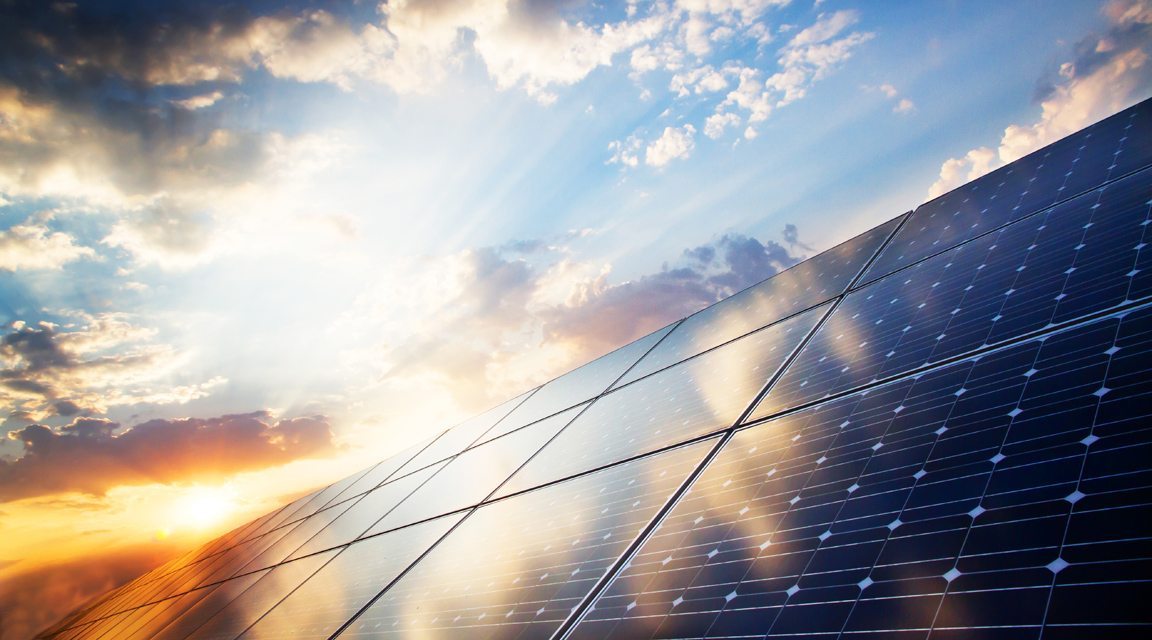
Following the award of two major integrated solar combined-cycle (ISCC) power plants in the final months of 2015, state utility Saudi Electricity Company (SEC) has started the procurement process for its first three major alternative energy projects.
The utility has invited consultants to submit proposals by the end of January for two solar plants and a wind scheme, the first major standalone renewables projects that have been brought to the market. Those in the regional and international renewable energy sectors hope Riyadh is ready to embark on a substantial programme.
With [a renewables programme in] Saudi Arabia, the Middle East alternative energy market goes from one of the most interesting to the worlds most interesting market, says Sami Khoreibi, CEO of Environmena, a UAE-based solar manufacturer and engineering, procurement and construction (EPC) contractor.
Slow progress
Following the establishment of the King Abdullah City for Atomic and Renewable Energy (KA-Care) in 2010, the kingdom detailed plans of an ambitious 54GW renewable energy programme in 2013. However, following the release of a draft white paper laying out a blueprint for the initial schemes, the plans stalled and no further progress was made.
MEED reported in early 2015 that the kingdom was downsizing its renewables programme, and the responsibility of developing alternative energy was likely to rest with SEC and state oil major Saudi Aramco, with KA-Care unable to make any progress with implementing projects.
In 2015, SEC was able to successfully award contracts for the 550MW Duba 1 and 1,380MW Waad al-Shamal ISCC power plants, which will have solar power components of about 50MW each. Both of the schemes were tendered and awarded as EPC deals.
This has provided the foundations for SECs standalone renewables independent power projects (IPPs), the first of which are likely to be tendered in 2016.
| SEC planned new capacity by year (MW) | |||||||||
|---|---|---|---|---|---|---|---|---|---|
| 2016 | 2017 | 2018 | 2019 | 2020 | 2021 | 2022 | 2023 | 2024 | |
| Qurrayah (steam turbine) | |||||||||
| PP12 | |||||||||
| Duba | 600 | ||||||||
| PP13 | 1,800 | ||||||||
| Shuaiba | |||||||||
| PP14 | 1,755 | ||||||||
| North Qassim | 1,800 | ||||||||
| South Medina (Taiba ISCC) | 3,780 | 1,800 | |||||||
| Waad al-Shamal | 1,050 | ||||||||
| PP15 | 1,800 | 1,800 | 1,800 | ||||||
| PP16 | 1,200 | 600 | 1,200 | ||||||
| Al-Kharj | 500 | ||||||||
| Al-Rays | 1,800 | 1,800 | |||||||
| Ras Abu Qumais | 1,800 | 1,800 | |||||||
| Ras al-Khair | 1,800 | 1,800 | 1,800 | ||||||
| ISCC=Integrated solar combined-cycle. Source: SEC | |||||||||
While the first three projects, two 30-50MW photovoltaic (PV) solar plants and a 10-50MW wind project, are small in size in comparison with some of the schemes in neighbouring GCC countries such as the UAE, the news that the kingdom is finally making a start on utility-scale renewables projects has been welcomed by solar companies and developers.
They are quite small, but it is good news [Saudi Arabia] is moving forward with them, a major international developer told MEED at the World Future Energy Summit (WFES) in Abu Dhabi in January. It is great that they are IPPs as we were not sure whether SEC would move ahead with EPC or the private developer model. This is what the market has been waiting for.
Robust demand
The start of its renewables programme is part of the kingdoms efforts to ensure generation capacity stays ahead of demand, which is continuing to grow at a robust rate.
| Saudi power demand | |
|---|---|
| Demand (MW) | |
| 2000 | 21,000 |
| 2010 | 43,000 |
| 2020f | 85,000 |
| 2030f | 120,000 |
| f=Forecast. Source: SEC | |
Peak power consumption growth has averaged 7 per cent a year in Saudi Arabia over the past six years, but has fluctuated quite significantly since 2010. After increasing by 10 per cent in 2010 due to unusually high summer temperatures and robust economic expansion, growth slowed to 5 per cent in 2011, before picking up again to reach 8 per cent in 2012.
| Saudi peak electricity demand growth (%) | |
|---|---|
| 2008 | 7 |
| 2009 | 8 |
| 2010 | 10 |
| 2011 | 5 |
| 2012 | 8 |
| 2013 | 3.7 |
| 2014 | 5 |
| Source: MEED | |
Due to a cooler summer, in 2013, peak consumption fell to 3.7 per cent, but rose to 5 per cent in 2014, with peak demand reaching 56,547MW. In August 2015, peak consumption reached 62,260MW, its highest ever and a 10.1 per cent growth on 2014.
While low oil prices have raised some concerns about the prospects for downstream petrochemicals and industrial projects, rapid population growth will continue to drive demand for power. The kingdoms Electricity & Cogeneration Regulatory Authority (Ecra) forecasts that demand will average 4.5-5 per cent up to 2030.
While the renewables projects will be welcomed, the majority of power generation projects in the next eight years will be conventional thermal-powered schemes.
New capacity
The kingdoms generation sector will have recorded a large step-up in capacity by the second quarter of 2016, with 10,711MW of new capacity due to have been added to the grid since the same period in 2015.
More investment is set to follow. In total, SEC is planning to oversee the development of an additional 47,711MW of new generation capacity by 2024, as part of plans to meet future demand.
The largest schemes in the tendering process are the 1,200-1,600MW Fadhili cogeneration IPP and the 3,780MW Taiba ISCC.
The four bidding consortiums are awaiting a decision on the Fadhili power and steam project, with commercial bids having been submitted on 1 November.
The project is the kingdoms first IPP since the award of Rabigh 2 in late 2013. It is being jointly developed by Aramco and SEC, with the state oil firm set to be the offtaker for the steam and SEC to buy the produced electricity.
For the Taiba ISCC, bidders are due to submit proposals in mid-February. The plant will contain a combined-cycle capacity of 3,600MW as well as a 180MW solar component. It will be one of the largest generation facilities in the kingdom, and will cost upwards of $3bn to build.
The plant is being procured using the same model that was used for the Duba 1 project, where the EPC contract and original equipment manufacturer (OEM) contract were tendered separately.
Nuclear plans
In addition to conventional and renewables projects, Riyadh is seeking to implement nuclear power on a large scale to meet future demand.
As with the renewables programme, KA-Care has made little tangible progress with the countrys nuclear energy programme. In September 2012, the authority appointed a group of advisers to work on plans to develop the programme. They included US management consultancy Oliver Wyman, Frances BNP Paribas and the local Riyad Bank. There has been little further information released about the programme since then.
However, according to sources within the kingdoms utilities sector, Riyadh is still committed to delivering a sizeable nuclear power programme, with up to 16 reactors across the kingdom proposed to provide upwards of 17,000MW of power by 2032.
It is understood within the kingdoms energy industry that SEC and Aramco are among the companies in consultation with the government regarding a nuclear power programme. KA-Care is reportedly being lined up to become the regulator for the sector.
As with much of Saudi Arabias development projects and infrastructure programmes, the key to succeeding with the ambitious power programme is securing financing to fund multibillion-dollar schemes in the era of lower-priced oil.
While SEC and the countrys desalination company, Saline Water Conversion Corporation (SWCC), managed to successfully implement several large-scale utility plants using IPP and independent water and power project (IWPP) models from the turn of the century, in recent years project owners have moved back towards government-funded EPC contracts.
However, the decision to push ahead with the first renewables projects using the IPP model shows that Riyadh is keen to reduce capital spending as much as possible. This will ensure the regions largest power market will remain a key focal point for regional and international developers and investors.
You might also like...
July 2026: Data drives regional projects
27 July 2026
Kuwait signs $16bn oil pipeline infrastructure deal
27 July 2026
A MEED Subscription...
Subscribe or upgrade your current MEED.com package to support your strategic planning with the MENA region’s best source of business information. Proceed to our online shop below to find out more about the features in each package.
Take advantage of our introductory offers below for new subscribers and purchase your access today! If you are an existing client, please reach out to your account manager.