

By having one computer system across its many downstream operations, state oil giant Saudi Aramco has improved efficiency and reduced technology costs.
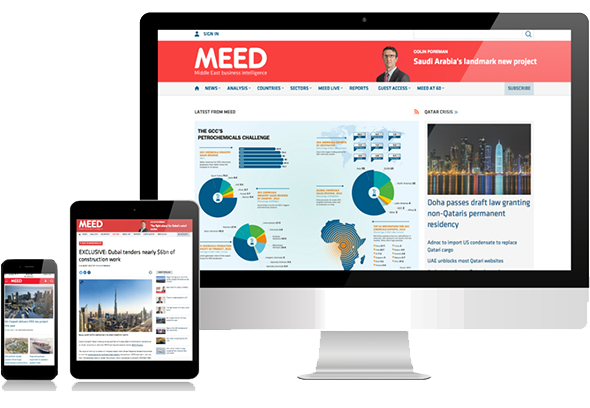
Dhahran, a town of 100,000 people on the Gulf coast, is home to the computer systems that oversee the world’s largest oil distribution network. The town, just south of the major Eastern Province city of Dammam, has been the centre of the Saudi oil industry since the 1930s, when Standard Oil of California, now known as Chevron Corporation, first discovered oil in the area.
That first well has been producing oil ever since, earning it the nickname ‘Prosperity Well’. It is here that Saudi Aramco built its headquarters. Since 2003, these have included its computer centre, the facility that manages the movement of oil throughout the oil giant’s distribution business.
In the mid-1990s, Aramco’s senior managers decided to improve the efficiency of the oil distribution network by standardising the computer systems and moving them onto a single technology platform provided by SAP, a German business software supplier. Between 1997 and 2003, the company implemented the SAP R/3 computer system, an enterprise-resource planning (ERP) system, in three stages across every part of its downstream business.

Moving functions
First Saudi Aramco’s human resources function went live with SAP R/3 in November 1999. Then the company’s product and sales function, including hydrocarbons management, switched to SAP in November 2001. Aramco’s remaining core functions moved from their old computer systems onto SAP in 2003.
In the final push, Aramco introduced SAP R/3 into its finance and accounting, materials supply, plant maintenance, contracting and procurement, warehousing, projects and capital planning, and knowledge management divisions. The company also started to use SAP Business Warehouse, a computer system that stores the data processed by all the other computer systems used in the company. Aramco’s senior executives used SAP Business Warehouse to directly analyse the company’s performance.
While other oil companies have standardised enterprise resource planning (ERP) systems from SAP, or its main rival, US firm Oracle, Saudi Aramco’s implementation has covered more assets in more countries than any of the ERP projects carried out by its rivals. About 23,000 of Aramco’s 56,000 employees use SAP R/3.
The computer system has been implemented at five refineries, five natural gas liquids plants, more than 30 gas-oil separation plants, 31 bulk plants, three marine terminals, 11 airports, the company’s entire network of pipelines, its fleet of crude oil carriers and all its service stations.
SAP R/3 has gone live in 200 of Aramco’s major locations worldwide.
The SAP project gives Aramco immediate benefits by enabling it to abandon more than 170 legacy IT systems, which comprised about 75 per cent of its systems infrastructure, says Ahmed al-Zayyat, general manager of the SAP Computer Centre. By reducing its number of software licences, Saudi Aramco has lowered its technology costs.
Sharing information
The oil giant has also saved money because it no longer needs to employ IT specialists who understand how to support 170-plus legacy computer systems. Instead of continuing to fund an IT department with a diverse set of skills, Aramco has built a centre for SAP experts - the SAP Computer Centre - at its headquarters in Dhahran.
The biggest benefits come from joining up the computer systems used by all the different parts of the downstream business. Aramco’s oil distribution network has become more efficient because the different parts of the business are able to share information.
“Over the years, separate departments involved in hydocarbons supply chain management had developed their own applications and created islands of information,” says Al-Zayyat. “We implemented several SAP applications focused on supply chain management for the oil and gas industry to pull everything together.”
The result is that applications and data across 11 functions are now integrated. “This has produced a marked improvement in our operational efficiency and enhanced our optimisation and decision-making around hydrocarbons production and sales,” says Al-Zayyat.
Saudi Aramco has used SAP to manage its business processes more effectively. Using the ERP system, Saudi Aramco’s sales function can view the movement of customer orders from oil tankers to terminals when they arrive at their destinations.
“SAP Oil & Gas allows us to manage and execute bulk supply chain activities - from planning through to final settlement - as a seamless, end-to-end process,” says Al-Zayyat.
“It allows us to manage downstream marketing activities covering tanker allocation, terminal management, berthing and customer sales. With SAP, we can align supply and production plans with market demand and achieve optimum results, benefiting our business and customers.”
Because all 11 functions in Aramco’s downstream business can view customer orders, they can identify bottlenecks and problems in the company’s business processes.
Eliminating paperwork
The ERP system also helps the company comply with regulations and requirements set by customers because it records everything that happens in the oil distribution network.
“Using SAP applications, we have eliminated paperwork, eradicated duplication of data entry, and replaced the previous silos of information,” says Al-Zayyat.
“Everyone now works with the same data and we have a solid audit trail and full control over the information flow. From one order number, users can track everything connected with that transaction online, right through to final billing and settlement.”
The SAP system encountered great hostility when it was introduced. The 11 major business functions that implemented SAP had developed their own software systems over many years. Some did not want to surrender control of their computer systems to the SAP Computer Centre.
“There was resistance in the beginning to an integrated system in which information had to be shared,” says Al-Zayyat. “SAP has forced us to share business knowledge and co-operate. It has helped us to switch our mindset to a corporate outlook.”
The system has also come under greater pressure since it went live in 2003. Saudi Aramco exported 8.6 million barrels of oil a day (b/d) when the system went live. Currently, the company exports 11.3 million b/d. By 2009, Aramco says it will export 12.5 million b/d.
Further pressure on the existing computer systems could occur later in 2008 if Opec decides to increase production at its meeting in February. Opec president and Algerian Oil Minister Chakib Khelil says the cartel could increase output because it fears a cold winter will increase global demand.
If Opec decides to export more oil, Aramco’s share of global production - it is already the world’s largest oil producer, with 11 per cent of global output - will increase further. Aramco can use the existing system to help it manage the greater volume of oil it could export. In early 2007, the company upgraded from SAP R/3 to a new version of the ERP system called mySAP. The new ERP system enables Aramco’s IT department to make changes to software more quickly than before.
In some cases, staff will be able to re-use parts of their existing software instead of having to write new code. Re-using software will save Aramco time and money as its IT department tries to scale up the ERP system to manage the distribution of even more oil.
The SAP system will also be extended into the areas of the business that still use their own software, says Ibrahim Mishari, Aramco’s vice-president of IT. “SAP upgrades are part of the capital budget going forward,” says Mishari. “The upgrades will address areas that were not in the original scope of work because the software for them was not available at the time, or because the company was not doing that particular function at the time the project began.”
The company’s preparation for the extra oil exports will include greater spending on external systems integrators - businesses that make their money implementing software at other companies. Aramco used Atos Origin Middle East, a French company that was acquired by private equity, to implement SAP R/3. The same systems integrator, which was acquired in late 2007 by the US’ Hewlett-Packard Company (HP), has continued its relationship with Saudi Aramco and is well placed to win new work, says Ken Willett, managing director in the Middle East for HP.
“Aramco is the ideal customer to have,” says Willett. “From an IT perspective, the investment levels, from customers such as Aramco and Sonatrach in Algeria, are going up substantially. Systems integration is the area where we see ourselves vastly increasing our services footprint. The fast-growing bit of the business is systems integration and outsourcing. The acquisition of Atos Origin Middle East dramatically increases our prospects in outsourcing.”
Standardising processes
Whatever Aramco decides to do with its IT systems next, the company has options. Multi-national companies in other sectors have used ERP systems to standardise business processes in all their locations around the world. Aramco has implemented the same software at its international operations, but has yet to use the common software platform to introduce standardised ways of working in each location.
UK supermarket chain Tesco is halfway through a project to introduce common IT systems and ways of working at all its stores worldwide. Once the stores carry out processes such as replenishment and in-store display in the same way, the company will be able to introduce new ideas and new processes globally whenever it wants. It could roll out upgrades every three months if necessary.
Nothing is stopping Aramco from using its SAP technology platform to roll out similar quarterly upgrades to business processes.
You might also like...



A MEED Subscription...
Subscribe or upgrade your current MEED.com package to support your strategic planning with the MENA region’s best source of business information. Proceed to our online shop below to find out more about the features in each package.
Take advantage of our introductory offers below for new subscribers and purchase your access today! If you are an existing client, please reach out to your account manager.