

Allan Fowlie, CEO of consultancy Tiller, explains the differences between federal Iraq and the Kurdistan region
Business environment
The Kurdistan Regional Government (KRG) has wholeheartedly encouraged development in the semi-autonomous northern region of Kurdistan through, among other things, the passing of two significant pieces of legislation: a business-friendly investment law in 2006 and a petroleum law based on production sharing in 2007. These laws, combined with the developments outlined below, have proved important to the development of the Kurdistan region, which as a result is experiencing significant and rapid growth.
The Kurdistan region is a friendly and business-minded place in which to work and live
Allan Fowlie, Tiller

By 12 January 2014, the investment board had approved 642 projects with a capital value of $36.4bn, which encourages schemes in the following sectors: manufacturing, power generation, agriculture, tourism, health, environment, science and technology research, education, information technology, communications, transport, banking, insurance, housing, roads and bridges, irrigation and dams.
The Ministry of Natural Resources website lists 41 production-sharing contracts signed by 28 January 2014. The small pioneer oil companies are now being joined by supermajors.
The Kurdistan region is a friendly and business-minded place in which to work and live. A sign of the open-for-business approach is that citizens of Europe, Australia, New Zealand, the US and Canada are issued with a two-week visit visa stamp on arrival, with no requirement to arrange a visa before departing from their home country.
Setting up a business
Anyone carrying out business in Iraq must do so through a registered corporate entity. The most common corporate forms used are branch offices (of foreign-registered companies) and limited liability companies. In practice, separate registrations are required in both the Kurdistan region and in federal Iraq.
Income Tax
Income tax is applied to all types of income arising in Iraq, regardless of where payment is made and where contracts are signed. In the Kurdistan region, a corporate tax registration can commence irrespective of whether corporate registrations (at Companies Registry) are up to date or not. Unlike in federal Iraq where a power of attorney (POA) is required, an authorisation letter is all that is needed in order for the tax registration to begin. The authorisation letter need not be notarised or legalised, as would be the case with the POA. A signature from a duly authorised officer and a corporate seal is sufficient to validate the letter.
The corporate income tax (CIT) rate is currently a flat 15 per cent on the net income of all companies. The deadline for filing CIT returns in Kurdistan is one month later than in federal Iraq, on 30 June. Petroleum companies that have signed a production-sharing agreement have been given a contractual assurance that the KRG will pay their CIT liability, rather than receiving an explicit CIT exemption.
Corporate tax losses can, in law if not always in practice, be carried forwards for a maximum of five consecutive years, with the following provisos:
- No more than half of any years taxable income can be offset
- Any loss is only deducted from the same source of income from which it is being offset.
There are currently no specific transfer-pricing guidelines. However, the Iraqi tax authorities reserve the right to adjust the taxable profits of an entity if they consider the amounts recorded to be unreasonable.
Personal income tax and social security tax
In the Kurdistan region, the official personal income tax (PIT) is 15 per cent, but in practice the tax authorities usually apply a reduced flat rate of 5 per cent based on an exemption applicable to specific personnel. There is also a monthly tax-free allowance of ID1,000,000 ($850). In addition, tax-free allowances can be given to cover food, transportation, clothing, hardship, hazard and relocation. Unlike in federal Iraq, there is no guide on the portion of total remuneration that can be paid in allowances, but most firms follow the federal Iraq model of 30 per cent. Another difference is that there is no requirement to register for PIT and it is paid only annually by employers as part of their yearly account submission.
Upon hiring its first employee, generally at formation, a company must register for social security and pension contributions (SSPC) at the General Directorate for Labour and Social Security (affiliated to the Ministry of Labour and Social Affairs) in the Kurdistan region. SSPC rates are the same as in federal Iraq with the major exception being that in federal Iraq, there is a higher rate of 25 per cent for oil firms. Expatriate staff can gain an exemption from SSPC, which is currently 12 per cent employer and 5 per cent employee. Employers must register non-Iraqi workers and apply for an exemption, rather than simply not declaring them.
Other Taxes
There is no capital gains tax in the Kurdistan region; gains are taxed as regular income. Also, there is currently no withholding tax applied to contract payments, unlike in federal Iraq, where there is a top rate of 7 per cent for oil companies. Moreover, there is no sales tax, value-added tax (VAT) or goods and services tax.
Tax incentives
There are several tax breaks offered to investment schemes approved by the Kurdistan Board of Investment. The key features of these are:
- Project income is exempt from tax for 10 years from the start of service provision or production;
- An exemption from import duties, taxes and licences on vehicles and equipment is available, provided they are imported within two years of approval;
- Raw materials and equipment used in production get relief from customs duty up to 15 per cent of project costs;
- The government allocates free or reduced-price land to investment schemes, with foreign and local investors equally entitled to buy and completely own land, although investors may not own land containing oil, gas or mineral resources;
- Projects can be fully foreign-owned and foreign investors are free to repatriate profits in full.
Key contacts
Kurdistan Board of Investment
Tel: (+964) 66 253 1559
Ministry of Natural Resources
Web: www.mnr.krg.org
Ministry of Labour and Social Affairs
Web: www.molsa-krg.com (Arabic only)
About the writer
Allan Fowlie is CEO of Tiller, which has been operating for more than 10 years, specialising in tax, accounting, compliance and advisory services in Iraq, including the Kurdistan region.
Email: allan.fowlie@tillerandco.com Web: www.tillerandco.com
Kurdistan Board of Investment
The Kurdistan Board of Investment (BOI) helps drive investment in the region, both domestically and from abroad. Using a one-stop-shop concept, it provides assistance to firms wishing to set up in the region and helps them liaise with ministries and other government bodies. It publishes guides to investment highlighting not only existing projects, but also sectors and subsectors where development is encouraged.
The BOI is responsible for issuing investment licences that grant benefits such as cheap land, tax exemptions and provision of public infrastructure to projects. It also evaluates project proposals, decides on eligibility and facilitates land allocation. However, it does not offer direct financial support.
There is a six-stage process for investors wishing to gain a licence:
- Submission of an investment proposal at a BOI office
- First assessment of submitted proposal for eligibility to receive public benefits
- Land allocation for approved projects and submission of detailed plans
- Second assessment and licensing
- Construction commencement and completion in compliance with BOI licence
- Commencement of operations in compliance with BOI licence
Disclaimer
The contents of this article, current at 25 January 2014, are for reference purposes only. They do not constitute legal or tax advice and should not be relied on as such. Specific legal advice about your specific circumstances should always be sought separately before taking any action based on this publication.
You might also like...
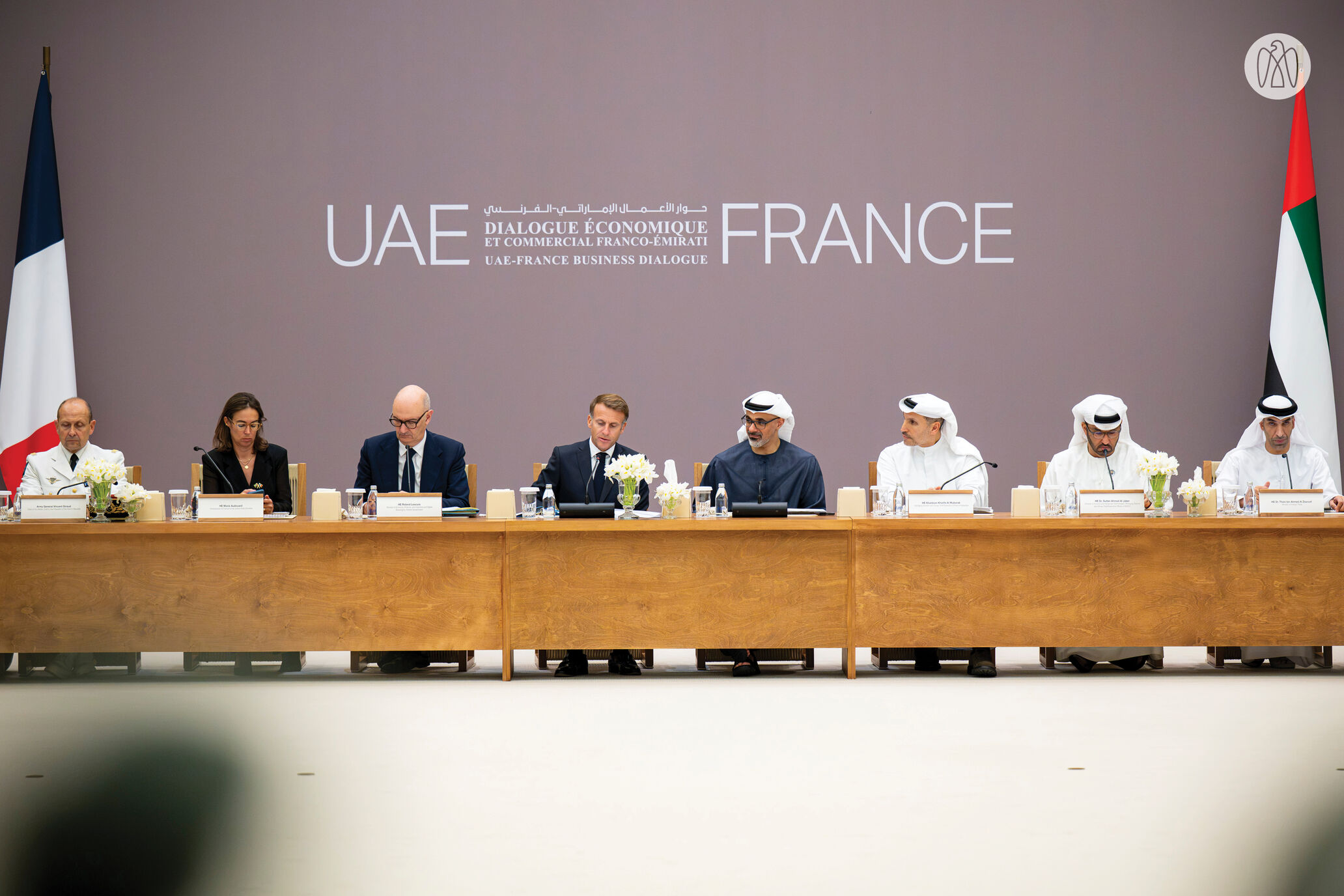
Adnoc Refining and Technip Energies sign pair of agreements
22 October 2026
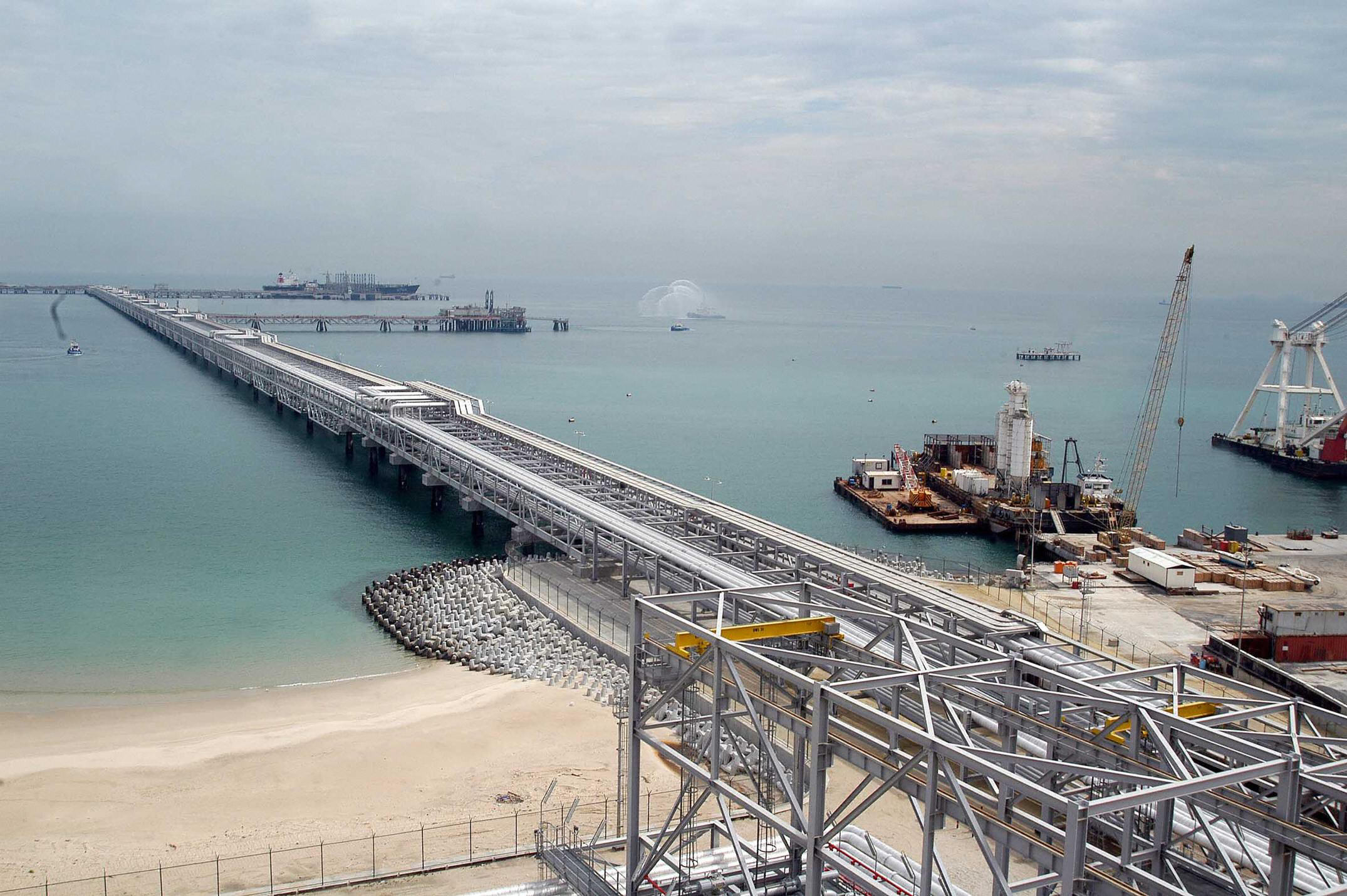

AI data centre boom strains the foundations of construction
22 October 2026
Brent hits $112 a barrel following Saudi oil field attack
22 October 2026





A MEED Subscription...
Subscribe or upgrade your current MEED.com package to support your strategic planning with the MENA region’s best source of business information. Proceed to our online shop below to find out more about the features in each package.
Take advantage of our introductory offers below for new subscribers and purchase your access today! If you are an existing client, please reach out to your account manager.