

Manufacturing is not the key to economic diversification, says one analyst
Diversification has long been a buzzword in the GCC, a region known worldwide for its economic reliance on the extraction and export of oil and gas.
The six-country bloc experienced a boom period between 2003 and 2013 and, in the last four years of this period, enjoyed $100-a-barrel-plus crude prices as the rest of the world struggled to recover from the economic downturn.
All through the boom years, governments emphasised the importance of industrial diversification to create jobs for nationals and lessen the shock of oil price slumps.
But with crude prices dropping 70 per cent since the middle of 2014, the success of these diversification efforts has been left exposed. Have governments done enough to offset a downturn in crude prices, and what is still left to be done?
In 2014, when the Brent crude price averaged $99 a barrel, Saudi Arabias oil GDP represented 44 per cent of the economy. The sale of hydrocarbons, including crude, refined products and petrochemicals, represented 85 per cent of export revenues and 90 per cent of public revenues.

Ras Tanura refinery
Ras Tanura refinery
Deceptive breakdown
With oil prices averaging $52 a barrel in 2015, the GDP breakdown gives the appearance that oil-exporting economies are now more diversified. But in reality, it has caused an overall plunge in government revenues, exposing the limited revenue contributions from non-oil industries.
Governments have reacted to the crude price shock in a variety of ways, including cutting spending, raising fuel prices and agreeing a date to introduce value-added tax (VAT). Saudi Arabia is preparing to unveil its National Transformation Plan, which will include asset sales, tax increases, a change in the way the state controls its financial assets, and measures to boost the role of the private sector.
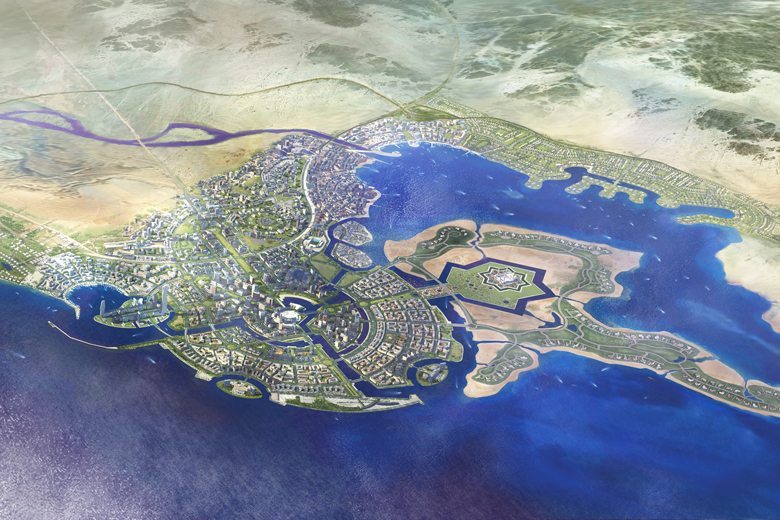
The kingdoms diversification strategy has hit a few false starts along the way. Up until 2012, the main focus for the Saudi General Investment Authority (Sagia) the licensing body for foreign investments was the development of six new economic cities across the country.
These schemes have been significantly delayed and the priority appears to have shifted to attract technology-based industries, specifically small- and medium-sized enterprises (SMEs) that can transfer know-how to the economy.
SME jobs
Speaking at the Saudi Downstream conference in Al-Jubail in March, the CEO of Saudi Basic Industries Corporation (Sabic) Yousef al-Benyan emphasised the importance of the private sector to create jobs for the growing number of young Saudi nationals.
There is a significant increase in the number of new Saudis in the workforce in the coming years, both men and women. Job creation must be led by the private sector and, critically, SMEs, said Al-Benyan.
The CEO revealed that SMEs contribute just 25 per cent of overall job creation in Saudi Arabia, far below the average for the worlds largest economies. SMEs contribute to 75 per cent of jobs in China, 70 per cent in the US, and in Europe 67 per cent of the workforce is employed by SMEs.
A recent study by UK consultancy EY shows the GCC countries have reached different stages of diversification. The groups Diversification tracker showed the UAE is ahead of some larger economies such as Brazil and Canada in terms of diversification. However, the GCC as a whole trails the high-income OECD countries and large emerging markets by some distance.

Qatar rig
Qatar rig
Saudi Arabia lags in terms of diversification, but shows a similar level of economic complexity as the UAE, while Qatars non-oil economy is rapidly growing, albeit with only a tiny contribution from private sector spending reflecting a continued reliance on government oil and gas revenues, EY said.
If the GCC countries were to achieve the average OECD level of diversification, this would correlate with an increase in real GDP of 1.6 per cent, seeing the GCC economy gaining $17.7bn.
Inconsistent efforts
Economic diversification over the past 20 years has been patchy at best and inconsistent, EY partner Michael Hasbani tells MEED.
Structural reforms are needed to eliminate any sense of protectionism and allow a more vibrant and younger generation to have more opportunities. When you allow foreign direct investment [FDI] to come in, it brings in the power of innovation, the power of free thinking and subversive thinking about breaking frameworks and ways of doing things.
Much of the focus attempting to diversify the economy in Saudi Arabia has been on downstream manufacturing industries. The kingdom has built up large petrochemicals, metals and fertilisers industries based on access to large volumes of low-cost gas for power and feedstock.
The success of these policies hinges on investment in developments such as the PlastChem Park, built next to Sadara Chemical Companys complex in Al-Jubail. Sadara, which has already began to start up plants, is the largest petrochemicals project ever undertaken in the Middle East and will produce a range of chemicals in the kingdom for the first time.
PlastChem Park hopes to attract industries to convert these chemicals into intermediates and finished products. Despite Sadara being close to completion, only two firms have been announced to set up in the industrial park. A joint venture of the US Haliburton and Abu Dhabi National Energy Company (Taqa) will produce oil and gas chemicals at the site, while the local Juffali will produce construction materials and auto fluids and components.
According to Saudi Aramco, one of Sadaras joint owners, the Saudi petrochemicals industry doubled employment to between 2007 and 2014 to 89,100, while almost doubling the value added to the manufacturing industry to $81bn.
Evaluating sectors
According to EY, several things need to be considered when looking at GCC manufacturing investments: which sectors can survive without long-term reliance on government support; which industries will affect other sectors and the economy as a whole; and which industries can offer a genuine alternative to public sector employment of Gulf nationals.

Gold mine in Saudi Arabia
Gold mine in Saudi Arabia
Manufacturing per se is not the key to economic diversification, says Hasbani. Manufacturing is important, but shouldnt be the only thing we look at to diversify. We need to be very selective and look at whether an industry we invest in will create upstream or downstream opportunities for the nation.
A key test for the determination of the GCC to diversify is whether efforts are continued if there is an upturn in the crude market. The boom years showed that governments can get complacent when short-term gains are easy to come by, but it is time to show that the Gulfs economies can survive without windfall oil revenues.
You might also like...

Saudi Arabia plans Mecca airport project
02 April 2026
Adnoc’s XRG and OMV establish chemicals giant
02 April 2026
A MEED Subscription...
Subscribe or upgrade your current MEED.com package to support your strategic planning with the MENA region’s best source of business information. Proceed to our online shop below to find out more about the features in each package.
Take advantage of our introductory offers below for new subscribers and purchase your access today! If you are an existing client, please reach out to your account manager.