



Department of Energy says the country could become a net exporter in the next decade
The US lifted its 40-year ban on oil exports on 18 December as part of a $1.1 trillion spending bill that was approved by Congress and is now due to be signed by President Barack Obama.
The ban was introduced in 1975, along with the Strategic Petroleum Reserve, in the wake of the 1973-74 Arab oil embargo, which pushed up oil prices and dealt a blow to the US economy.
Americas Strategic Petroleum Reserve is an emergency stockpile of oil maintained by the US Department of Energy. It has the capacity to hold up to 713.5 million barrels, making it the largest emergency supply in the world.
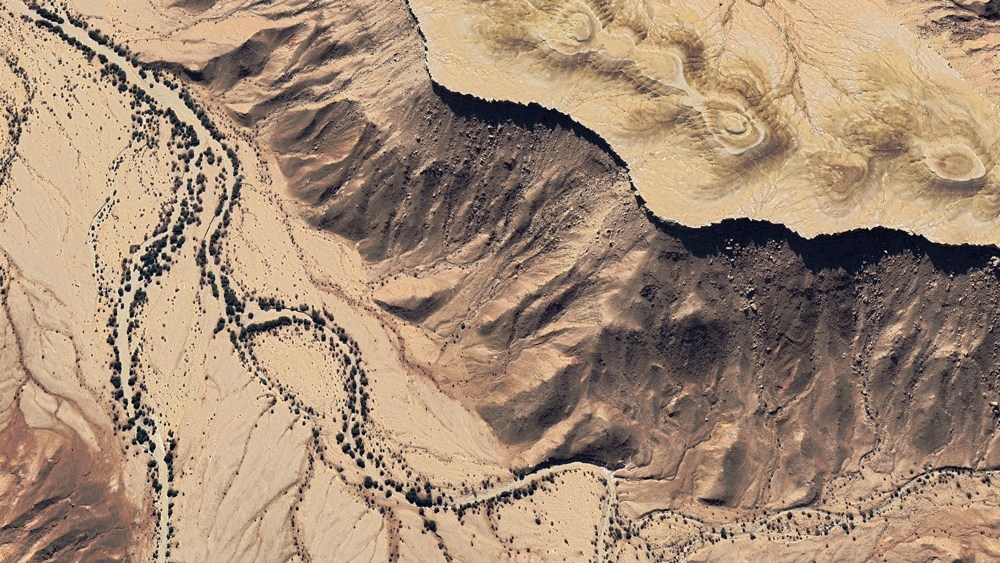
The end of the ban means that the 9.2 million barrels a day produced in the US and the 490.7 million barrels stockpiled commercially are now available for export.
US President Barack Obama still retains the ability to limit exports in the case of a national emergency, or if exports cause domestic oil shortages.
Over recent years, US oil production has boomed due to the rise of new technology that has made it cost-effective to exploit unconventional resources.
The US could become a net exporter of crude oil in the next decade, according to the US Department of Energy.
Lifting the ban is not expected to have a significant impact on global oil prices.
You might also like...

UAE bank asset quality hinges on property market
03 April 2026
Safety and security matters
03 April 2026

Saudi forecast remains one of growth
03 April 2026


A MEED Subscription...
Subscribe or upgrade your current MEED.com package to support your strategic planning with the MENA region’s best source of business information. Proceed to our online shop below to find out more about the features in each package.
Take advantage of our introductory offers below for new subscribers and purchase your access today! If you are an existing client, please reach out to your account manager.