


Qatars success in building the regions first waste-to-energy plant has led to growing interest in the technology as governments look to tackle household waste mountains
Converting municipal waste products into a source of power is an attractive proposition, especially for countries in the Middle East and North Africa, where rapidly expanding cities are putting pressure on both resources and the environment.
Poorly constructed landfill sites and illegal dumps are struggling to contain the regions growing household waste mountain, which in some cities is periodically set alight. The environmental side effects such as air and groundwater pollution are extremely serious and fortunately no longer considered acceptable by governments in the region. As a result, the UAE, Saudi Arabia, Bahrain, Kuwait, Jordan and Egypt are all looking to follow Qatar in implementing waste-to-energy (WTE) schemes as part of their future waste management strategies. But progress has been mixed.
Waste management
WTE is an essential component of an overall waste management system because of its ability to divert waste away from landfill, says Sherien Elagroudy, executive director at the Egypt Solid Waste Management Centre of Excellence. The centre was established in late 2013 with a $1.8m grant from the governments Science & Technology Development Fund and is a joint initiative between Ain Shams University, Cairo University, consultancy Chemonics Egypt and private sector waste management firms, Entag and Ecaru.
Egypt generates 25 million tonnes a year (t/y) of municipal solid waste and 83 per cent of this is openly dumped, 9 per cent composted, 5 per cent sent to landfill and 3 per cent recycled. Urban areas are responsible for about 14 million t/y and this could potentially generate
250-900MW, says Elagroudy.
However, she points out that this is less than 5 per cent of Egypts total current power generation capacity. Add to this the countrys and the regions artificially low energy prices, and WTE does not compete financially as a power source, but it could solve a number of other problems, from freeing up much-needed land to reducing environmental pollution. The energy procured is simply a by-product, says Elagroudy.
The cement industry in Egypt has already begun using waste-derived fuels to supplement gas, with Italys Italcementi, Frances Lafarge, Portugals Cimpor and Mexicos Cemex using either refuse-derived fuels or agricultural waste, which is treated and then combusted, as a source of energy. Beyond this, much work remains to be done before WTE is used throughout the country, starting with a national masterplan that outlines potential projects for each governorate, and the appropriate regulatory and legal framework.
Commercial viability
In terms of technology selection, the options facing Egypt and the rest of the region are multiple, from simple thermal processes where waste is burned to generate steam to power turbines, to more complex methods such as gasification. However, experts warn policymakers to beware of investing in methods that have not demonstrated long-term commercial viability. For example, gasification technology requires a lot of pre-treatment of the waste before it is reacted at high temperature to create a gas mixture known as syngas, which can be used as a fuel.
In order to gasify, you have to pre-treat the waste and when you complete the energy balance, you may see there is no benefit, says Bettina Kamuk, chairwoman of the Vienna-based International Solid Waste Association working group on energy recovery. Sometimes you even use more than you create. Kamuk is also head of the WTE department of Denmarks Ramboll, which is advising Abu Dhabi National Energy Company (Taqa) on a 3,000 tonne-a-day (t/d) facility planned for the emirate.
It is a very complex technology, says Allan Barton, global leader for resources and waste at the UKs Arup. In gasification, you dont just make methane, you make a lot of other things that when they condense form a tar that blocks everything. Gasification with cleaning is the answer and whoever can make it work commercially is going to be very rich.
That is not to say the technologies cannot be used successfully. Gasification is particularly well-suited to uniform waste streams and a number of private industries are working on development projects. But for now, treating municipal solid waste at a city-scale needs proven technology.
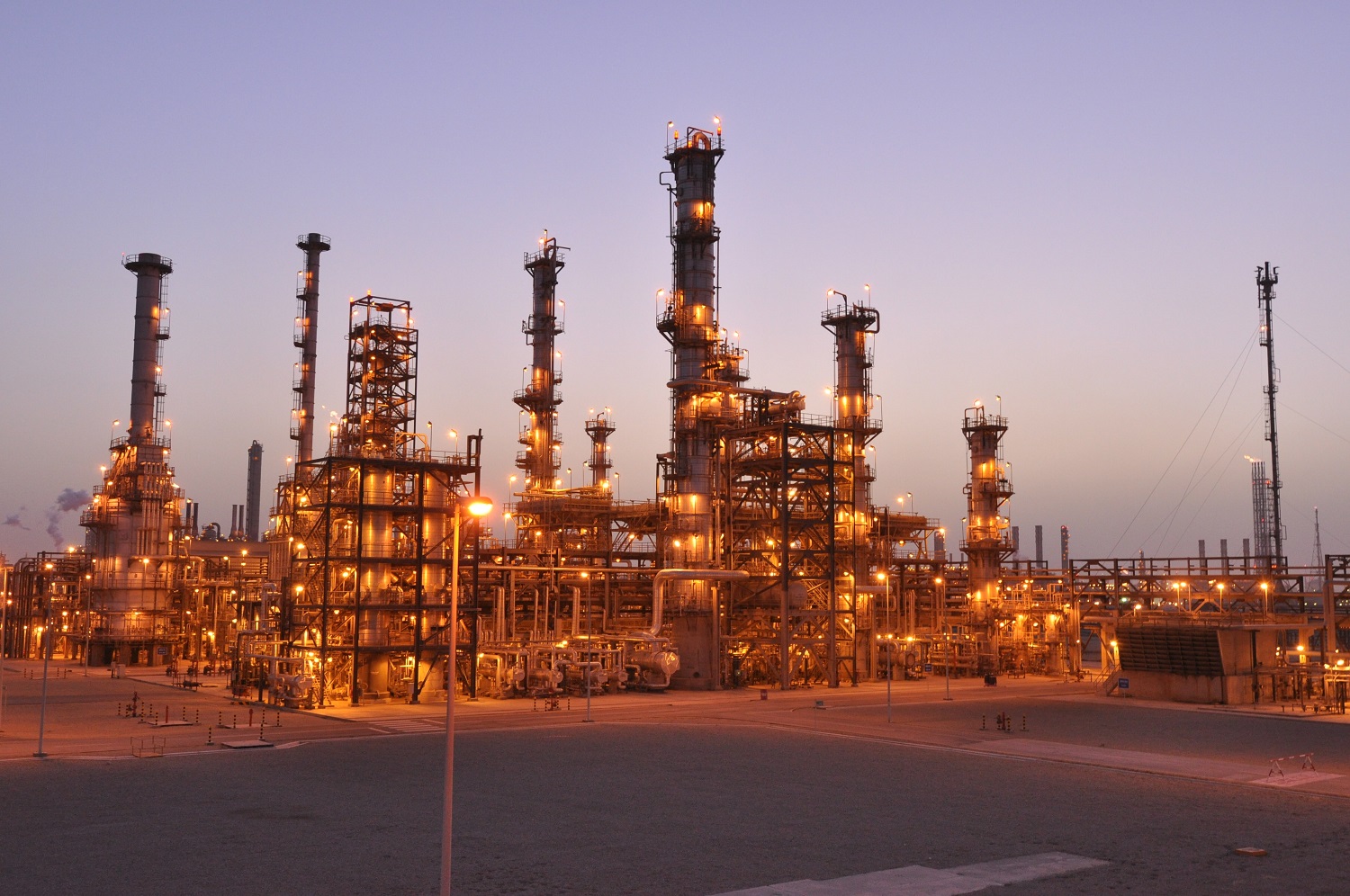
The most common mass-burn plants use a moving grate to slowly propel the waste through an incinerator, and the generated heat passes into an advanced boiler system, which drives a turbine. Flue gases and wastewater are then treated before anything is released. This tried and tested system is being used in the regions first major WTE plant in Qatar, which opened in 2011. Situated at Mesaieed, the 2,300-t/d plant replaced the Um Alafai landfill site and two smaller waste dumps, which had long been a focus of complaint.
Qatari success
The facility consists of a solid waste management centre that sorts waste, separating out anything that can be recycled and removing organic waste to make compost. The remainder, about 40 per cent, is burnt in an incinerator and the energy emitted is used to produce electricity. Only the leftover ash needs to go to landfill, and is estimated to be 5 per cent of the volume that was previously dumped. The total generation potential of the plant is 48.4MW, including the composting plant gas engines. It takes 15.4MW to run, making it a net exporter of 33MW. The facility cost $522m to construct and the 20-year operation and maintenance (O&M) deal is worth a further $549m.
Qatars use of an engineering, procurement and construction (EPC) contract followed by a long-term O&M deal is expected to be replicated around the region. Other procurement and financing models are used abroad, such as the establishment of a public firm that then tenders separate packages for the major components.
However, emerging schemes are following the EPC model. Abu Dhabi, for example, is expected to take this approach. In February 2013, Taqa invited interest for the construction of its 3,000-t/d plant. In November, MEED reported that 17 firms had responded and that the project was awaiting government approval.
That the Abu Dhabi scheme drew so much interest is reassuring, particularly as neighbouring Dubai cancelled its planned WTE plant in June 2012, having tendered it three times. Initially, Dubai Municipality had sought to build a $2bn, 6,000-t/d plant at Al-Warsan. But the scheme was axed in 2011, reintroduced as a smaller 3,000-t/d project, then cancelled again the following year. Such confusion makes it unlikely many firms will return to the table should Dubai bring another scheme to market.
Progress has also been delayed on a WTE project in Bahrain. Frances CNIM was expected to begin construction of a 390,000-t/y plant at the Askar landfill site in late 2011, after signing a contract in December 2010. The project was being carried out as a public-private partnership, with CNIM raising finance for the $480m scheme.
The Municipalities Affairs & Urban Planning Ministry tells MEED that the project has been held up over environmental concerns at the site. CNIMs contract requires the environmental authorities to be satisfied before the scheme can move ahead.
The ministry says it is expecting this will be resolved in the next couple of weeks and that CNIMs proposed plant goes beyond the requirements of the most stringent European directives.
Meanwhile, Kuwait and Jordan have invited interest for WTE facilities and several municipalities in Saudi Arabia are considering projects. Sharjah in the UAE is also in discussions with technology providers. For states that are pushing ahead with projects, the good news is that thermal plants have evolved greatly since the first incinerators were introduced. We have had WTE for more than 100 years and the first in Denmark was in 1903, says Kamuk. But it really grew in popularity in the 1970s-80s, after the oil crisis, and that was where WTE took off.
Interest was further stimulated by new laws passed in Europe to reduce the volume of waste sent to landfill and restrict emissions from plants. Ongoing tightening of these laws and similar legislation in the US have seen WTE technology become much more sophisticated in terms of emissions.
The combustion process itself is more or less the same, but today we have much more modern facilities with a very advanced control system, which is more efficient, recovers more energy and generates very low emissions, says Kamuk. Evidence from the US Environmental Protection Agency shows similar legislative controls reduced dioxin levels from combustion facilities by 99 per cent between 1990 and 2005. Heavy metal pollutants such as lead, cadmium and mercury fell by 96 per cent, as did other particulates.
Lower emissions
What has also become clear from developed WTE markets is that even with optimised recycling and recovery, there is always waste remaining that must be handled. You can do a lot of separation, recycling and anaerobic composting, but you will always end up with a residual waste stream of about 30-40 per cent that it is best to burn, says Barton. That this can then produce power is welcome in the region, where despite low energy prices, electricity generation capacity has struggled to keep pace with peak demand.
Delivering WTE projects requires commitment from the highest level with appropriate regulation. This is another challenge for the emerging sector, as plants are expensive while landfill is cheap. Fortunately, awareness of waste management is growing. States are making progress on reducing the use of landfill, but a lot more must be done to tackle the problem of growing municipal waste mountains that have been ignored for decades.
Key fact
Qatars waste-to-energy plant has cut the volume of waste sent to landfill by 95 per cent
Source: MEED
You might also like...
Dubai scales up its metro ambitions
23 April 2026
Emsteel maintains UAE steel pricing stability
23 April 2026
A MEED Subscription...
Subscribe or upgrade your current MEED.com package to support your strategic planning with the MENA region’s best source of business information. Proceed to our online shop below to find out more about the features in each package.
Take advantage of our introductory offers below for new subscribers and purchase your access today! If you are an existing client, please reach out to your account manager.