


As the GCC’s energy system evolves, the long-term success of the transition will depend not only on new infrastructure, but on the expertise required to operate it reliably, says Engie’s Niko Cornelis


Across the GCC, energy discussions often focus on renewable targets, competitive tariffs and gigawatts under development. Far less attention is paid to the operational disciplines required to keep critical infrastructure performing safely, efficiently and reliably over time. As renewable generation, battery storage, gas power or new desalination technologies become a larger part of the region’s energy system, keeping power and water flowing dependably requires greater operational flexibility, coordination and technical expertise throughout the lifecycle of these assets.
Several trends are driving this shift. Electricity demand continues to grow alongside industrial expansion, urban development and digitalisation, placing increasing pressure on the assets that underpin electricity and water production. As a result, the quality of day-to-day operation becomes a crucial factor in preserving the reliability of the region’s power and water infrastructure.
Within this environment, different organisations play distinct but interconnected roles. Regulators set the policy and market framework, while transmission system operators manage the grid and offtakers – such as Ewec – procure electricity and water. Developers and operators play distinct roles across the value chain, with integrated players such as Engie combining development, financing, construction and long-term operation of assets under partnership models that ensure reliable power and water supply.
System evolution
This perspective extends beyond day-to-day operations. These assets are designed to operate over decades, during which the broader system surrounding them continues to evolve. Many of the power and water assets across the GCC were commissioned when electricity demand patterns were more predictable baseload thermal generation and integrated cogeneration. Today, they operate within more dynamic systems increasingly shaped by renewable generation, greater flexibility dispatch requirements, and changing approaches to water production.
This distinction points to a wider truth about the energy transition: it is measured by what the region builds, but determined by how reliably these assets are operated long after construction ends.
Operational resilience
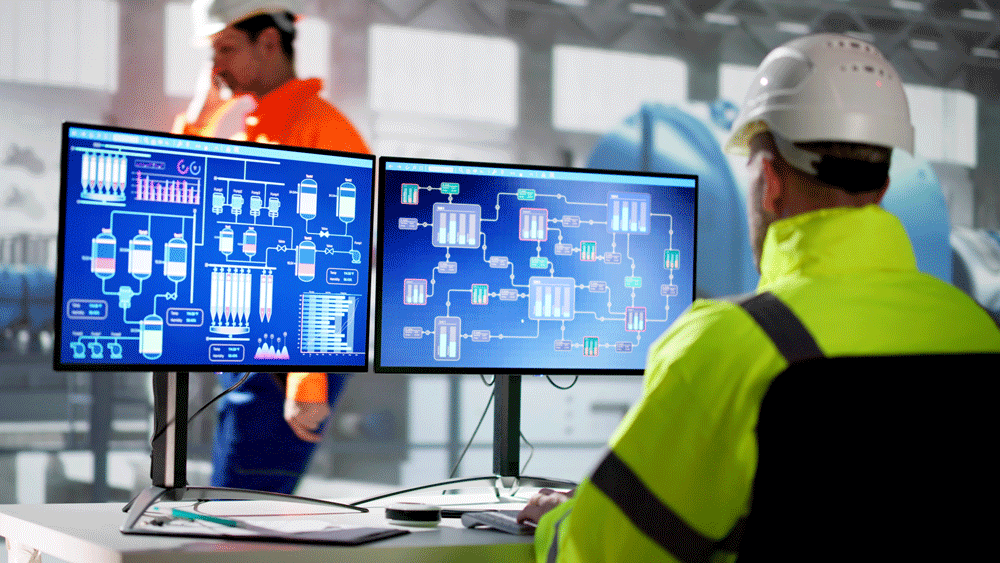
Sustaining reliable output heavily depends on close coordination across engineering, maintenance, operations and digital teams responsible for how plants perform in real time. Across the region, the focus is on ensuring assets can respond safely and efficiently to changing system requirements without compromising on performance and availability.
Periods of disruption provide the clearest test of these capabilities. While peak summer demand remains broadly predictable, the growing penetration of renewable generation and more dynamic load profiles require operational teams to adjust dispatch in real-time while maintaining output.
Equipment failures, fuel supply disruptions, transmission outages or sudden shifts in system demand can all place significant pressure on power and water systems. In these moments, continuity depends on preparation, clear escalation structures, tested business continuity processes and the experience of the teams on the ground.
Human expertise
Technology is strengthening this discipline. Predictive maintenance systems, digital monitoring platforms and real-time analytics are improving visibility and enabling asset operators to identify potential issues earlier. These tools will continue shaping the future of asset performance as systems become larger and more interconnected.
But it is people who allow this discipline to hold over decades. Power and water systems require experienced engineers, technicians and integrated teams capable of managing highly complex plants safely and consistently over long periods, and much of that expertise cannot be installed or automated. It is built gradually, through years of technical knowledge and coordinated execution under demanding conditions, which is why it sustains reliability long after the technology of any given moment has moved on.
Long-term value
New capacity, advanced technology and ambitious targets all matter, but they create lasting value only when the assets behind them are maintained with discipline, day after day, through both stable and disrupted conditions.
For Engie, this means being a long-term partner to the region while maintaining close coordination with regulators, system operators and offtakers to help keep electricity and water flowing consistently. As the GCC accelerates its transition, the disciplined operation of critical infrastructure will remain one of the foundations on which its success depends.

You might also like...
Aramco selects contractors for five offshore tenders
23 October 2026
Contractor wins $599m Ras Al-Khaimah hotel construction deal
23 October 2026
Adnoc Onshore seeks bids for Bab gas cap well tie-in project
23 October 2026
Focus turns to the Northern Emirates
23 October 2026

A MEED Subscription...
Subscribe or upgrade your current MEED.com package to support your strategic planning with the MENA region’s best source of business information. Proceed to our online shop below to find out more about the features in each package.
Take advantage of our introductory offers below for new subscribers and purchase your access today! If you are an existing client, please reach out to your account manager.