

Plans for the new city that will be built around the 1-kilometre-plus tall tower are accelerating, says Jeddah Economic Company CEO Fabien Toscano


Development is accelerating at Jeddah Economic City. Jeddah Economic Company (JEC) will start formal talks with third-party developers for the first phase of the masterplan this year, as construction of the world’s tallest tower at the centre of the scheme rises past the 116th floor.
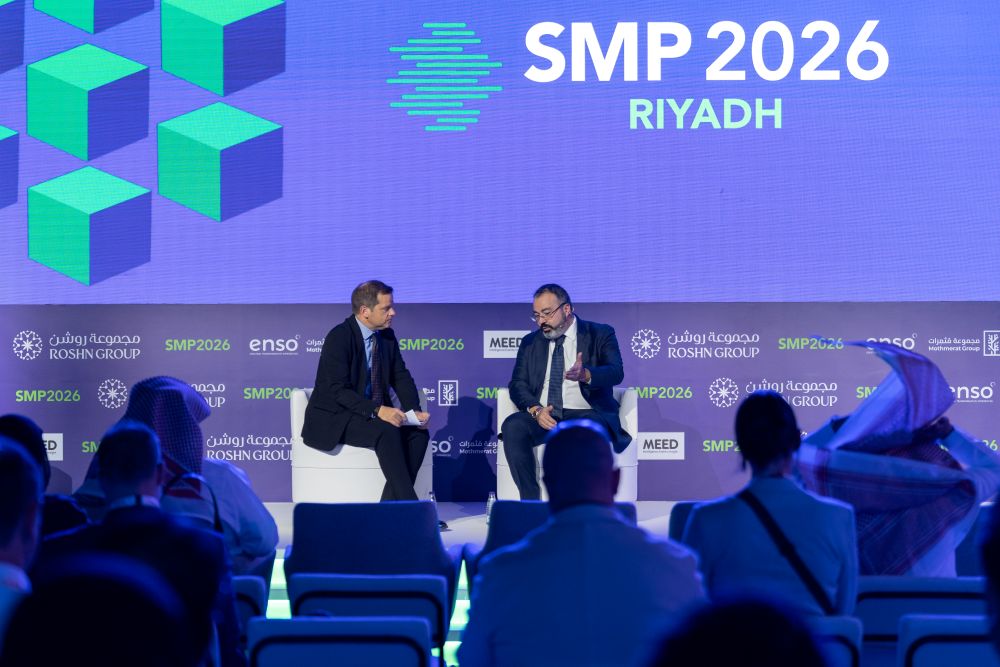
Fabien Toscano, chief executive officer of JEC, told MEED at its Shaping Mega Projects Conference on 29 September that infrastructure for the 1.7 million-square-metre (sq m) first phase is complete, with all plots serviced and individually titled. The tower, which will be the first building to exceed 1 kilometre in height, is due for completion in 2028, and JEC plans to release residential units for sale in 2027.
How big is the Jeddah Economic City masterplan?
Jeddah Economic City is in north Jeddah, adjacent to Obhur Creek and the Red Sea. The approved masterplan covers 5.3 million sq m and includes more than 14 million sq m of gross floor area (GFA), so that’s quite considerable. It is a full city with residential, retail and office assets, as well as extensive public realm to support the development.
The current focus is phase one. The first phase comprises 1.7 million sq m of land and just over 4 million sq m of GFA. For context, phase one is slightly larger than King Abdullah Financial District and is anchored by the tower. The tower is the heart of the project, and the priority is to deliver phase one before later focusing on phase two.
What stage is phase one at?
Phase one is largely ready from a master developer perspective. All the infrastructure is in place, including roads, traffic lights, sidewalks with granite kerbstones, electricity and water networks, and the district cooling network.
All phase one plots are serviced and have been individually titled.
When building the infrastructure, JEC elevated the roads to place the utilities. As a result, what would typically be ground level will function as a basement parking level for future developments. This will save developers time and cost because they won’t have to dewater. A further benefit is that, even at the ground floor level of the masterplan, the Red Sea is clearly visible because the site sits more than 14 metres above sea level in places.
How is construction of the tower progressing?
As of late September 2026, the tower had reached the 116th floor, about 466 metres above sea level, so it’s moving very well. More than 6,000 people are working on the tower each day. The project has surpassed 20 million hours without a lost-time incident, which is very important for us as a developer. The tower is moving at full speed, and we are making strong progress, so we’re very happy with that.
What’s your floor cycle rate right now?
For the core, the current rate is about five days per core. We are doing pretty well.
What are the technology challenges when building that high?
Times have changed since Burj Khalifa. Concrete can now be pumped to 1 kilometre. The tower is largely concrete up to the top, except for the last spine, and differs from Burj Khalifa in design. While there are always challenges on a project of this scale, construction technology has evolved, and we have a great team of architects and consultants to support us throughout the project, as well as a great contractor.
What are the components within the tower?
The tower will include a Four Seasons hotel with 182 keys, 97 Four Seasons-branded residences, and 325 Jeddah Tower apartments ranging from one-bedroom units to penthouses. The penthouses will be the highest residential units in the world.
It will also include duplexes, an observation deck with indoor and outdoor areas, more than 14,000 sq m of office space, and a range of resident and hotel amenities inside and outside the tower.
Can you reveal the final height of the tower?
Not today. It is 1 kilometre-plus, and will be the first building to actually exceed the 1-kilometre mark, making it the world’s tallest tower when completed. It is also important to say that this is only what you see. We ended up driving 270 piles down to 105 metres to support the building. A lot of work has gone into things people don’t see today, but we’re not yet ready to announce the height. It will come in time.
What is coming next for Jeddah Economic City?
There are two important dates for us. The first is Cityscape this year, where JEC will showcase the tower and the wider masterplan, with particular emphasis on phase one. This will also mark the start of more formal engagement with developers, as phase one land plots are ready for immediate development.
The second date will be in 2027, when JEC expects to release some of the tower’s residential units for sale.
Could you explain the relationship between the tower and the broader development?
They all complement each other. The reality is the tower is the icon. It’s the heart of the project. In fact, that will be the icon for Jeddah in the future. So the value is there. It will attract people. The broader city – its amenities and mixed-use offering – will encourage people to stay and support long-term value.
As JEC prepares to release plots, it plans a phased approach that prioritises essential amenities such as schools, hospitals, retail and residential uses to support the tower and the wider development. The masterplan also includes a water feature and public gathering spaces.
Jeddah is an incredible city that many people visit, but if you look at the numbers, very few people actually spend time in Jeddah. They come, they go to Mecca, they go to Medina. With a compelling attraction, we can create an anchor that encourages more people to visit and experience Jeddah through this project – and, of course, to come to live and work here as well.
With the right mix in place, you want people to have amenities from day one – and also the ability to live and work here, and to enjoy the destination as a vibrant public realm. Getting that mix right from the outset is essential, and that’s exactly what we’re focused on.
We have a plan. I’m not going to share it today, but it’s the framework we’re working to – and it will guide how we phase and cap development. When we speak with developers, it’s always within the context of that plan and our land-release strategy.
What heights will the other buildings reach?
Buildings across the development will range from mid-rise to high-rise. Some towers will eventually reach 450 metres, while other buildings will typically range from G+5 or G+6 upwards. This is a city centre-type project with density, a concentration of amenities and walkability; everything people talk about today is integrated into this masterplan.
How can investors participate in the project?
We are the master developer, so people can contact us. We are happy to discuss available opportunities and land plots, and we have a process that starts with a site visit, reviewing opportunities, and discussing whether it’s a land purchase or another type of structure. And of course, at Cityscape, we will be there. We will have a team there. We’ll be able to engage with people directly at Cityscape.
What construction opportunities lie ahead?
There is a lot of real estate to be built around all asset classes. Some of it may be done by us. Some of it will be done by a third party. Some of it may be done as a joint venture, but there will be opportunities across all asset classes, and eventually infrastructure for phases two and three when the time is right. Most of the tower work is now locked in, and we are now into delivery. The fit-out will come. The designs have been fixed. Right now, it’s mostly MEP, finishing the tower, and closing it out.
Jeddah is an established city that has been built up over a long time. What are you offering that’s different for investors? What kind of interest have you got so far?
A couple of elements will make this project a success. First, if you look west of our site, there is the sea; to the east is the mountain. If you go further south, there is an industrial zone. All the growth in Jeddah will happen to the north. It’s already happening, and I think that’s very important. Second, Jeddah is very well positioned today for growth.
In terms of our project specifically, we will have the tallest tower in the world. It has all the amenities, the social infrastructure, the water body, the retail, etc, to make it an interactive place. Second, we have quality infrastructure today, and third, it’s ready. We’re not talking about something that may happen. It is ready today. People can take a plot today and develop tomorrow. It’s there, all connected, all the utilities, the district cooling, everything that I mentioned earlier – it’s ready, and I think that is the big difference.
We’re also right on the sea. In fact, some of our plots are directly on the waterfront. We have two plots along the creek as well as plots on the open sea, so the site is fully connected along the water. That’s something I don’t think is really available anymore today.
Second, on density: when I think about Jeddah – and I’m fairly new to the city – it’s clearly evolving into a multi-centric city, growing in a way that will create several distinct centres over time. I believe our development will consolidate its position as one of those centres, especially given its density and its character as a city-centre-style project, supported by strong amenities.
How do your priorities change as the project moves toward completion?
The focus is very clear. The tower must be delivered to the right quality, on time, and on budget. We have to launch the tower to the world and keep our promises to the potential buyers. As for the city, anyone who works with us – whether an investor, a joint-venture partner or another stakeholder – is, in practice, a partner in building the destination.
It’s about choosing the right partners and releasing the right amount of land for sale at the right time. We need to manage the pace of release as we create value – that’s a key objective going forward. Everything we do adds value, but we have to do it thoughtfully and sensibly, and bring the right partners with us.
Ultimately, partnership is critical: we need the right capabilities for each asset class. Some things we will deliver ourselves, and for others we should rely on specialists who can do them better than we can. We have to be realistic about that.
Going back to that city idea, cities are not built by one person; they are built by a collective of people.
We’ll all learn from one another, and the destination will benefit overall from having different product types and different approaches to delivery. As master developer, though, we have a responsibility to put the right infrastructure in place, manage the city effectively, and release land in a disciplined, sensible way – so we create value both for ourselves and for everyone participating in the development.
Just to refresh, what are the key dates for the tower?
In terms of construction time, it is 2028.
You might also like...
Consortium wins Safaniya field onshore facilities project
06 October 2026
Al-Yamamah signs Saudi 380kV transmission deals
06 October 2026
Eagle Hills plans new Syria projects
06 October 2026
WEBINAR: Saudi Arabia’s $2.14tn Projects Market
06 October 2026
A MEED Subscription...
Subscribe or upgrade your current MEED.com package to support your strategic planning with the MENA region’s best source of business information. Proceed to our online shop below to find out more about the features in each package.
Take advantage of our introductory offers below for new subscribers and purchase your access today! If you are an existing client, please reach out to your account manager.