


The head of the company hopes the gas export project will benefit both its shareholders and the host country.
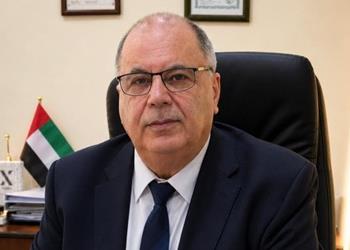
At Yemen LNG's office in the bustling Hadda district of the Yemeni capital, Sanaa, Joel Fort, the company's general manager, is maintaining his calm despite everything that is going on around him. It is 24 June, less than one month before the company's first train at Balhaf will begin processing gas, and two months before the first ship is due to leave the export terminal bound for South Korea.
Yemen's first liquefied natural gas (LNG) export project more than matches the ambitions of the giant schemes being undertaken by other states in the region, despite the fact it is neither the biggest nor the most technically complex gas development in the Arabian peninsula.
Yemen LNG plans to produce 1.2 billion cubic feet a day (cf/d) of natural gas at its plant at Marib, in central Yemen, before transporting it to a 6.7 million-tonne-a-year (t/y) liquefaction and export terminal at Balhaf in the south of the country via a 322-kilometre-long pipeline.
Significant step
Fort acknowledges that the project appears small when compared with developments in Qatar, the region's most advanced LNG producer. Qatar's Qatargas II project alone is valued at more than $12bn and involves the production of 15.6 million t/y of LNG by 2011. But for Yemen, the poorest country in the Arab world, Fort says the export project is a huge step forward.
The $4bn cost of developing the Yemen LNG export project is 10 times more than any single previous investment in the country, and the $2.8bn in financing raised in May last year is the biggest ever project financing deal completed in Yemen. The project is being led by French energy major Total, which holds a stake of almost 40 per cent in the company.
Fort says the project has had its challenges, but the scale and technical hurdles have not fazed him. "The complexity of our project is not that it is breaking a record in terms of size," says Fort. "It is a pretty big plant but it is not the largest on earth. It does not incorporate a lot of technical novelties. It is using a well-proven design, so that is not where the difficulty stands."
According to Fort, the challenge for Yemen LNG has been its location. "Clearly, the difficulty in Yemen is the logistical aspects," he says. "We were building a plant in the middle of nowhere. When I arrived here four years ago there were eight [members of staff] in the company and now we number 900. When we arrived in Balhaf there was nothing, now there is an LNG plant. There was no pipeline, now there is a pipeline. We are, I think, rightly proud of what we have done.
"There is nothing derogatory here [in what I am saying] to the country or the region; it is the reality. [The project] is in the middle of nowhere geographically but it is also in the middle of nowhere in terms of the degree of preparation of local administration, of central administration. This is a big thing.
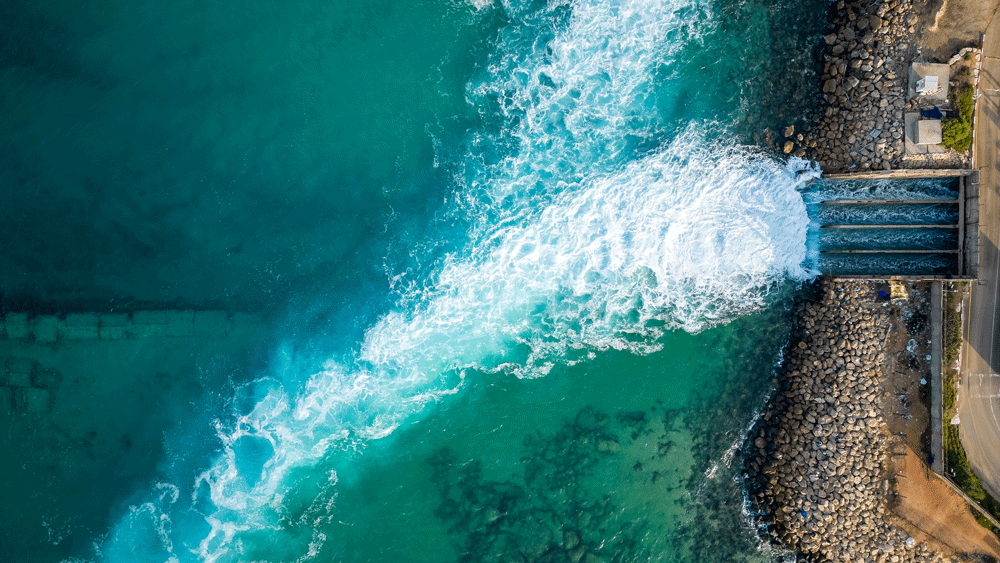
"We are not in Ras Laffan [in Qatar]. We are not building the seventh LNG train in Qatar; we are building the first ever LNG train in Yemen. We have to be completely autonomous in terms of logistics and support. We cannot rely on anything in Balhaf, not even water. We have to manufacture our own from sea water."
Beyond the desalination plant, which Yemen LNG built at Balhaf, there was the small matter of developing a single-runway airport and a 100MW power station, alongside a port to accommodate the giant ships required to transport LNG. "We had to bring in all the components for our own harbour because there was nothing in Yemen capable of receiving the size of goods that we are using," says Fort.
His task over the past four-and-a-half years has clearly been a mammoth one and the pace of activity is not letting up. "This is the hectic period," he says. "It is the home run, the last few weeks before we get to the reward of the four-and-a-half years of effort that we have put in. We have a lot of things to do and we are under the scrutiny of a lot of people, but we want to stay cool-headed because the last thing we would like to see happening is to rush too much and to run the risk of safety issues. We would like to move swiftly but safely."
Assessing risks
The project was originally scheduled to be up and running by the end of 2008, but was hit hard by the shortage in manpower and mater-ials that affected the entire Middle East oil and gas industry in 2007-08. That shortage - brought on by the large number of major projects launched around the region - helped to push the cost of the project up from about $3.7bn to a little more than $4.2bn, says Fort.
"It was the competition between the various big projects in the Middle East that [made it difficult] to source the appropriate manpower and resources to complete the project on time," he explains. "We were all suffering. Yemen LNG has suffered perhaps the least among the big projects in the area, but we were suffering a little bit. It cost us a few months."
Qatar returns as a topic of conversation when Fort describes the difficulty of competing for manpower with the LNG hub. "There are tens of thousands of workers mobilised in Qatar to complete its various projects," he says. "We are only mobilising 10,000 workers at the moment, but we have also perhaps the handicap of not being in the most attractive place on earth, or even the most attractive place in the Middle East."
Security concerns remain a key issue. "It would be irresponsible in Yemen not to address security concerns seriously," says Fort. "First of all because the concerns are real; and second because as soon as they are perceived as being in existence, even if they are minor, there is a duty of care to the people we employ to demonstrate that we take it seriously. "
The threats to the project are numerous. They include attacks by tribal groups, the rise of Islamic extremists in the country, and piracy in the waters off the coast of the Gulf of Aden, where Balhaf is located.
Fort says that piracy, which has been on the increase in the past year, poses the greatest threat to the project. "Risk is the multiplication of the probability of occurrence by magnitude of impact," he says. "If we take the tribal risk, the probability of occurrence is extremely high - we see it every day - but the magnitude of impact is reasonably limited. If we take the terrorist attacks, the probability of occurrence is very low, but the magnitude of impact is high. With piracy, the probability of occurrence is very high and the magnitude is also very high. That is where we are most exposed. Of course, we are doing things [to tackle] this."
Yemen LNG employs a team of 25 managers who oversee the company's security operations, with 600 local military personnel. It is also in talks with the country's government over new maritime initiatives to deter pirates from attacking its LNG export tankers.
Closer to home, education and social initiatives are the best fix for attacks on the com-pany's onshore facilities, says Fort.
"We have to explain to people on all levels what we are doing," he says. "We have to explain it to the decision-makers [in government], but we also have to explain it to the local people who have never seen something like this. All that they understand is that we are doing something big and we are manipulating big money. They do not understand what we are doing."
He goes on to clarify his point. "The local population is not educated to the point of understanding clearly what we do or that this is for the good of the country, and if there are disturbances today then [they] will be compensated in five years' time," he says. "This is far away from their day-to-day preoccupations of having a decent life today. What we have done is to work with them to understand what their real needs on a day-to day-basis are, and how we can try to contribute so that they can see that our activities are theirs, that our pipeline is theirs, that they see some benefit to what we do."
As part of its efforts, the company has a team of 25 people dealing with sustainable development issues, with a budget of $17m during the construction phase of the development, and $26m over the first five years of operations - far more than it would be on a conventional development, says Fort, and "pretty big numbers" by local standards.
Even bigger will be the economic impact of the project on Yemen's finances. Fort says that the government's share of revenues is projected to be $30-50bn over the project's 25-year lifespan, equivalent to $1.2-2bn a year, or 15-25 per cent of the country's current total annual revenues. For a country with a per capita gross domestic product (GDP) of $2,400 a year, these are significant sums.
Changing perceptions
Fort appears unconcerned about the recent fall in the price of natural gas around the world. The price has dropped from more than $8 a million BTUs at its peak in July 2008 to about $4 a million BTUs today, as demand has waned and production has increased. Fort says that despite this drop, the revenue projections for the scheme are unchanged.
"If the question is would you revisit these numbers today, my answer would be no," he says. "Yes there is an economic crisis, but nobody is forecasting that it is going to last 25 years. That would be a real disaster. The pundits, the economic gurus, are predicting a recovery over the next 18 months to two years. Therefore, when we built and applied the economic model [for revenue], even if we change the parameters a little bit for a couple of years, over 25 years it is a blip and it is completely absorbed by the $30-50bn."
"We are not in this to change the country," he adds. "That is not our remit and it is not our ambition. But we have demonstrated that it is possible to handle a large investment in Yemen according to business principles at an inter-national level.
"That is perhaps the best contribution we have made to the international community that has some interest in investing in Yemen. We have demonstrated that it is feasible. We have even demonstrated that it is possible to get limited recourse financing, which is based on the project itself. That in its way is already a big game changer for the country."
You might also like...

Building around the strait
04 June 2026

Fitch cuts global airport outlook on Iran war
04 June 2026
Iran conflict curbs migrant labour flows to Gulf
04 June 2026




A MEED Subscription...
Subscribe or upgrade your current MEED.com package to support your strategic planning with the MENA region’s best source of business information. Proceed to our online shop below to find out more about the features in each package.
Take advantage of our introductory offers below for new subscribers and purchase your access today! If you are an existing client, please reach out to your account manager.