



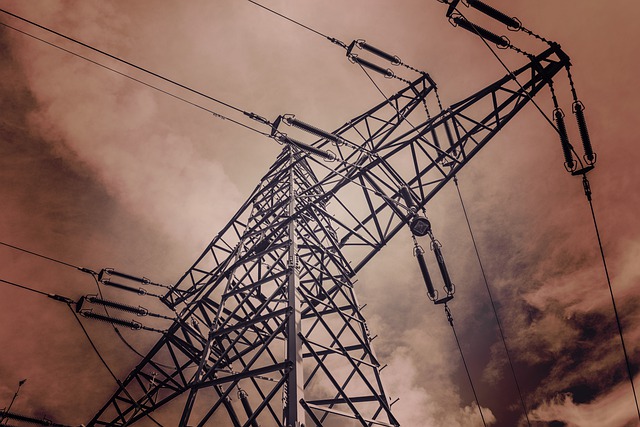
Grid stress is the next data centre bottleneck as AI-enabled data centre construction is outpacing grid expansion
 Analysis
Martina Raveni, senior analyst
GlobalData Strategic Intelligence
Demand for artificial intelligence (AI) capabilities is driving announcements of significant new data centre projects, but electricity grids—the vast network of power lines, substations, and transmission infrastructure that moves electricity from where it is generated to where it is needed—are not scaling at the same pace.
AI-enabled data centres typically require higher and more concentrated loads than traditional facilities, adding substantial new demand on top of broader electrification trends. As a consequence, existing grids are struggling to handle large new power loads and are being pushed beyond their design limits, both in scale and speed.

Across major data centre hubs, growing connection queues, constrained transmission capacity, equipment shortages, and long upgrade timelines are all symptoms of grid stress, a situation in which new power demand rises faster than the grid can expand. Governments and data centre operators will need to align data centre growth with grid investment to prevent power constraints from limiting the rollout of AI infrastructure.
Addressing grid stress is a key imperative for data centre operators and power utilities. One of the clearest indicators of this issue is the surge in grid connection queues: the pipeline of projects waiting to connect due to unavailable capacity or pending network upgrades. The International Energy Agency’s (IEA) 2026 Electricity Outlook estimates that more than 2,500 gigawatts (GW) of renewable, large‑load, and storage projects are waiting in connection queues worldwide.
In Europe, the problem is increasingly visible in major data centre hubs, the so-called FLAP-D markets: Frankfurt, London, Amsterdam, Paris, and Dublin. Here, developers can face waits of seven to 10 years for connections, thereby extending project timelines and raising uncertainty, according to Interface. The Netherlands and Frankfurt have effectively banned new connections until at least 2030 due to massive power grid congestion.
In April 2026, OpenAI cited regulatory constraints and high energy costs as reasons for pausing its multi-billion-pound UK data centre development. Subsequently, an investigation by UK newspaper The Guardian highlighted uncertainty about grid connections and capacity constraints at the site. Similarly, in July 2026, the UK cloud provider Nscale was hit by grid delays and announced that the planned grid connection for its new AI campus would not be ready in time for the site’s targeted 2027 opening.
In addition to connection queues, transmission constraints in the electricity grid exist. These occur when power lines, transformers, or other network equipment reach their maximum safe thermal and voltage capacity. In January 2026, Google said the US transmission system was the biggest challenge for connecting data centres. On top of these transmission issues, prices for key grid components have nearly doubled over the past five years, and supply chain issues are also contributing to the grid connectivity problem. For example, in May 2026, the US reported that shortages of large transformers were delaying grid expansion, with lead times of up to four years for some units.
These challenges are turning grid access into a bottleneck for the data centre development process, delaying projects. Furthermore, the current situation is exacerbated by the fact that planning, permitting, and completing new grid infrastructure can take between five and 15 years, compared with one to three years for data centres, according to the IEA.
Stress response
Governments and grid operators are beginning to address these issues, but approaches differ depending on market structure and grid conditions. In China, for example, national coordination directs some computing capacity toward regions with stronger power availability while keeping latency-sensitive workloads closer to major population centres, effectively shifting demand geographically to reduce pressure on congested hubs.
In Europe, policymakers and power utilities are prioritising grid reinforcement and broader infrastructure upgrades to expand capacity over time. Ireland, for instance, has put in place a huge infrastructure programme, including an allocation of €18.9bn ($21.8bn) of grid investment between 2026 and 2030. In the US, grid operators in regions with heavy load growth are exploring new tools to manage grid failure risks and integrate large new users more effectively. PJM Interconnection, the biggest US grid operator, accelerated new power plant connections through a readiness-based review process and created emergency rules to curtail power to large data centres first to protect residential reliability.
Taken together, these examples illustrate that there is no single fix for grid stress. Credible strategies tend to combine moving or shaping demand, accelerating grid network investment and permitting, and improving flexibility through various measures so large loads can be integrated without undermining reliability. Data centre developers and governments should treat the build-out of AI infrastructure and grid planning or upgrades as part of a joint, integrated plan rather than separate issues.
You might also like...

UAE banks profit as credit growth surges
12 October 2026

Developers prepare bids for 1GW Oman bess scheme
12 October 2026

Frontrunner emerges for Saudi Arabia’s GCC rail link design
12 October 2026

UAE and Saudi Arabia agree rail and power-link studies
12 October 2026



A MEED Subscription...
Subscribe or upgrade your current MEED.com package to support your strategic planning with the MENA region’s best source of business information. Proceed to our online shop below to find out more about the features in each package.
Take advantage of our introductory offers below for new subscribers and purchase your access today! If you are an existing client, please reach out to your account manager.