


GlobalData says conflict in the Middle East and Ukraine is disrupting supply chains and raising costs for rail schemes worldwide
Railway construction projects worth $6.7tn are being tracked worldwide, according to UK-based data and analytics company GlobalData.
The figure covers projects at every stage from announcement and study through to execution. Schemes at the pre-execution and execution stages account for $4tn, or 58.7% of the total.
GlobalData estimates that annual spending on the pipeline could reach $479.5bn in 2026 and $643bn in 2027. It expects spending to average $749.5bn a year between 2028 and 2030. These forecasts assume all tracked projects proceed on schedule, with spending distributed evenly across the execution stage.

Regional split
North-East Asia accounts for the largest share of the pipeline, with projects worth $2.1tn, or 31% of the global total. Western Europe ranks second at $803.7bn, followed by North America at $775.3bn and South Asia at $754.6bn.
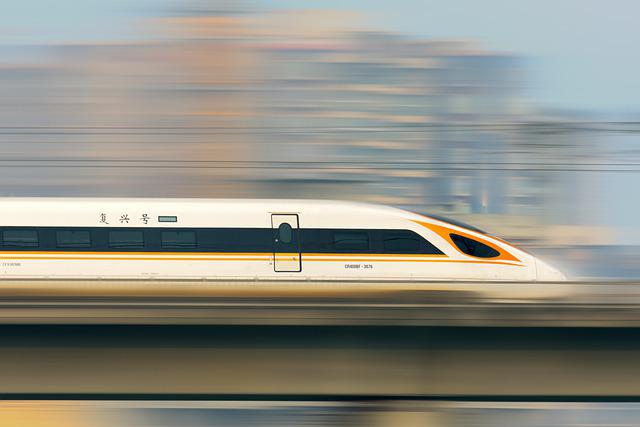
China is the main driver of activity in North-East Asia. In January, the country's national railway operator said it planned to expand the operational network to about 180,000km by 2030, from 165,000km at the end of 2025. The plan includes adding 10,000km of high-speed lines to take the high-speed network to 60,000km, a third of the total.
In Western Europe, the European Commission is targeting a doubling of high-speed rail passenger traffic and a 50% increase in freight volumes by 2030 compared with 2015 levels, backed by investment of up to $273.5bn. Cross-border schemes including the Brenner Base Tunnel, the Lyon-Turin Base Tunnel, the Fehmarn Belt Fixed Link and Rail Baltica are due for completion between 2030 and 2035.
Rising costs
GlobalData says building new railways is becoming more difficult and more expensive. Conflicts in the Middle East and between Russia and Ukraine have disrupted global supply chains, making materials harder to source and workers harder to hire.
Projects in or near conflict zones face the risk of direct damage. GlobalData expects governments in affected regions to spend more on security to protect workers and infrastructure.
Inflation is adding to the pressure by raising the cost of raw materials, energy and specialist labour. The risk is greater for megaprojects with long construction periods. GlobalData cites the UK's HS2 high-speed rail scheme, where it says inflation accounted for a third of the cost overruns. In May, the UK government said the project's cost had risen to $138bn.
The public sector funds 80% of the global pipeline. Public-private partnerships account for 18.8%, and projects financed solely by the private sector make up 1.3%.
High-speed railways are the largest segment by value at $2.7tn, a 39.4% share. Metro, underground and light rail projects follow at $2.1tn, or 30.5%. Conventional and commuter railways account for $1.4tn, or 20.5%.
Regional outlook
GlobalData values the Middle East and North Africa rail pipeline at $414.2bn. Projects at the pre-execution and execution stages account for $302.1bn, or 73%, a higher share than the global average. Saudi Arabia accounts for 22.1% of the regional pipeline by value and the UAE for 14.4%. High-speed rail is the largest segment at $141.3bn, followed by metro and light rail projects at $124.5bn.
GlobalData expects spending on the regional pipeline to peak at $106.4bn in 2028, assuming all projects proceed on schedule. It says conflict in the region is disrupting equipment imports and pushing up war-risk insurance premiums, adding to costs and delaying construction.
You might also like...
Alstom wins $515m Riyadh metro trains deal
05 October 2026
Rabigh 2 IPP expansion secures $2.58bn financing
05 October 2026
Dubai announces $490m e-commerce hub expansion plan
05 October 2026
Iraq and Turkiye discuss oil and gas deal
05 October 2026

A MEED Subscription...
Subscribe or upgrade your current MEED.com package to support your strategic planning with the MENA region’s best source of business information. Proceed to our online shop below to find out more about the features in each package.
Take advantage of our introductory offers below for new subscribers and purchase your access today! If you are an existing client, please reach out to your account manager.