

The UK-based oil company is reopening its office in Tripoli
The London-headquartered oil and gas company BP has signed a memorandum of understanding (MoU) with Libya’s National Oil Corporation (NOC), agreeing to consider the redevelopment of two of the country’s largest oil fields and the exploration of neighbouring areas.
Under the MoU, BP and NOC will jointly conduct feasibility studies to assess the technical and commercial viability of restarting production at the Messla and Sarir oil fields, according to a statement published by BP.
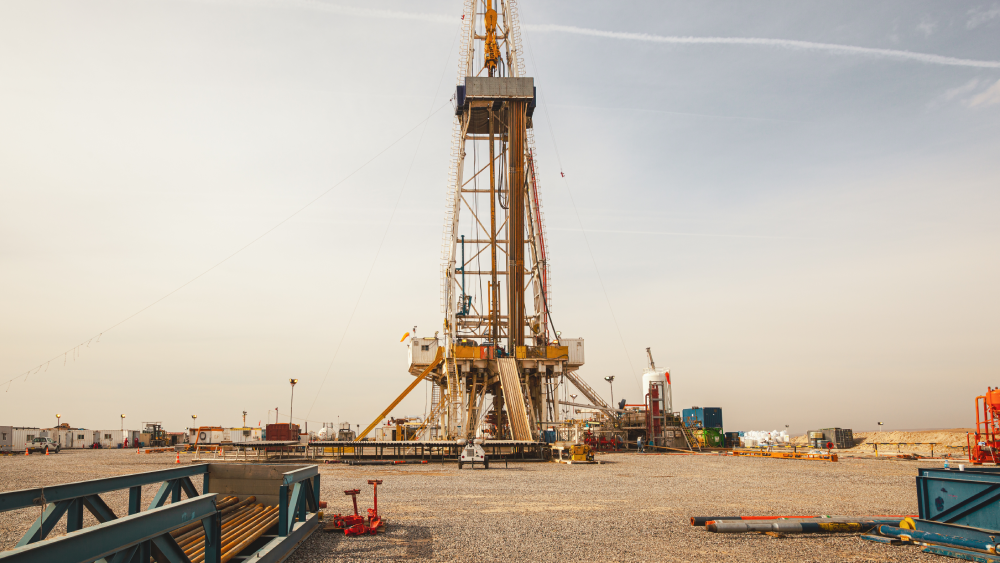
The Messla and Sarir oil fields were previously among Libya’s most productive assets.
Under the terms of the MoU agreement, BP and NOC will explore the potential development of both conventional and unconventional oil and gas resources across a broad area of the Sirte Basin.
William Lin, BP’s executive vice-president for gas and low-carbon energy, said: “This agreement reflects our strong interest in deepening our partnership with NOC and supporting the future of Libya’s energy sector.
“We hope to apply BP’s experience from redeveloping and managing giant oil fields around the world to help optimise the performance of these world-class assets.”
BP also confirmed plans to reopen its office in Tripoli before the end of this year.
In its statement, BP said: “The move marks a significant step toward restoring the company’s physical presence in Libya and demonstrates a renewed confidence in the country’s operating environment.”
This announcement comes amid a wider trend of international oil companies returning to Libya. Shell, for instance, signed a separate agreement with NOC to evaluate the Atshan field. Other global players, such as Eni, OMV and Repsol, are also active in Libya once again, reversing the withdrawal that followed the 2011 revolution and subsequent civil unrest.
Libya is Africa’s second-largest oil producer and a key member of Opec.
The country’s output has recently stabilised at around 1.385 million barrels a day (b/d).
With the redevelopment of major fields and new exploration, production levels could rise significantly in the coming years.
The country’s security situation remains difficult, with frequent outbreaks of violence and clashes between militias.
In May, clashes in Tripoli involved heavy artillery and armed confrontations between rival factions.
The clashes highlighted concerns over stability within Libya’s capital and the rest of the western region, which is under the control of the Government of National Unity (GNU).
The Sarir and Messla oil fields, located in the Sirte Basin, rank among Libya’s largest. Sarir was discovered in 1961 and Messla in 1971.
BP re-entered Libya in 2007, when it signed an exploration and production sharing agreement (EPSA) covering exploration areas A and B (onshore), and area C (offshore) with Libya’s NOC.
The EPSA was later put on hold following the declaration of force majeure.
In 2022, Eni acquired a 42.5% interest and assumed exploration operatorship of the EPSA, with BP retaining a 42.5% interest and the Libyan Investment Authority holding the remaining 15%.
In 2023, Eni and BP formally lifted the force majeure, resuming exploration operations in the onshore areas.
Iraq expansion
BP is also pursuing expansion efforts in Iraq. Earlier this year, the company finalised a deal with Iraq’s Ministry of Oil to help redevelop the Kirkuk oil fields.
These projects – encompassing the Bai Hassan, Avana, Baba, Jambur and Khabbaz domes – are expected to yield more than 3 billion barrels of recoverable resources, with the potential for up to 20 billion barrels, according to BP.
The company said: “Together, these developments point to BP’s strategic push to re-enter frontier and post-conflict energy markets, combining legacy assets with fresh exploration.
“For Libya, renewed international investment offers the potential for greater economic stability and a stronger presence in the global oil market.”

 READ THE JULY 2025 MEED BUSINESS REVIEW – click here to view PDF
UAE and Turkiye expand business links; Renewed hope lies on the horizon for trouble-beset Levant region; Gulf real estate momentum continues even as concerns emerge
Distributed to senior decision-makers in the region and around the world, the July 2025 edition of MEED Business Review includes:
> AGENDA: UAE-Turkiye trade gains momentum > INTERVIEW 1: Building on UAE-Turkiye trade > INTERVIEW 2: Turkiye's Kalyon goes global > INTERVIEW 3: Strengthening UAE-Turkiye financial links > INTERVIEW 4: Turkish Airlines plans further growth > CURRENT AFFAIRS: Middle East tensions could reduce gas investments > GCC REAL ESTATE: Gulf real estate faces a more nuanced reality > PROJECTS MARKET: GCC projects market collapses > INTERVIEW 5: Hassan Allam eyes role in Saudi Arabia’s transformation > INTERVIEW 6: Aseer region seeks new investments for Saudi Arabia > LEADERSHIP: Nuclear power makes a global comeback > LEVANT MARKET FOCUS: Levant states wrestle regional pressures > GULF PROJECTS INDEX: Gulf projects index continues climb > CONTRACT AWARDS: Mena contract award activity remains subdued > ECONOMIC DATA: Data drives regional projects > OPINION: A farcical tragedy that no one can end |
To see previous issues of MEED Business Review, please click here
You might also like...

Dubai Inc steps in as developers turn cautious
21 September 2026
Ras Al-Khaimah’s Stevin Rock selects Irish firm for limestone quarry
21 September 2026
MEED announces national winners of 2026 project awards
21 September 2026
Contractors line up for $1bn Jumeirah Islands residences work
21 September 2026
RELATED
A MEED Subscription...
Subscribe or upgrade your current MEED.com package to support your strategic planning with the MENA region’s best source of business information. Proceed to our online shop below to find out more about the features in each package.
Take advantage of our introductory offers below for new subscribers and purchase your access today! If you are an existing client, please reach out to your account manager.