

Privatisation agency holds talks with bidders and lenders before launching deals to ensure projects can reach financial close
Saudi Arabia's National Centre for Privatisation & PPP (NCP) holds structured talks with bidders and lenders before it launches transactions to make sure projects in its pipeline are bankable, according to a senior official.
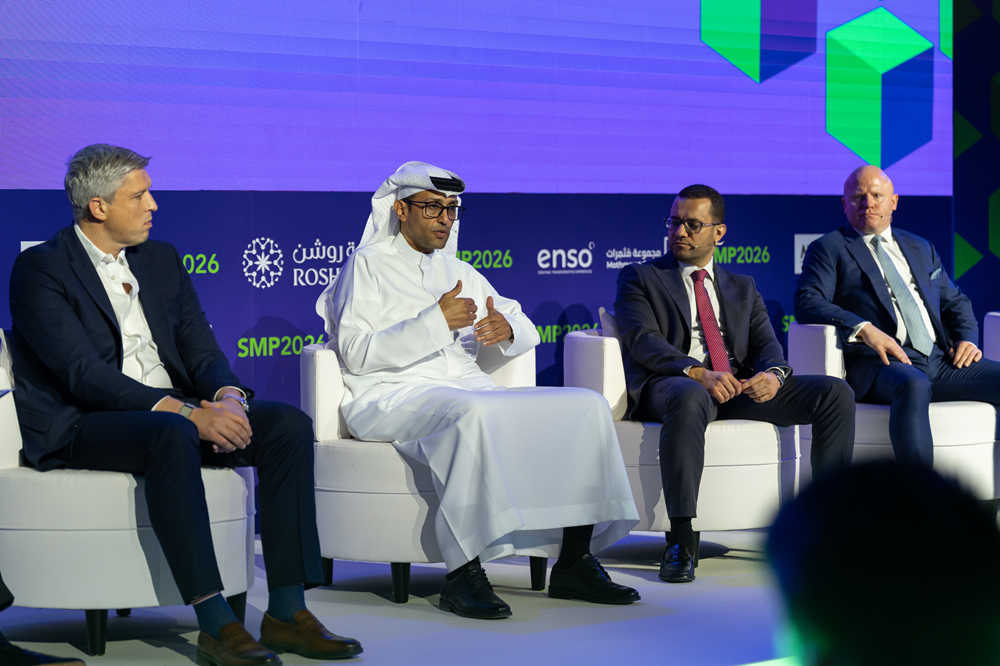
Speaking on a panel at MEED's Shaping Mega Projects conference in Riyadh on 28 September, Tariq Alghaziri, executive vice-president at the NCP, said the centre carries out market sounding with potential bidders and debt providers, including commercial and Islamic banks, before announcing deals.
"Bankability is a key word for us," he said. "You can structure the deal in the way you want. You can have whatever technicalities and technologies are required, but is it suitable for the private sector to deliver? That's the big question."

Alghaziri said the national privatisation strategy, approved at the end of 2025 and published at the start of 2026, sets the NCP's targets up to 2030 and outlines its project pipeline. The strategy coincides with the third phase of Vision 2030, which he said is focused on measuring impact after earlier phases established the legal framework and enabled the private sector.
Public-private partnership (PPP) contracts typically run for 25 years and in some cases more than 40 years, he said, which makes early engagement essential. "When we launch it, all the bidders, suppliers, EPC contractors, banks and ECAs are on the same page, and then they just have to align on commercial points and not negotiate legal aspects."
Risk transfer
Jonathan Looker, managing director for Saudi Arabia at UK consultancy Mott MacDonald, said the public and private sectors often perceive risk very differently.
"Can you put yourself in the shoes of the person you're trying to transfer risk to?" he said. "There isn't one single allocation model that is fit for every project."
Looker said failure to agree on risk can prevent projects reaching financial close. "I've unfortunately been involved in a number of projects where we just can't get the deal done because there is not a meeting of minds around a specific aspect of risk."
Alghaziri said Saudi regulations now state that the party with the capacity to manage a risk should take it, but that risk carries a cost. "You cannot just give the risk without pricing it," he said. The NCP has trained more than 300 people over the past five or six years, including through a PPP professional certification it introduced in the kingdom.
Early planning
Hesham Ouf, senior director of finance at Roshn Group, the Public Investment Fund (PIF) subsidiary, said risk management begins at the feasibility stage. "You need to have the stage gates right from the beginning until the project is delivered," he said.
Ali Al-Kuwari, senior manager of export development at Qatar Development Bank (QDB), said early disclosure of procurement needs allows lenders to assess project risk. "For me, the answer is very easy. I'll ask for a sovereign guarantee," he said.
Wesley Thomson, partner and head of environmental, social and governance (ESG) at UK property consultancy Knight Frank, said climate exposure is becoming a central risk for long-life assets. "Mitigation is not the right word any more. I prefer to say adaptation, because the truth is you need to adapt to what we're seeing."
You might also like...
Egypt implements oil and gas storage projects worth $1.1bn
02 October 2026

Financing hinders progress at major Iraqi refinery project
02 October 2026

Sequencing key to delivering event driven projects
02 October 2026

Saudi pre-budget leans on borrowing to fund projects
02 October 2026
A MEED Subscription...
Subscribe or upgrade your current MEED.com package to support your strategic planning with the MENA region’s best source of business information. Proceed to our online shop below to find out more about the features in each package.
Take advantage of our introductory offers below for new subscribers and purchase your access today! If you are an existing client, please reach out to your account manager.