


Rainbowing is the name given by dredging contractors to the practice of spraying large quantities of dredged material on to water to create new areas of dry land. The term comes from the elegant arc formed by the sand as it is thrown through the air.
Right now the world centre for rainbowing is probably Dubai, where fleets of dredgers are spraying enormous quantities of sand scraped off the seabed on to a growing number of man-made sandbanks that are rising from the Gulf waters. These sandbanks will soon be dotted with five-star hotels and luxury villas as they are transformed into three of the most ambitious tourism developments ever undertaken.
About 540 million cubic metres of sand and rock will go into the construction of Palm Jumeirah, Palm Jebel Ali and Globe Island. They are huge projects, but just a few contracts in a market expected to yield more than $600 million of new work in the next two years.
'In the past year there has been a significant increase in dredging activity in the Middle East, driven primarily by leisure and commercial developments,' says one senior dredging contractor. 'Our feeling is that this will continue for the short to medium term.'
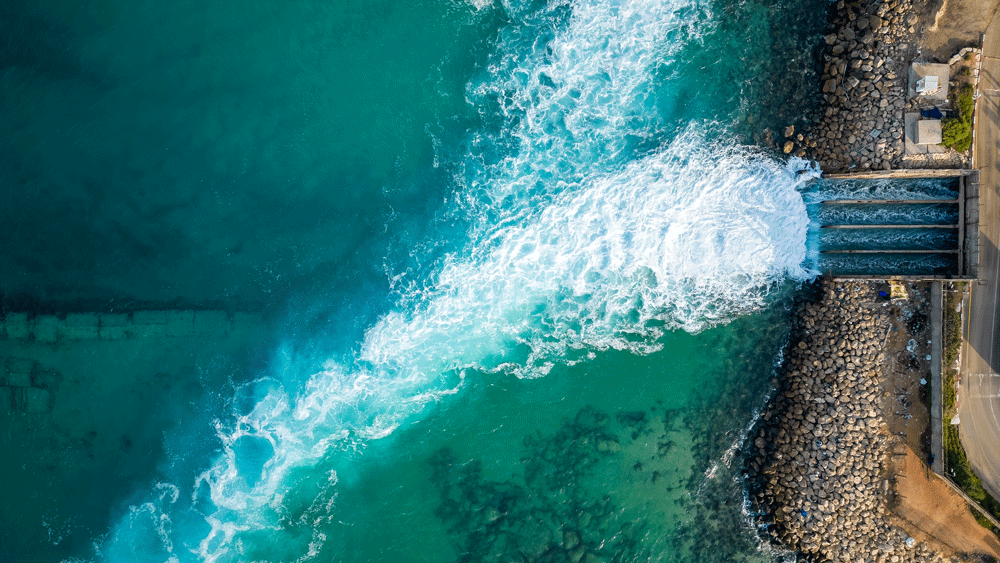
The highly specialised nature of the work and the high cost of equipment and labour mean the dredging market is dominated by a handful of global giants: Van Oord, Ballast Ham and Royal Boskalis Westminster, all of the Netherlands, Jan de Nul and Dredging International of Belgium and the US' Great Lakes Dredge & Dock.
'There is hardly any local capacity in the market,' says Pieter Meijer, Middle East area manager of Van Oord, which recently took the massive Eur 200 million ($218 million) Globe Island construction package. 'There is a lot of land reclamation work in the region. In Dubai there are the artificial islands, such as Palm Jumeirah and Globe Island, which we have got. And in Bahrain there is also a lot of landfill. We have a Eur 50 million ($54 million) foreshore reclamation project at Bandar al-Seef and at West Hidd a Eur 50 million land reclamation project. But next year we expect the major contracts to be for big pipeline projects such as the Dolphin project [to transport Qatari gas to the UAE via a subsea pipeline] and for Kuwait Oil Company [KOC].'
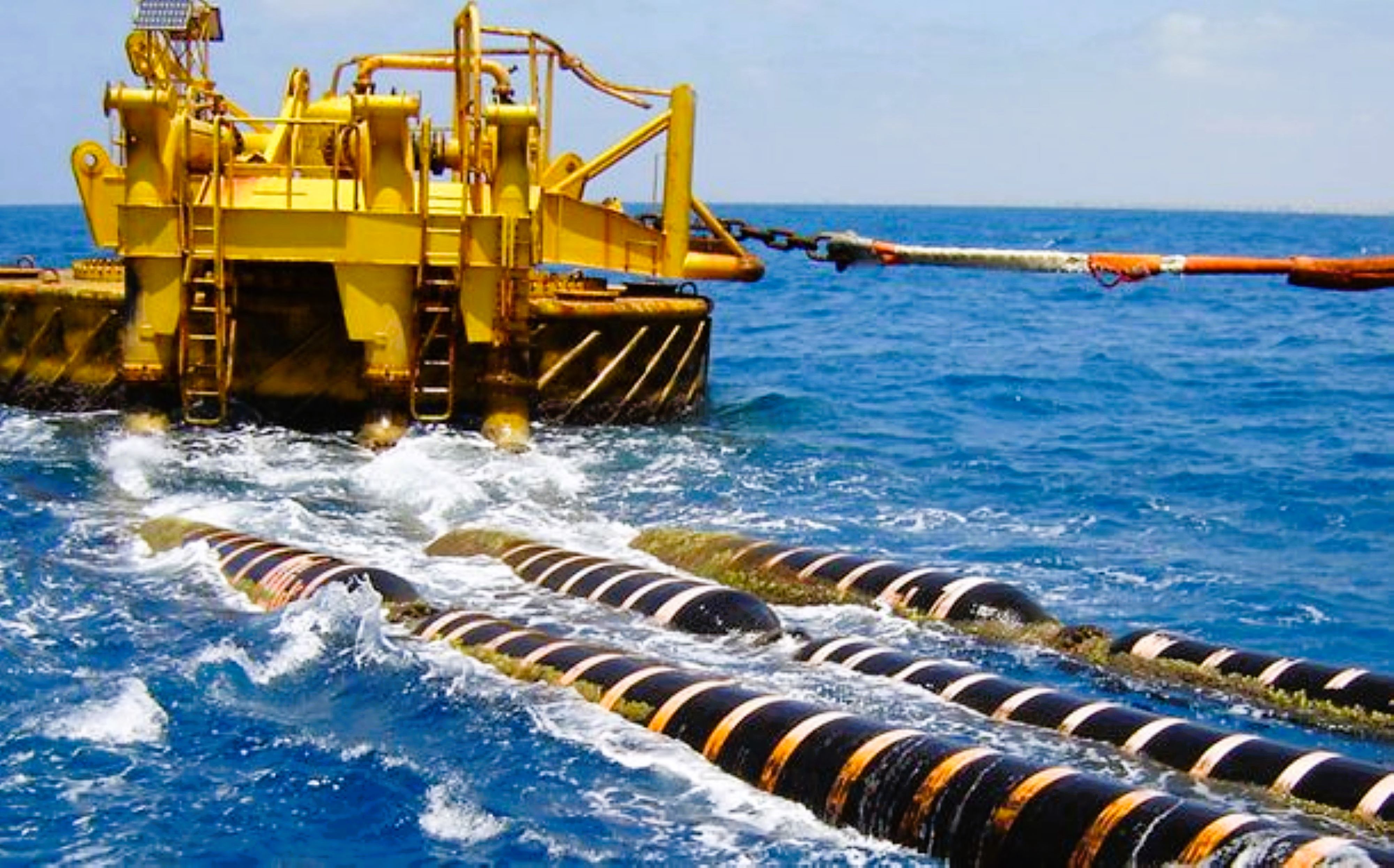
However, while most dredging contractors agree the Middle East market will remain buoyant for the foreseeable future, that does not mean they can afford to relax. Dredging is a highly competitive business with several distinct market sectors, and contractors need to be prepared for major market shifts between these segments. In general, dredging can be defined as work involving the handling of natural underwater materials - silt, sand, clay and rock. Within that definition, contractors can be involved in a wide range of operations, including: sea-bed excavation; creation and maintenance of beaches; land reclamation; restoration of aquatic and wetland habitats; and excavation of pipeline, cable and tunnel trenches. Each of these has its own characteristics and its own particular specialists - so each field of operation tends to moves independently of the others.
'The Middle East is a hit-and-run market where we tend to work on major projects rather than rely on repeat business. At the moment more projects are tourism-driven,' says Roel Berends, director of corporate relations for Royal Boskalis Westminster, the world's largest dredging firm.
'In the late 1980s, when many of the oil countries realised they were too dependent on oil and looked for other revenue streams, it led to many new ports or port enlargement projects in the region. Now the majority of those ports projects have been carried out, the new driver is tourism. The Middle East is an important region to us. We are currently working in Dubai, Bahrain, Qatar and other countries and have a long history in the region.'
Boskalis' annual turnover in the region over the past five years has averaged about $70 million - a figure that looks likely to be equalled or even exceeded in 2003. But last year the company saw revenues peak at more than $140 million - as a result of a single contract: the construction of the crescent island that forms the external breakwater on the Palm Jumeirah project. The hike underlines the project-driven nature of the Middle East market.
Van Oord has also had a good year in the region. As well as landing the Eur 200 million ($218 million) construction contract for Globe Island, it has also carried out dredging work for the UN at Umm Qasr port in Iraq. The latter project, to provide initial dredging to allow larger vessels into the port, was valued at a mere Eur 1.5 million ($1.6 million) but Umm Qasr offers potentially high rewards to dredging contractors.
'At some point Umm Qasr will provide a huge opportunity. It is a large, neglected port that is silted up and full of wrecks,' says one contractor.
Major work is not expected to start at the port until stability has returned to Iraq, but the US' Great Lakes Dredge & Dock has been clearing channels for US reconstruction contractor Bechtel since April. It is therefore well placed to pick up further contracts once work begins in earnest.
Richard Thompson
You might also like...


A MEED Subscription...
Subscribe or upgrade your current MEED.com package to support your strategic planning with the MENA region’s best source of business information. Proceed to our online shop below to find out more about the features in each package.
Take advantage of our introductory offers below for new subscribers and purchase your access today! If you are an existing client, please reach out to your account manager.