


But profit a record high and up by 50 per cent
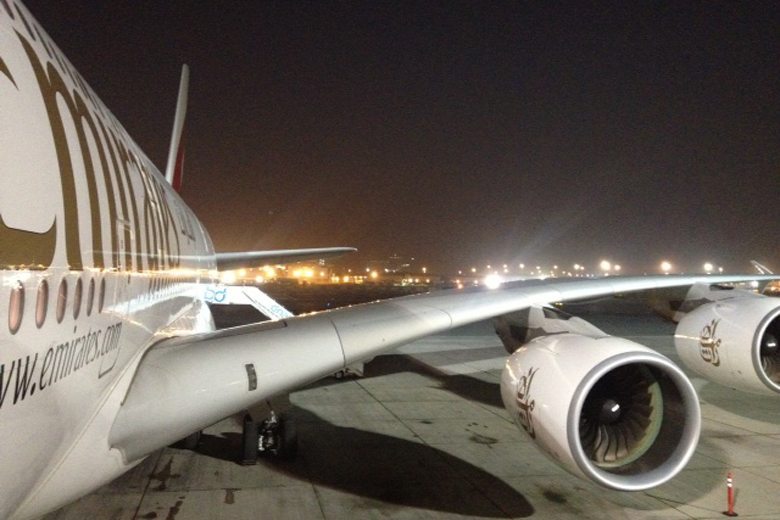
Dubais Emirates Group reported profits of AED8.2bn ($2.2bn) in the fiscal year ending 31 March, up 50 per cent from the previous year.
The record profit was achieved against revenues that declined by 3 per cent to reach $25.3bn.
It marks the 31 year-old groups 28th consecutive year of profitable operations.

Emirates chairman and CEO Ahmed bin Saeed al-Maktoum, said the groups performance validates its business model and strategies against an unfavourable currency situation which eroded our revenues and profits, an uncertain global economic environment dogged by weak consumer and investor sentiment, as well as ongoing socio-political instability in many regions around the world.
The group collectively invested in excess of $4.7bn across a number of areas including the acquisition of new aircraft, new companies, facilities upgrade, new technologies and staff initiatives.
The airline division accounted for $1.9bn of the groups profit, while cargo and logistics arm Dnata accounted for the rest.
The airlines revenue dropped by 4 per cent compared to the previous fiscal year to $23.2bn. The company attributed the drop in airlines revenues to significant currency devaluations against the US dollar and fare adjustments following the reduction in fuel prices.
The currency devaluation is Emirates key markets, which are understood to include Russia and China, translated to $1.6bn revenue loss and claimed $1.1bn of profits.
Operating costs decreased by 8 per cent on account of lower average jet fuel price. The fuel share of the airlines total operating was at 26 per cent, down from 35 per cent in the previous year. This trend meant the airline spent only $5.4bn, some 31 per cent less than the previous fiscal year, on fuel subsidy.
Emirates added 29 new aircraft to its fleet while phasing out nine during the year, expanding total passenger and cargo capacity by 5.5 billion available tonne kilometres (ATKM) to reach a total of 56.4 billion ATKMs, understood to the be the largest globally.
Phasing out the older aircraft and the new deliveries in the past year allowed Emirates to reduce average fleet age to 74 months, which the company says is half the industry average.
Emirates carried 51.9 million passengers in the outgoing fiscal year achieving a passenger seat factor of 76.5 per cent, which is marginally lower comapred to 79.6 per cent in the previous year. This decrease is a direct result of the 13 per cent rise in seat capacity by available seat kilometres (ASKMs), cited the airlne, as well as to lingering economic uncertainty and strong competition in many markets.
You might also like...
World Bank slashes GCC growth forecast to 1.3%
10 April 2026

Al-Habtoor launches $1.3bn Dubai real estate project
10 April 2026

Jordan sets market briefing for Amman water PPP
10 April 2026

A MEED Subscription...
Subscribe or upgrade your current MEED.com package to support your strategic planning with the MENA region’s best source of business information. Proceed to our online shop below to find out more about the features in each package.
Take advantage of our introductory offers below for new subscribers and purchase your access today! If you are an existing client, please reach out to your account manager.