



The International Energy Agency has costed the Saudi, Emirati and Iraqi projects that would let most Gulf crude avoid the strait. It warns that the new routes would remain exposed to attack
Gulf producers would need to spend about $40bn on new pipelines to route most of their oil exports around the Strait of Hormuz, according to the International Energy Agency (IEA).
The estimate, published in the agency's World Energy Outlook 2026, covers 6.8 million barrels a day (b/d) of export capacity that is either under construction or proposed in Saudi Arabia, the UAE and Iraq. The IEA calculates that the investment would add about $2 to the cost of each barrel exported from the Middle East.
The figure gives the clearest indication yet of the scale of the pipeline programme that could follow the 2026 crisis, which the IEA describes as the largest energy supply shock the world has faced. Oil volumes transiting the strait collapsed from 20 million b/d to an average of about 3 million b/d in March, April and May.
Project pipeline
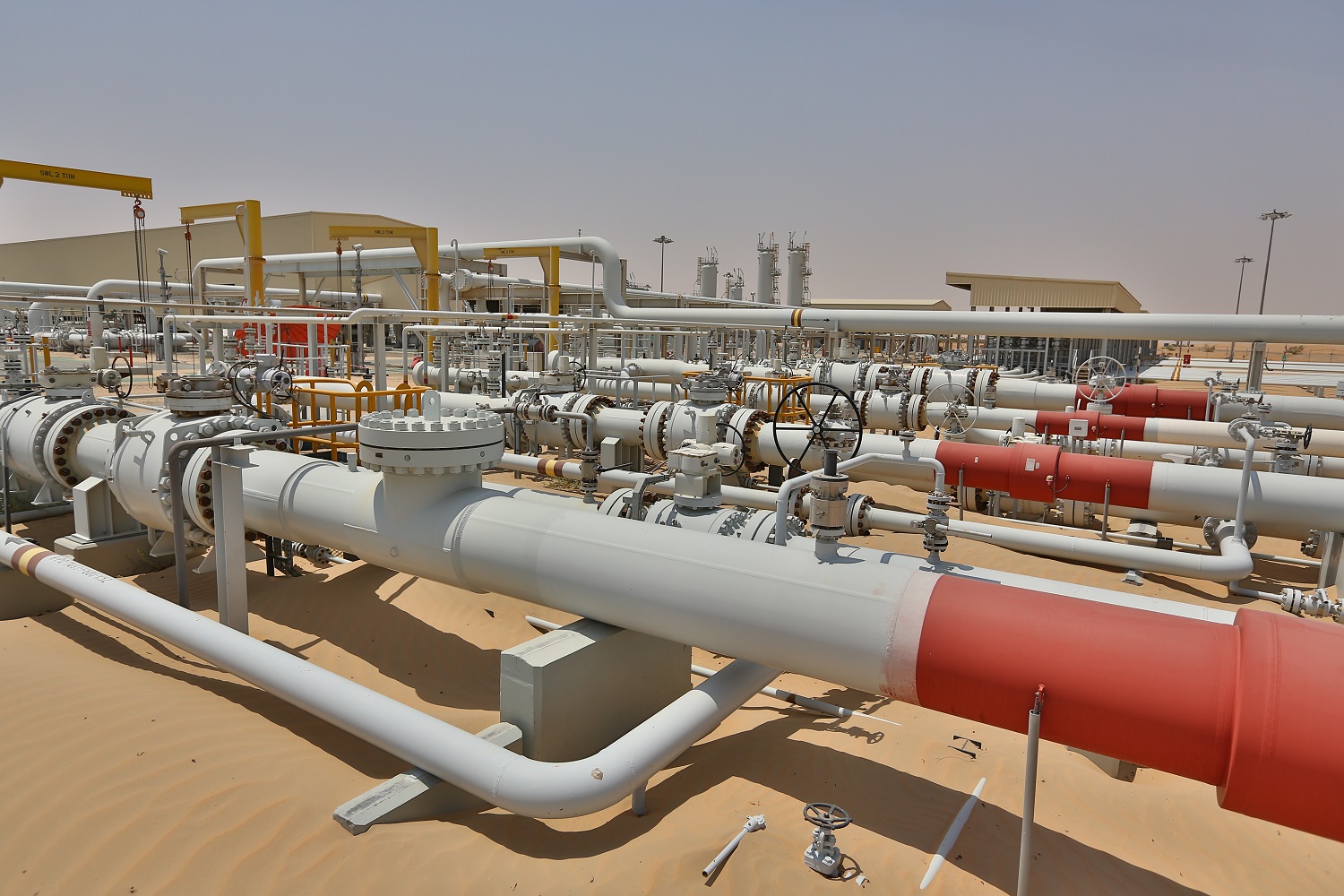
The only scheme under construction in the IEA's list is Abu Dhabi National Oil Company's (Adnoc) West-East pipeline, which will add 1.8 million b/d of capacity. MEED has reported that the 520-kilometre line from Jebel Dhanna to Fujairah is being built in three sections. It is expected to double Adnoc's crude export capacity through Fujairah when it is commissioned in 2027.
Separately, Adnoc expects to tender the main engineering, procurement and construction (EPC) contract for a new offshore line linking its Gulf processing islands to Jebel Dhanna, which will eventually connect to the West-East pipeline, by the end of the year .
The largest proposed project is a 3 million b/d expansion of Saudi Aramco's East-West pipeline from Abqaiq to Yanbu on the Red Sea. Aramco president and CEO Amin Nasser has said engineering work began in the early days of the conflict. Saudi Energy Minister Prince Abdulaziz bin Salman said in October that the kingdom is looking to expand its crude export capacity by pipeline to as much as 10 million b/d.
In Iraq, the IEA counts two 1 million b/d lines from Haditha. One would run to Baniyas in Syria. The other would run to Fishkhabur, where it would link to the Iraq-Turkiye pipeline to Ceyhan. MEED has reported that a consortium led by Qatar's UCC, which includes Chevron and TotalEnergies, is discussing terms for four interconnected pipeline packages worth about $5bn, with a contract expected to be signed before the end of the year. Iraq and Saudi Arabia are also considering reviving the 1,568km pipeline from Zubair to Yanbu, which was halted in 1990.
The agency says the new routes would not help all Gulf producers. Bahrain, Kuwait and Qatar would still depend on the strait for their exports.
Bypass flows
About 8 million b/d of bypass pipeline capacity is already available, according to the report. These lines carried about 2 million b/d in 2025 and ramped up to a peak of 6.8 million b/d during the crisis.
In the IEA's Stated Policies Scenario (STEPS), only the Adnoc project is completed and bypass flows return to about 3 million b/d by 2035. If every existing, under-construction and proposed route were built and used to capacity, bypass flows could reach about 14.5 million b/d. Most Saudi and UAE exports, along with more than 60% of Iraq's, would then avoid the strait.
The IEA's new Low Hormuz Case adds higher output from producers outside the Gulf and demand cuts by importers. In that case, oil transit through the strait falls below 2 million b/d by 2035. Raising supply outside the strait would require about $200bn of additional upstream investment between 2025 and 2035.
Security caveats
The agency cautions that the pipelines would not remove the risk. Drone attacks temporarily shut the East-West pipeline in September, and any exports to the Red Sea must pass through the Bab Al-Mandab Strait. MEED has reported that Houthi attacks on Aramco's Red Sea assets since July, including the Jizan refinery, have cost Riyadh that alternative route. Even in the Low Hormuz Case, the Middle East still exports nearly 15 million b/d in 2035, about 20% of global oil trade.
The IEA also notes that if the strait is at least partially open, Gulf producers would have few reasons not to use it. That could weaken the commercial case for the most expensive bypass schemes.
Execution risks are emerging in Iraq. MEED has reported that the Common Seawater Supply Project is behind schedule, largely because pipeline segments cannot easily be imported through the strait. The same problem could force contractors on new export lines to use more costly routes.
The IEA says there is no feasible bypass for liquefied natural gas (LNG). About 110 billion cubic metres of gas passed through the strait in 2025, most of it from Qatar. Adnoc is pursuing a 4 million tonne a year LNG export facility at Fujairah, fed by pipeline from Abu Dhabi. MEED has reported that it has selected three teams for front-end engineering and design work.
Cost pressures
The wider upstream picture is less encouraging for contractors. The IEA expects global upstream oil and gas investment to rise by about 1% to $550bn in 2026, with increases elsewhere largely offset by reductions in the Middle East. Its Upstream Capital Cost Index is forecast to rise by about 8% this year, which the agency says will raise the risk of overruns and delays.
The agency also warns that a resolution of the crisis could create a buyers' market for oil and gas. Lower prices would test whether the security case for bypass pipelines survives once the strait reopens.
You might also like...

Riyadh gives bidders more time for aviation complex
20 November 2026

Dar Global launches Trump project in Qatar
20 November 2026

Saipem wins Egypt offshore drilling contract
20 November 2026
Kuwait’s $7.7bn oil contract shift may reduce interest from bidders
20 November 2026



A MEED Subscription...
Subscribe or upgrade your current MEED.com package to support your strategic planning with the MENA region’s best source of business information. Proceed to our online shop below to find out more about the features in each package.
Take advantage of our introductory offers below for new subscribers and purchase your access today! If you are an existing client, please reach out to your account manager.