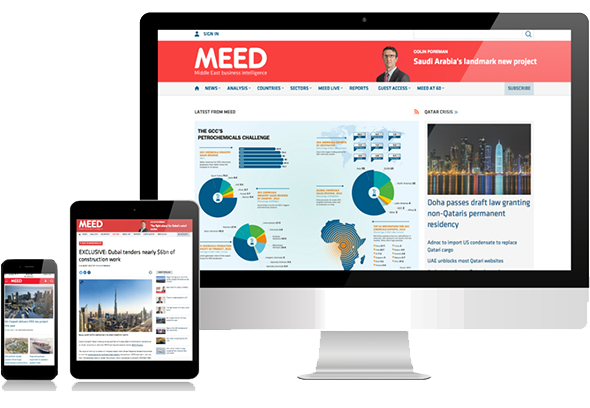



Despite investing billions of dollars in new production capacity, the Gulf's petrochemicals industry is suffering from a shortage of supply as firms choose to sell at a higher price elsewhere.
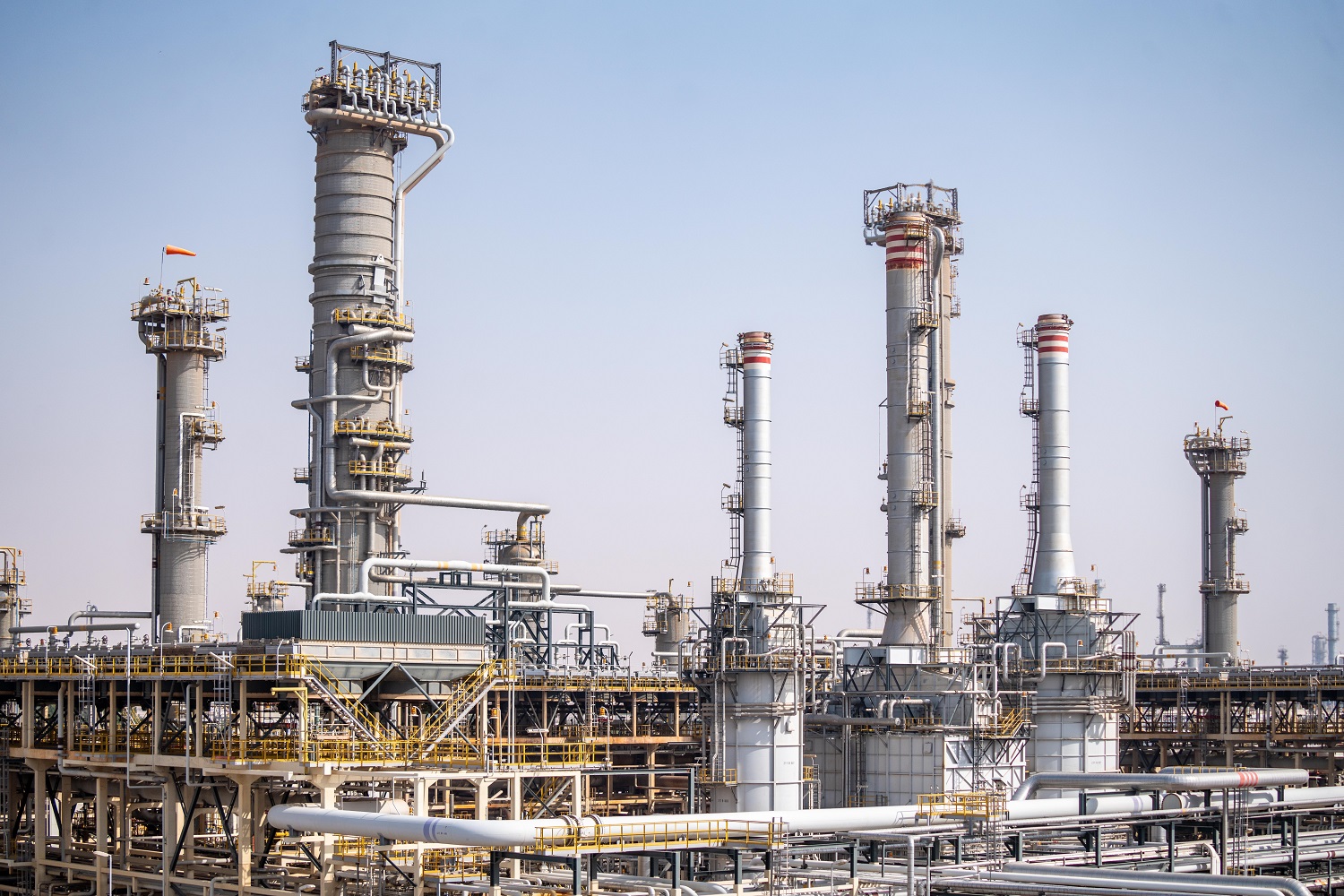
The Gulf petrochemicals industry has invested billions of dollars on expanding capacity in recent years. But despite much of this additional production having come on line, the supply of petrochemicals products in the region has dropped. Instead of selling to customers in the Gulf, producers are chasing the higher prices for their products in other markets, particularly polyethylene, their main product.
"Polyethylene [supply] in the Middle East is very tight," says Utpal Sheth, Dubai-based director of Middle East polyolefins at chemical industry consultant CMAI. "Convertors are finding it difficult to get hold of any.
"April prices for polyethylene were very low, at about $930-950 a tonne for high-density polyethylene (HDPE), almost $250 a tonne less than in Asia, the Middle East's main market. No one was willing to sell here when they could get higher prices elsewhere."

Consumers of petrochemicals products in the Gulf were preparing for the additional capacities to come on line to enable them to restock, but some key start-ups have been delayed, such as the 1.37 million-tonne-a-year (t/y) plant at Petro Rabigh in Saudi Arabia. This adds to the difficulty of having producers that had previously sold within the region now preferring to sell to the higher-priced Asian region, which supplies US users.
Low demand
"According to data from the American Chemistry Council, after falling by 30-40 per cent in the second half of 2008, demand is finally stabilising [in the US]," says Paul Hodges, chairman of London-based industry consultant International Echem. "Oil product demand is low and profitability is near non-existent [as a result of the low prices globally], so people are shutting down."
Hodges estimates that about 20 per cent of crackers have been shut down worldwide, but none in the Gulf.
On average, output from the US' Dow Chemical Company, the second-largest chemical company in the world behind Germany's BASF, was 68 per cent of total capacity in the first quarter of this year, up from 64 per cent in the fourth quarter of 2008, but still well below full capacity.
"If they are typical, and it is a fair bet that they are, these are major cutbacks in supply," says Hodges. "People are reluctant to build any stocks in anticipation of demand picking up."
When demand will pick up for a sustained period is the subject of much speculation. "Look at polymers," says Hodges. "There is an incredible amount of speculation in the futures markets. In China last year, 150,000 tonnes of polymers were traded. The same amount has been traded in just the past two weeks."
Speculators are looking for a recovery and expect prices to be higher in about six months' time, so are buying now while prices are low. This effectively means the rise in the number of trades is not reflecting increased demand, but rather opportunistic buyers.
"The outlook for demand remains the same for the next two-three years, we are just bouncing along the bottom," says Hodges.
Despite the bleak demand outlook, the Middle East's petrochemicals firms are expanding, hoping to take advantage of their low cost of production to gain market share.
In the UAE, Abu Dhabi's Borouge 3 project is making progress. Borouge, a joint venture of Abu Dhabi National Oil Company and European plastics giant Borealis, invited three international firms on 24 April to bid for the project management consultancy contract on the $3bn project to boost capacity by 2.5 million t/y at the Ruwais plant in Abu Dhabi.
When the Gulf's new petrochemicals complexes do eventually come on line, the cheap feedstock on which the plants are run will work to their advantage, and they are expected to run to full capacity as a result. "The rest of the world will have to fight for volumes," says Hodges.
The next stage for the global industry will be getting rid of over-capacity. "We will be lucky if operating rates average 85 per cent," says Hodges. "So far, we have only seen a few marginal facilities shut down [around the world], nothing major yet. But it has to come."
However, Middle East petrochemicals companies have also been reporting weak profits. Saudi Basic Industries Corporation (Sabic), the Gulf's largest petrochemicals producer by market value, posted a 95 per cent slump in net profits in the fourth quarter of 2008 compared with the same period a year earlier.
Similarly, fourth-quarter earnings of Industries Qatar (IQ), Sabic's closest rival by market value, dropped by more than 90 per cent to QR100m from QR1.5bn a year earlier. IQ's first-quarter 2009 net profit was down 68 per cent to QR612m from QR1.9bn in the first quarter of 2008.
Revised estimates
The announcements are a concern for petrochemicals executives and analysts, who have significantly revised down their earnings estimates for 2009. Many expect the trough to continue through to 2011 for commodity chemicals, as capacity is reduced, particularly in Europe and Asia, where ageing technology and high costs are resulting in shutdowns.
Five ethylene crackers in the Gulf will begin shipping product globally by the second quarter of this year. Four are in Saudi Arabia: Yanbu National Petrochemical Company's (Yansab) 1.3 million-t/y cracker in Yanbu, Saudi Ethylene & Polyethylene Company's 1 million t/y cracker at Jubail, and two crackers producing 2.55 million t/y at Petro Rabigh. The fifth is the 1.3 million-t/y Qatar Chemical Company and Qatofin joint venture at Ras Laffan.
With less experienced petrochemicals operators, Iran faces greater difficulties in getting its projects up and running on schedule. Inter-national sanctions on trade with the country mean the industry has to rely largely on government or domestic private funding.
Laleh Petrochemical, a joint venture of Iran's National Petrochemical Company (NPC), Poushineh Industrial Group and Sabic, is one example. In April, it pushed back the start-up of its 300,000-t/y low-density polyethylene (LDPE) project in Bandar Imam by a month for the third time, giving no reasons for the delay. It was initially set to start producing in November 2008.
Other projects in the financing or engineering stage could face fresh delays, as terms are renegotiated in light of reduced engineering, procurement and construction costs.
The arrival of new ethane-based cracker supply from the Middle East will also reduce demand for olefins from existing crackers based on naphtha and liquefied petroleum gas in Asia and Europe, due to ethane's cost advantage.
According to Hassan Ahmed, head of global chemicals research at UK bank HSBC, Saudi Arabia's ethane-based crackers have fixed, long-term feedstock supply contracts, at $0.75-1.25 a million BTUs. With crude oil trading at about $50 a barrel and natural gas at $4-5 a million BTUs, this is a massive advantage for Saudi producers.
"The average feedstock cost advantage for a Middle East ethylene producer equates to $300-350 a tonne on a price basis of about $600 a tonne," says Ahmed.
HSBC expects Middle East firms to continue to generate healthy margins despite the tough conditions, and gain market share by being the lowest-cost producers.
Regardless of the fluctuating phases of demand cycles, as long as the region's feedstock advantage remains and global energy prices remain at or above current levels, this advantage is unlikely to erode.
With European producers cutting capacity, and in some cases shutting down, Gulf producers should be in a good position to make healthier profits once worldwide demand picks up.
You might also like...

Caution governs Jordanian bank lending
12 June 2026

Trump touts Iran settlement after fresh hostilities
12 June 2026
A MEED Subscription...
Subscribe or upgrade your current MEED.com package to support your strategic planning with the MENA region’s best source of business information. Proceed to our online shop below to find out more about the features in each package.
Take advantage of our introductory offers below for new subscribers and purchase your access today! If you are an existing client, please reach out to your account manager.