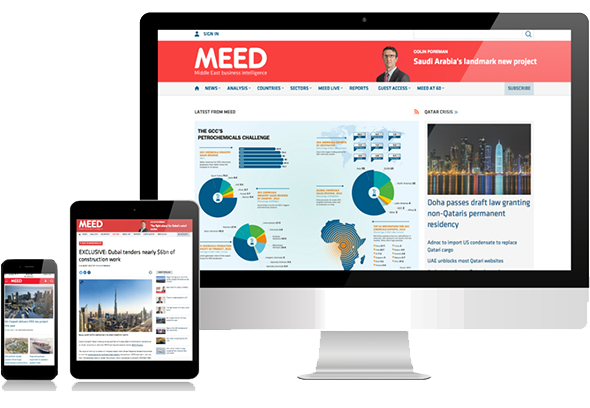



Countries around the region are increasingly focusing on building up their manufacturing capabilities as a means to diversify their economies and gain protection from imported inflation.
The collapse in oil prices since the final quarter of 2008 has served as a reminder for Middle East governments of the importance of having a diversified economy. With many governments expecting to run budget deficits this year, the need to expand their sources of income beyond oil and gas is becoming ever more pressing.
Most GCC countries have been striving to broaden their industrial base for several decades, with limited success. Bahrain led the way, opening the Gulf’s first aluminium smelter in 1971, operated by Aluminium Bahrain (Alba). Qatar followed by establishing Qatar Steel in 1974. In the mid-1970s, Ras al-Khaimah Cement Company and Dubai Aluminium started operations in the UAE, and petrochemicals giant Saudi Basic Industries Corporation (Sabic) was established in Saudi Arabia.
Imported goods
Despite these early efforts, however, manufacturing is still in its infancy in the region, accounting for less than 15 per cent of gross domestic product (GDP) in the six GCC countries, including just 2 per cent in Kuwait.

The lack of their own manufacturing capability has left the Gulf states reliant on importing manufactured goods to meet local demand, and has consequently made their economies vulnerable to imported inflation.
“In some ways, it is like an advanced manifestation of what economists used to call ‘the Dutch disease’,” says Robert Young, vice-president for Europe and Middle East business consulting at US-headquartered consultant CRA International.
The term was coined by economists in the 1970s to describe the decline of the manufacturing sector in the Netherlands in the wake of its discovery of a large natural gas field.
According to the theory, revenue from natural resources leads to a reduction in industrial activity in a country, as the inflow of foreign currency and subsequent inflation makes local manufacturing uncompetitive compared with other markets.
However, the emergence of China and India as ravenous consumers of both raw materials and finished products since the mid-1990s has prompted renewed interest among the GCC states in developing their own manufacturing bases. Competition for imports, together with a pressing need for job creation and alternative income streams, are driving the region towards a new period of industrialisation.
“Demographics make it a necessity to develop a manufacturing industry,” says Sheikha Dheya bint Ebrahim al-Khalifa, president of Bahrain-based Riyada Consulting. “You cannot rely on importing all goods that you need. Transportation costs alone make it unsustainable, and there is a growing need for employment.”
A raft of government-backed manufacturing projects are due to come on stream in the next few years as a result of this renewed effort to diversify away from hydrocarbons production. This includes aluminium projects in Oman, Qatar and the UAE, which in total will add 1.6 million tonnes of smelting capacity by 2010.
To create a sustainable manufacturing sector, however, the Gulf states have to be careful not to limit their investments to primary industries that rely on selling into volatile export markets.
They also need to develop downstream industries whose products can be sold at higher prices, particularly since it is these sectors that account for the bulk of imports to the region.
According to figures from the London-headquartered Iron & Steel Statistics Bureau, the Middle East and North Africa region is the largest importer of finished and semi-finished steel products, consuming more than 40 million tonnes a year (t/y).
“Producing just molten aluminium is not going to give [profit] margins,” says YS Shashidhar, vice-president for South Asia and the Middle East at US consultant Frost & Sullivan. “The margins are in the downstream applications such as rods and contractors.”
As the early pioneer of aluminium production in the region, Bahrain has had many years to foster the growth of ancillary industries. Today, about 50 per cent of the output from Alba’s 860,000-t/y smelter is sold locally to a well-developed downstream sector, which includes Gulf Aluminium Rolling Mill Company, Bahrain Aluminium Extrusion Company, Midal Cables, Bahrain Atomizers and AluWheel. Taken as a whole, GCC customers now consume about 66 per cent of the smelter’s aluminium.
Oman’s Sohar Aluminium has followed this example and is assisting the development of a downstream aluminium cluster in its home market. In 2007, it signed a 20,000-t/y liquid metal sales deal with Austria’s Salzburger Aluminium and the local Takamul Investments to supply a factory at an industrial park adjacent to the smelter that will manufacture busbars, which are used for electrical power distribution.
Domestic development
Developing downstream industries on the back of investments in primary industry in this way also helps to create local employment opportunities and ensures more wealth remains in the region.
It is understandable why until now investments have tended to focus on exploiting the region’s access to low-cost energy. This obvious competitive edge has enabled new companies to break into mature markets and compete with rivals from countries that industrialised more than 100 years ago.
However, with concerns growing over whether or not future supplies of gas in the region will be sufficient for all the projects planned, the extent of this advantage is being called into question and the business case for developing new energy-intensive industries is weakening. Gas constraints have already forced Bahrain’s Alba to put on hold plans to expand its smelting capacity to 1.2 million t/y.
As a result, GCC countries are seeking to develop their secondary and tertiary industries as well. But faced with competition from low-cost manufacturing hubs such as China and more technologically advanced producers in the West, it is a huge challenge for the Gulf states, particularly given the lack of a manufacturing heritage in the region.
For many products, it will always be cheaper to import than to try to reproduce them locally, and as such investors need to be selective about which opportunities they pursue. “The GCC is not focusing on low-cost production as we cannot compete with China,” says Al-Khalifa. “The focus here is on developing hi-tech manufacturing with lower-intensive and more highly skilled labour.”
Gulf governments are increasingly promoting niche areas such as nanotechnology and biotechnology. “With industries that are in their infancy, there is the chance that if you make the right investments in education and research, you can move ahead,” says Young.
To address the lack of technology and expertise, free zones have been set up throughout the Gulf to encourage international companies to invest in the region and set up educational and research and development facilities.
Out of all the GCC countries, Saudi Arabia is pursuing the most ambitious industrialisation programme. “Saudi’s National Industrial Strategy aims to grow the industrial sector by 8 per cent a year until 2020,” says Young, whose company has been advising the government on its approach.
The plan is to focus on developing a few key manufacturing areas: packaging, metals processing, pharmaceuticals, electronics, biotechnology and automotive components.
Industrialisation plans
Several agencies have been established to boost industrial activity in the country, including the Saudi Industrial Property Authority (Modon). It has been a driving force behind the growth of the kingdom’s non-hydrocarbons industrial sector in recent years, attracting investors to open manufacturing plants in a series of industrial clusters around the country. Modon currently manages 14 industrial cities across the kingdom, which employ more than 300,000 workers in total.
“They need to be careful they are not creating too many competing initiatives,” says Young, “But that concern has been recognised and now they are looking to make sure resources are not being wasted and that finances and managerial talent are not being spread too thinly.”
With a largely youthful population of almost 30 million people, Saudi Arabia faces the greatest pressure of all the GCC countries to create employment opportunities. Despite the vast wealth produced by its oil and gas production, the investment in that sector generates a limited number of jobs for locals -Young estimates that every $1m worth of investment creates just half a job.
But there is no doubt that the focus on industrial growth is bearing fruit. In 1975, there were about 472 factories operating in Saudi Arabia; by the end of 2008, that figure had risen to 4,072.
Considering that 40 years ago there was virtually no manufacturing activity in the GCC, the region has advanced a long way in a relatively short time. A successful manufacturing sector requires access to raw materials, technology and a skilled workforce, and progress is being made in all these areas.
For now, the sector’s contribution to Gulf countries’ GDPs remains limited, but the seeds for future generations are being sown in the right places and, provided these efforts continue, governments can look to the future with a degree of confidence.
You might also like...

Caution governs Jordanian bank lending
12 June 2026
Trump touts Iran settlement after fresh hostilities
12 June 2026
A MEED Subscription...
Subscribe or upgrade your current MEED.com package to support your strategic planning with the MENA region’s best source of business information. Proceed to our online shop below to find out more about the features in each package.
Take advantage of our introductory offers below for new subscribers and purchase your access today! If you are an existing client, please reach out to your account manager.