


Lack of abundant fossil fuel resources drives innovation and vice versa
None of the GCC member states and only two of the Mena states - Tunisia and Morocco - are ranked among the worlds top 50 most innovative countries, based on Bloombergs 2015 innovation index.
The index measures countries against six parameters including research and development, manufacturing, hi-tech companies, education, research personnel, and patents.
The top 10 most innovative countries are South Korea, Japan, Germany, Finland, Israel, US, Sweden, Singapore, France and the UK.
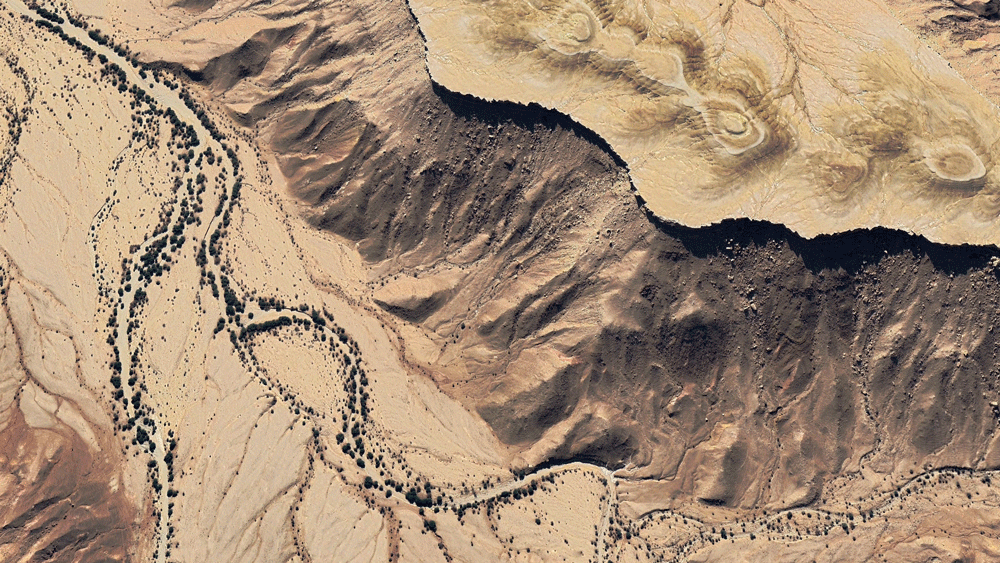
Six of the top 10 most innovative countries happen to be among the top 10 largest net oil importers as well, and none of the oil exporting countries made it to the top 50 most innovative.
It can then be inferred - perhaps loosely - that the lack of abundant fossil fuel resources drives innovation, and vice versa.
Given major increases in a countrys income, usually prompted by the discovery of natural resources, usually reduces the competitiveness of the countrys manufactured goods, and causes an increase in imports. Put another way, the success of a resource-based sector like oil and gas usually reduces the likelihood of other sectors succeeding at the same time or scale, a phenomenon which has been called Dutch disease due to its occurrence in the Netherlands in 1977, when the country made a major gas discovery.
Ironically, the Netherlands is now the worlds 20th most innovative country, proving that it has successfully manoeuvred to balance the success of its natural resources-driven industry with developing other sectors of its economy such as research, education and technology.
The UAEs plan to invest $82bn into its science, technology and innovation sector is an important - in fact perhaps the most important - step, in its bid to further diversify its economy away from hydrocarbons and liberate its economy from oil price volatilities.
While continued investments in the oil and gas sector is necessary, indeed Saudi Arabias Oil Minister Ali al-Naimi has said that some $700bn in oil and gas finance would be required over the next 10 years, allocating sizeable budget for innovation and high technology is a growing imperative if the regions largest economies were to be truly committed to their economic diversification strategies.
You might also like...
Risk accelerates Saudi spending shift
27 March 2026

Remaking construction in Saudi Arabia
27 March 2026
Kuwait restores power lines after debris damage
27 March 2026





A MEED Subscription...
Subscribe or upgrade your current MEED.com package to support your strategic planning with the MENA region’s best source of business information. Proceed to our online shop below to find out more about the features in each package.
Take advantage of our introductory offers below for new subscribers and purchase your access today! If you are an existing client, please reach out to your account manager.