


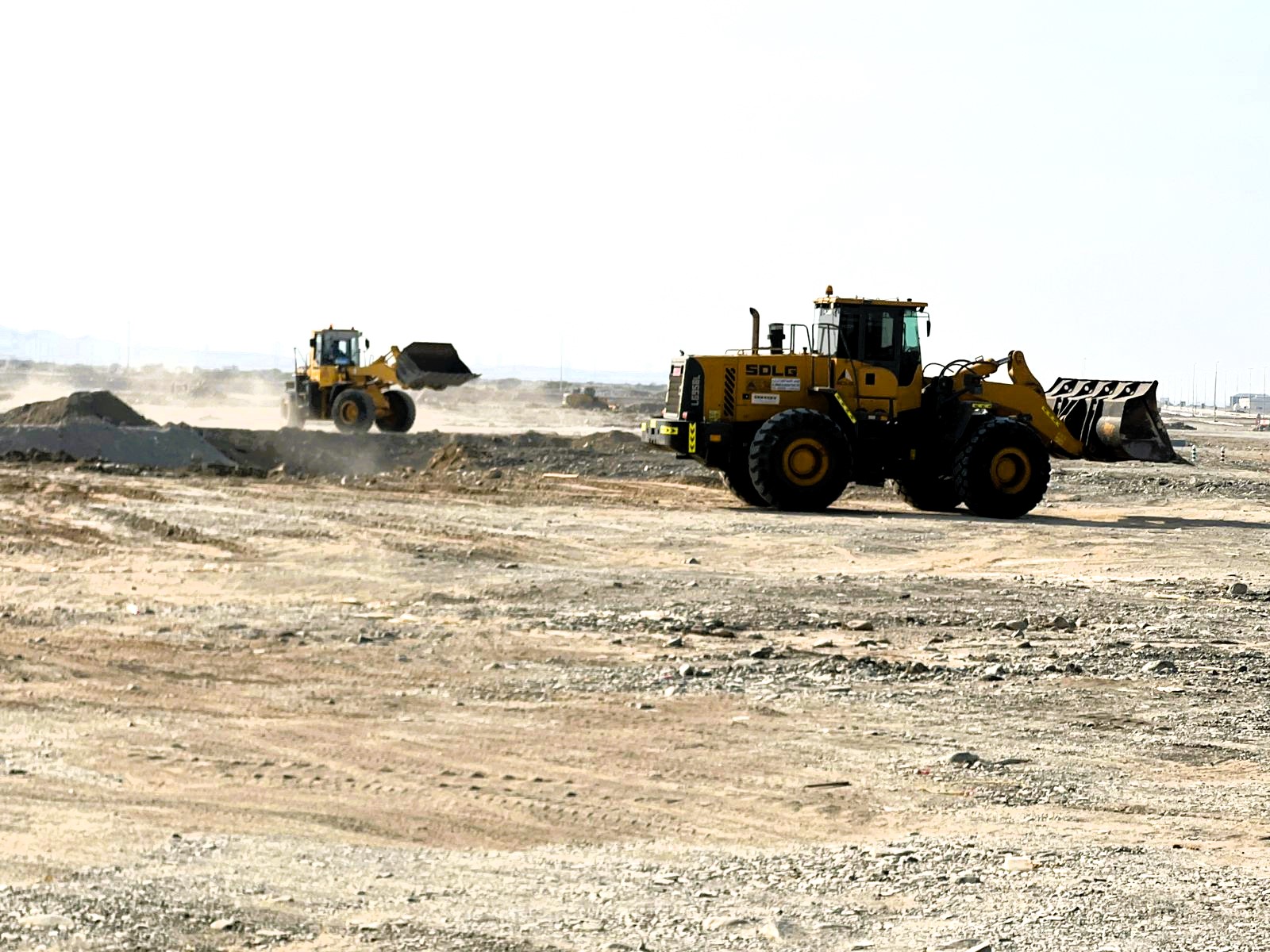
The kingdom's road infrastructure is expanding rapidly, but will it grow quickly enough to keep up with burgeoning demand?
Little more than 50 years ago, Saudi Arabia had barely 200 kilometres of paved roads, linking a handful of royal palaces around Riyadh. Now it has about 150,000 kilometres of roads and this is growing daily.
Saudi Arabia has established an effective highway network linking Riyadh in the centre to Jeddah in the west and the Eastern Province, as well as points north and south.
Key roads include the 750-kilometre-long Riyadh-Taif highway, the 750-kilometre Taif-Abha-Jizan highway, the 421-kilometre Mecca-Medina highway and the 383-kilometre Riyadh-Dammam highway.

But the Saudi Arabian authorities are under pressure to increase capacity to ensure the kingdom's strong economic potential is not constrained by blocked transport arteries. The increasing population is stretching resources to the limit.
The kingdom is no stranger to ambitious roads projects. The completion of Saudi-Bahrain King Fahd causeway in 1986 a 26-kilometre, four-lane highway in the middle of the Gulf demonstrated the country's willingness and technical capacity to implement challenging schemes.
In 2003, the government allocated SR 20,000 million ($5,332 million) to build 3,950 kilometres of roads over a five-year period, with the emphasis on high-speed links between urban areas and remote provinces.
Subsequent annualised budget allocations have ensured a host of projects have got off the ground. This year, funding has been allocated for 8,000 kilometres of roads. The transport and telecommunications budget for 2007 is set at SR 13,600 million ($3,626 million), representing a 38.7 per cent year-on-year increase.
Just this week, a host of contracts worth SR 1,700 million ($453 million) were announced (see News, page 18)The Saudis are responding to rapid growth in their infrastructure, but other factors are also having an effect. 'Saudi Arabia is the major freight hub of the region. You will find most agricultural produce going to or through the kingdom,' says Michael Wing, a transport specialist at Hyder Consulting.
The series of economic cities sprouting up across the kingdom one of which, the Prince Abdulaziz bin Mosaed Economic City in Hail, is explicitly focused on the transport and logistics sector have emerged as robust demand drivers for the Saudi Arabian road improvement programme.
'The economic cities have mixed-use developments retail, commercial, residential units serving big populations and a large number of labourers. Accordingly, you need the supply to meet the resulting increase in transport demand,' says Muhammad Mustafa, an associate director at the IBI Group, which is advising on a comprehensive transport system for Medina.
Although much of the new spending is designed to meet the needs of the economic cities, it is also geared to meeting demand for new highways to keep the Saudi Arabian economic boom on track. New and upgraded roads will also help satisfy the massive increase in urban traffic volumes that has accompanied population growth and the economic upswing. Studies suggest the volume of vehicular traffic in Riyadh has increased five-fold since 1980. Arriyadh Development Authority (ADA) says the number of daily trips by car in the city now exceeds 50 million.
Upgrade projects
Huge volume increases have led to severely congested roads, especially in urban areas, triggering a concerted effort at urban road renewal. New real estate developments in and around major population centres are underpinning a massive push for road infrastructure, propelled by developments such as Riyadh's King Abdullah Financial District and the city centre upgrade.
Contractors have their hands full with the resulting slate of road upgrade projects, with the main thrust on expanding public highways. 'About 60 per cent of our projects are for dualising highways,' says a roads specialist at the local Al-Harbi Trading & Contracting. 'The Transport Ministry typically wants to add two extra lanes to two-lane highways and convert them into divided roads so that is mostly what we are doing.'
Only a minority of government spending is earmarked for grassroots projects. Al-Harbi says only about 20 per cent of its roads contracts are to build newly paved roads.
Other key projects include upgrading feeder roads and junction improvements. 'All over the kingdom, they are building new feeder roads, making complementary works for new expressways, adding interchanges and bridges there is a lot of work going on,' says Usama Dahman, vice-president of Saudi Consulting Services (SaudConsult).
Contractors are primed for contract awards in the final quarter of 2007 for one of the biggest new road projects to get off the ground in recent years a planned 570-kilometre highway in the Eastern Province. Priced at $740 million, the project involves the construction of a dual carriageway linking Batha to Shaybah and Umm al-Zumour on the Omani border, due for completion in 2011. Three engineering, procurement and construction bidders, all local, are in the running for the motorway contract, designed to facilitate greater traffic flows in one of the kingdom's busiest regions.
Municipal authorities are pressing ahead with their own road programmes. Medina's strategic transport plan has been designed to adapt to the city's massive projected population increases, while the other holy city, Mecca, has had one of the few private sector-operated roads schemes to get off the ground, at the Jebel Omar real estate development. The private Jebel Omar Development Company is overseeing construction of a road parallel to that linking the Jeddah-Mecca expressway with Haram.
Jeddah Municipality in 2006 handed the US' Fluor Corporation a project management contract to oversee the municipality's SR 2,000 million ($533 million) plans for major investments in infrastructure development, including the construction of roads, bridges and related facilities. It is estimated that 30 bridge and tunnel projects will be required over the next five years to ease growing congestion.
Reducing pollution
This need to relieve traffic problems has kickstarted Riyadh's road upgrade plan. The ADA is pushing a five-year development project to upgrade and repair Riyadh's 2,900 kilometres of arterial roads, 1,600 kilometres of secondary arterial roads and 12,700 kilometres of other roads.
One of the key projects under way is on the final section of the Riyadh ring road, undertaken by Saudi Binladin Group for the Transport Ministry. This is to build a 30-kilometre, eight-lane highway running from interchange one at Salboukh road to interchange 29 at Taif road, including construction of seven new interchanges, three large bridges, service roads and associated roadworks. The upgrade will support efforts to provide smoother highway connections between the city's axis points.
In late June, Riyadh governor Prince Salman bin Abdulaziz announced the award to Saudi Oger of a SR 698 million ($186 million) construction contract for Riyadh's King Abdullah road scheme the latest, but not the last, attempt to relieve the city's chronic traffic congestion. The 36-month contract involves widening the existing road to three lanes in each direction, and adding four underpasses.
What makes the project stand out is its environmental theme, which was previously absent in the kingdom. Trees are to be planted at the side of the road to reduce pollution levels and a 10-metre space will be left in the centre of the highway for the laying of track for electric trains indicating that the authorities are starting to think more strategically about integrating the transport network.
Consultants say such road-rail integration could emerge as a key theme in future transport projects. 'When it comes to urban transport systems, there is a strong need for integration,' says Mustafa of IBI. 'Decision-makers are becoming more supportive of intermodal switching.'
The firm's plans for Medina involve a multi-modal integrated public transport solution incorporating rail and bus rapid transit systems.
This kind of strategic thinking is still more evident at the municipal level than at the ministerial level, where efforts are still largely focused on plugging the most severe gaps in the country's road infrastructure. Fragmentation makes it difficult to think holistically about transport issues. 'The big picture is not really there yet there is no clear strategic plan,' says one consultant. 'There are a lot of plans for the municipalities but not for the kingdom itself, and you can see that in the annual capital underspend. The ministry never gets near its budget targets.'
Splitting responsibility between two departments has also stunted effective co-ordination of nationwide transport policy. While the Transport Ministry has responsi-bility for roads, the railways have always been the remit of the Saudi Railways Organisation, and contact between the departments has been limited. Although the Saudi Arabian General Investment Authority has attempted to forge a more integrated approach to transport, the learning curve is steep.
However, pressure for change is coming from the top. King Abdullah's emphasis on boosting regional development spreading the wealth to the corners of the kingdom is steering investment into roads projects in deprived areas, such as the south-western province of Asir.
Priority areas
In late 2006, Abdullah launched a series of infrastructure, education and health projects in Asir province, with significant volumes of investment made available for priority areas.
Several roads are under construction, with a 60-kilometre dual carriageway to link Al-Mahail with the western coastline and a 36-kilometre, two-lane road running from Abha to Magran in the Asir region. New mountain roads planned for Asir, Jizan and Baha districts will benefit the associated agriculture, mining and tourism sectors.
Although private management of schemes has been introduced in Jeddah, previously stated plans to build major highways on a build-operate-transfer basis have not come to fruition. With bulging public coffers, the urgency has drained away from such schemes.
Contractors say plans for toll roads at one point envisaging the introduction of a levy of 5 halalas per kilometre have been delayed indefinitely. 'When oil prices sank below $10 a barrel, you heard more about these schemes,' says one Saudi consultant. 'No one is talking about them any more.'
More pressing than harnessing the private sector, say some experts, is the need to configure a more coherent strategic view of how to fit together the kingdom's various transport systems, particularly with aviation traffic booming on the back of new budget carriers and the onset of mega rail projects such as the Saudi Landbridge connecting Jeddah with Jubail.
As municipal authorities start to take a longer-term view of their traffic difficulties, the seeds of such a strategy are slowly germinating. The Saudi Arabian leadership is keen to make progress on its grand vision of the kingdom as regional transport hub. But the road, like many of the arteries traversing the kingdom, looks long and arduous.
You might also like...

Gulf aviation ambitions face uncertain future
26 June 2026
Abu Dhabi announces Dar Al-Funoon Saadiyat project
26 June 2026

A MEED Subscription...
Subscribe or upgrade your current MEED.com package to support your strategic planning with the MENA region’s best source of business information. Proceed to our online shop below to find out more about the features in each package.
Take advantage of our introductory offers below for new subscribers and purchase your access today! If you are an existing client, please reach out to your account manager.