


The agreement for cooperation on the peaceful use of nuclear energy was signed in Riyadh by Saudi Energy Minister and Industry & Mineral Resources Minister Prince Abdulaziz Bin Salman and US Energy Secretary Chris Wright
Register for MEED’s 14-day trial access
Saudi Arabia and the US have signed an agreement for cooperation on the peaceful use of nuclear energy.
The agreement was signed in Riyadh on 22 July by Saudi Energy Minister and Industry & Mineral Resources Minister Prince Abdulaziz Bin Salman and US Energy Secretary Chris Wright.
The agreement “aims to enhance cooperation between the two countries in the peaceful uses of nuclear energy and to facilitate the exchange of expertise, knowledge and technologies, contributing to strengthening bilateral cooperation in accordance with the highest international standards of nuclear safety, nuclear security and non-proliferation”, according to a statement carried by the official Saudi Press Agency.
“It also reflects the shared vision of both countries to expand cooperation in energy and future technologies while supporting sustainable development,” the statement said.
“The agreement builds on the historic strategic partnership between the two friendly countries and follows the announcement made during the visit of His Royal Highness Prince Mohammed Bin Salman Bin Abdulaziz Al-Saud, Crown Prince and Prime Minister, to the United States in November last year, on the conclusion of negotiations on bilateral cooperation in the peaceful uses of nuclear energy,” it added.
“The agreement also builds on the long-standing energy cooperation between the two countries, supporting efforts to diversify energy sources, advance cutting-edge technologies and expand opportunities for cooperation and investment in ways that serve the mutual interests of the two friendly countries,” the statement concluded.
Saudi nuclear ambitions
Nuclear development is a core component of the Saudi Vision 2030 goal of transitioning away from complete fossil fuel reliance.
Generating domestic electricity via nuclear power will allow Saudi Arabia to export more crude oil. Rapid population growth and heavy energy consumption in the industrial and household sectors – together with water desalination needs – require major power grid expansions.
The kingdom holds significant domestic uranium deposits, estimated at over 90,000 tons, which it intends to leverage for an independent fuel cycle.
In 2011, Riyadh announced plans to build 16 nuclear reactors over 20 years. The target was later revised to an initial goal of constructing two large-scale 1.4 gigawatt-electric (GWe) commercial reactors, with a long-term goal of 17 GWe of capacity by 2040.
Implemented via the Saudi National Atomic Energy Project, the strategy moved from rapid building to a focused framework: large commercial plants, small modular reactors, fuel cycle development and regulatory structures.
The government established the Nuclear Energy Holding Company in February 2022 to act as the primary commercial developer for the projects.
Separately, Saudi Arabia is advancing preparations for its first commercial nuclear power plant as part of its Vision 2030 strategy, with Khor Duwaiheen – identified as the lead site for a planned 2.8GW facility – now moving towards the procurement phase.
MEED previously reported that Riyadh had held technical and commercial negotiations with shortlisted vendors including EDF, Rosatom and Korea Hydro & Nuclear Power.
The project client, Saudi Arabia’s King Abdullah City for Atomic & Renewable Energy (KA-Care), has set and extended the bid submission deadlines several times since 2022, with advancement understood to be dependent on "progress in bilateral government-to-government talks”.
Gulf nuclear energy moves
The UAE was the first country in the GCC, as well as in the entire Middle East and North Africa region, to tap into nuclear energy for civilian use, having built and commissioned the Barakah nuclear power plant in Abu Dhabi in September 2024.
Operated by the Emirates Nuclear Energy Corporation, the Barakah nuclear plant consists of four reactors, each with a capacity of 1.4GW, providing 40 terawatt-hours (TWh), equivalent to about 25% of the UAE’s base power load.
In September last year, the plant completed its first year of full-fleet operations, generating more than 120 TWh of clean electricity since Unit 1 began operating.
Separately, Bahrain is also exploring the use of nuclear power for domestic consumption, as well as for the potential export of surplus, as MEED recently reported. State energy conglomerate Bapco Energies is tasked with studying the prospect of building a modular nuclear power plant in the country.
According to sources, the proposed project is being led by BeVentures, the venture capital arm of Bapco Energies, which was launched in July 2024.
Under the plan that is being studied, power produced by the nuclear facility will be supplied mainly to major industrial complexes in the country, such as Aluminium Bahrain (Alba) and Bapco Refining, for the clean production of aluminium and refined products, respectively, in line with Bahrain’s ambition of achieving net-zero emissions by 2060.
BeVentures has, in turn, approached global consultancy firms such as Bechtel, Fluor, Kent, Technip Energies and Wood to assist with concept study and early-stage planning and assessment for the modular or small nuclear power project.
Bapco Energies and BeVentures are also considering tapping into private financing and equity partnerships, in part or in full, for the proposed project, sources told MEED.
The Paris-based International Energy Agency’s Net Zero by 2050 roadmap indicates that nuclear energy will nearly double its share by 2050, with annual capacity additions reaching 30GW in the 2030s.
At the 28th UN Climate Change Conference, Cop28, which was held in Dubai in 2023, more than 20 countries pledged to triple nuclear capacity by 2050, with banks and nuclear industry players signalling their support for the pledge more recently.
The Organisation for Economic Co-operation & Development's Nuclear Energy Agency recently said that global nuclear capacity will triple by 2050 only under its most transformative scenario, with the Gulf's reactor procurement decisions among the projects that will determine which path the industry takes.
Acccording to the Nuclear Energy Outlook, China and Russia hold a strategic advantage in the international market, with Chinese-designed reactors accounting for 85 GWe of projects and Russian-designed reactors accounting for 57 GWe, more than half of which are export projects in countries including Egypt, Hungary and Turkiye.
ALSO READ: Nuclear tripling target hinges on delivery
 READ THE JULY 2026 MEED BUSINESS REVIEW – click here to view PDF
Stress test for Gulf aviation; Mixed performance as country outlooks diverge in the Levant; GCC tourism sector pivots from crisis to recovery mode.
Distributed to senior decision-makers in the region and around the world, the July 2026 edition of MEED Business Review includes:
> AIRPORTS: Dubai and Riyadh reaffirm airport ambitions > INDUSTRY REPORT: Dubai eyes tourism sector recovery > DATA CENTRES: Big Tech falls short on data centre promise > LEADERSHIP: Aramco’s citizen developers accelerate digital change |
To see previous issues of MEED Business Review, please click here
You might also like...
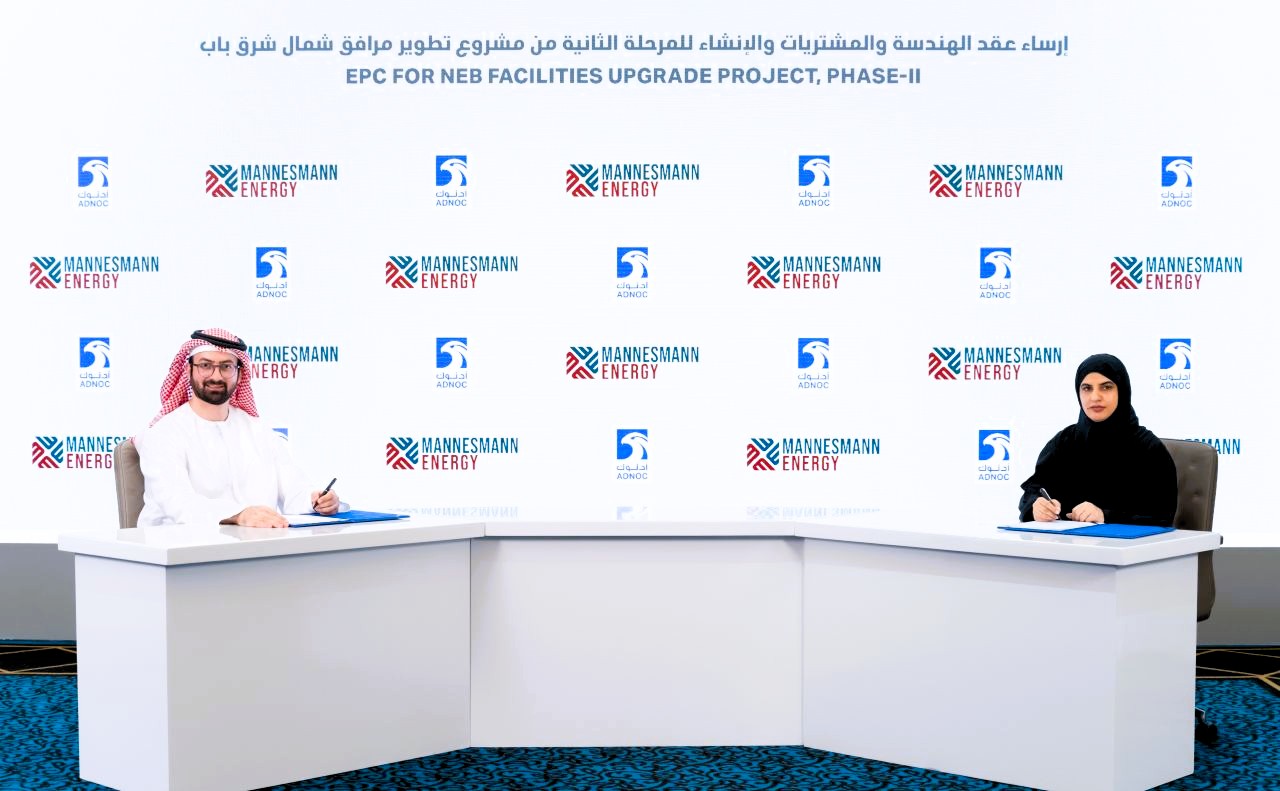
Local contractor wins North East Bab facilities upgrade
13 November 2026
Oman gives Shuwaymiyah port bidders more time
13 November 2026
Borouge prepares to tender ethane cracker construction
13 November 2026
Dutco wins Abu Dhabi Riviera Residences contract
13 November 2026
A MEED Subscription...
Subscribe or upgrade your current MEED.com package to support your strategic planning with the MENA region’s best source of business information. Proceed to our online shop below to find out more about the features in each package.
Take advantage of our introductory offers below for new subscribers and purchase your access today! If you are an existing client, please reach out to your account manager.