


Ninety-seven per cent of global institutional investors expect the Menat region to attract significantly more infrastructure capital by 2030
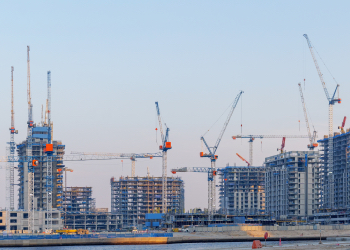
Appetite to invest in infrastructure projects in the Middle East, North Africa and Turkiye (Menat) region is strong and continues to grow.
HSBC’s latest report, New Networks of Capital: Menat Infrastructure, reveals significant international corporate and investor demand for greater exposure to the region in the lead up to 2030.


HSBC-commissioned analysis of MEED data identifies $872bn in individual project packages within a wider $1.4tn planned and unawarded infrastructure pipeline.
The data shows that the value of planned but unawarded infrastructure projects and programmes increased by 54% between January 2023 and January 2026, from $792bn to $1.22tn. Infrastructure planning activity has continued this year, with the pipeline increasing a further 15% to $1.4tn between January and October 2026.
Additionally, 97% of investors expect Menat to attract notably more infrastructure capital by 2030, according to an HSBC-commissioned global survey of 1,626 senior business leaders and 818 global institutional investors across 16 markets – including India, US, China and the UK – conducted between 18 September and 5 October 2026.
The survey captures business leader and investor expectations through to 2030 and reflects the longer-term nature of infrastructure investment. It found 94% of surveyed investors expect the region to represent a larger share of their portfolios in the next four years.
Similar ambitions were also found in the global business community, with 81% of business leaders polled considering Menat critical or very important to their growth and infrastructure strategy, and 90% expecting their investment or exposure to increase in the next four years.
While Europe-Menat is the most significant economic corridor for contributions of international capital over the next four years, expectations for growth to 2030 highlight the predominance of China-Menat flows as the region demonstrates its ability to attract capital from around the world.
For contractors, consultants and suppliers, the findings point to a sustained pipeline of work rather than a cyclical peak. For investors, they suggest competition for quality assets in the region’s core markets will intensify as US and European entrants scale up.
To enhance project execution, businesses identified improved risk-sharing, faster permitting and greater regulatory transparency as key enablers; while investors prioritise larger, scalable projects and better transparency on realised returns.
Building on its strong infrastructure pipeline, the findings show the region can attract even greater international capital through well-structured investment opportunities, effective risk-sharing, robust public-private partnership models and world-class execution.
Of the $872bn pipeline of individual infrastructure packages, about $390bn is estimated to be likely to require third-party financing if packages proceed to award, with $149bn-$197bn potentially reaching financing in the next five years.
You might also like...

Linear infrastructure defines regional growth
26 October 2026
Expo 2030 Riyadh tenders Culture of Wisdom Pavilion
26 October 2026

Aramco continues with capex plans despite conflict
26 October 2026
Morocco plans second high-speed rail phase to Agadir
26 October 2026

A MEED Subscription...
Subscribe or upgrade your current MEED.com package to support your strategic planning with the MENA region’s best source of business information. Proceed to our online shop below to find out more about the features in each package.
Take advantage of our introductory offers below for new subscribers and purchase your access today! If you are an existing client, please reach out to your account manager.