


Interview: Keith Clarke, vice-chair, Future Cities Catapult
Urbanisation and the environment are the two biggest issues confronting policymakers around the world when considering the economic future for their populations. MEED spoke to Keith Clarke on the revolution in infrastructure planning that is needed if the cities of the future are to succeed.
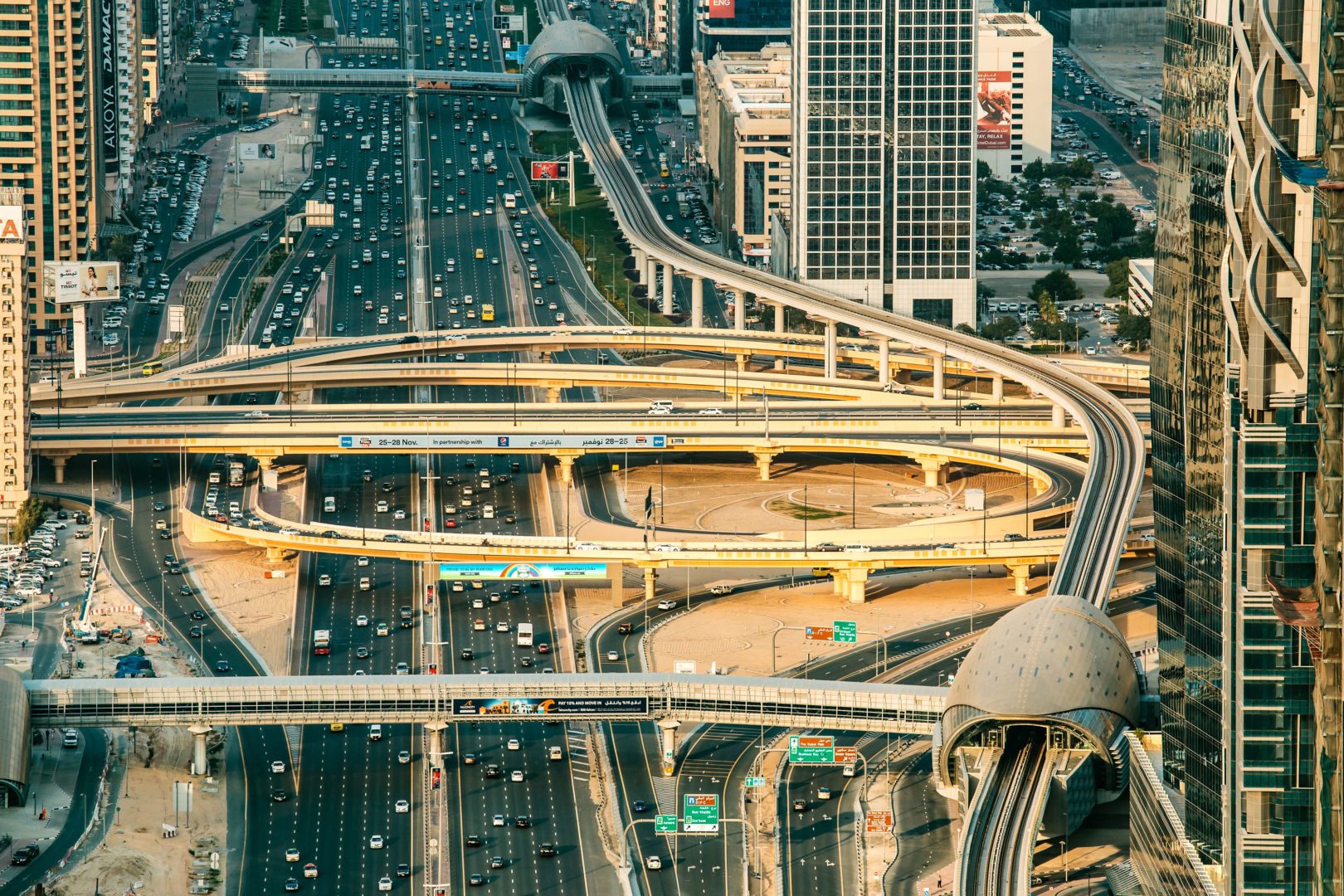
When considering urbanisation, the first thing that planners must accept is that people are going to move to cities in growing numbers.
Urbanisation is going to happen. All the forecasts are that 70 per cent of the global population will be urban in the future [and as high as 90 per cent in the GCC]. Whether that is a good thing or not is irrelevant. The trend is happening, says Clarke.
People are going to urban centres because it is a better life than being in rural areas. Agriculture and rural activities are becoming increasingly mechanised there is a better life for people in cities as it is where they make money, can thrive and get all advantages of culture and living in an integrated community in a secure environment.
The Middle East will be affected by this trend, although not on the same scale as other regions where populations and cities are larger.
The growth rate [in the Middle East] is not particularly high compared with some of the developing nations. African, Indian and Chinese cities, as well as some South American cities have far greater growth rates, says Clarke.
Probably more significantly, they are growth rates on cities that are already 10 million-plus. An increase of 10 per cent on 10 million is lot of people, whereas a 10 per cent increase on 1 million is entirely manageable. The Middle East is in sweet spot in terms of growth because once cities have a population of more than 10 million, they are exponentially more complex.
The regions harsh climate is not an insurmountable challenge and is not unique. The Middle Easts urbanisation problems are similar to those seen in other parts of the world, with climatic conditions almost identical to some parts of Midwest America, Asia and Australia, Clarke highlights.
The region is not unique in having extreme water shortages, and it is not unique in having extremes of temperature that are getting worse.
Regional flexibility
The climatic challenges are offset by the regions flexibility.
[The region] does have some massive attributes. They are emerging societies that have the ability to change very fast, and Dubai and Abu Dhabi have shown extraordinary adaptability and flexibility, says Clarke. Their development of new industries and announcements on diversification and intelligent urbanisation says that not only are they similar to other places, they are at an advantage.
Another perceived advantage is that the relatively new cities of the Middle East are not encumbered by past decisions, although they are not blank canvases. Doha for instance, had some quite interesting land use issues where it was struggling to find property sites for all the World Cup stadiums and quite difficult to link it into the transportation plan, says Clarke.
Where the region does have more of a blank canvas that anywhere else is the vision for the economy. In Doha there was considerable discussion about whether they want to be a city with 2.5 million, 3.5 million, or 6 million people. Arguably all are achievable, but they are radically different versions of the city.
What a city wants to be requires a vision or goal, says Clarke, without which it can be difficult to plan.
It is not building infrastructure and seeing what happens. Cities have a vision and those that have a vision like London did, you will get an Olympic Games, you get trade shows, serious industry and people wanting to live and work there. That is what is happening in the Gulf, people want to live and work in Dubai.
Implementing that vision requires effective bureaucratic apparatus. The biggest constraint is the maturity of governance. Not the maturity of people, but the maturity of the institutions themselves, says Clarke. I have seen improvements in government in Dubai and Abu Dhabi and now attempts to do that with budgetary processes in Qatar. The rate of progress in all those three places puts the UK to shame.
For Clarke another key component of urbanisation is decarbonisation. You cant divorce urbanisation issues without getting beyond fossil fuels. They go together, he says. In five years from now, a city that is flagrantly abusing its carbon budget is not going to be a place that is socially acceptable for companies to move to.
Air quality
There is a growing acceptance that air quality is an issue that needs to be tackled.
I have a hope or a belief that since COP 21 [in Paris, in December] and the fact that we have now accepted that the science is real, we have a choice. That choice is a really unacceptable world [where temperatures rise] 4 degrees-plus, where you get extreme weather, food shortages, land use issues, biodiversity issues, migration issues, security issues, that that brings with you the gross inequality. It will be highly disruptive to any city, wealthy or poor, but poor ones will really suffer and the rich ones will put up fences, says Clarke. [The alternative is a] 2 degree [rise] and urbanising with a technical revolution in the way we run our cities.
Governments are starting to realise the benefits of decarbonising. Six cities have said they want to be carbon neutral, several US states have made similar pledges, in China the environment is rising up the agenda, and in Dubai a commitment has been made to source 75 per cent of its energy from renewable sources. Why are these commitments being made? asks Clarke.
It doesnt win any votes. Going out saying I will make technological changes to the way we do infrastructure and there may be carbon pricing will be highly disruptive to the economy and it is likely to be non-progressive.
The successful cities will be the ones that can capitalise on the opportunities these changes offer the broader economy. Cities realise it is in their interests to be efficient and be at the forefront of this revolution. It brings many other benefits because it is a precursor to lots of other things that you need to grow your economy, says Clarke.
Infrastructure design
For actual infrastructure, decarbonisation will mean that the way assets are designed will have to change. We generally design that for capacity. We dont design it for the operating cost, we think about that later. It is not unreasonable to say if we set carbon standards you have to design efficiency, says Clarke.
This trend has already started for other industries. Hybrid cars have dramatically improved the efficiency of cars, and aircraft has started experimenting with solid fuels that have a greater density to make them more efficient. Advanced building management systems and environmental benchmarks such as Abu Dhabis Pearl rating system have improved the efficiency of buildings.
Meanwhile, infrastructure is lagging behind. Infrastructure is still sitting in Victorian times. There is going to be a revolution. We cant afford the money. There is $30 trillion to be spent on urban infrastructure, and we cant do that with efficiencies that we have had before, says Clarke.
Keith Clarke is vice-chair of the UKs Future Cities Catapult, which is a UK government-funded organisation created to help develop new ideas and technologies that will make urban centres better places to live.
Previously, he was CEO of UK-based consultant Atkins and helped set up Qatars Central Planning Office, which coordinates major infrastructure schemes that will underpin Dohas 2030 vision. It also aims to reduce the countrys dependence on the energy sector. He is also the non-executive chairman of the Tidal Lagoon (Swansea Bay), which plans to generate renewable energy from sea movements on the Welsh coast.
You might also like...


A MEED Subscription...
Subscribe or upgrade your current MEED.com package to support your strategic planning with the MENA region’s best source of business information. Proceed to our online shop below to find out more about the features in each package.
Take advantage of our introductory offers below for new subscribers and purchase your access today! If you are an existing client, please reach out to your account manager.