

Contractors should be consulted before packages are tendered to secure supply chains and capacity
Contractors must be brought into event driven construction projects before contracts are tendered if the kingdom is to secure the labour, materials and supply chains needed to meet fixed opening dates.
Saudi Arabia has a busy schedule of global events. In 2030 it will host the World Expo in Riyadh, and in 2034 the kingdom will stage football's World Cup.
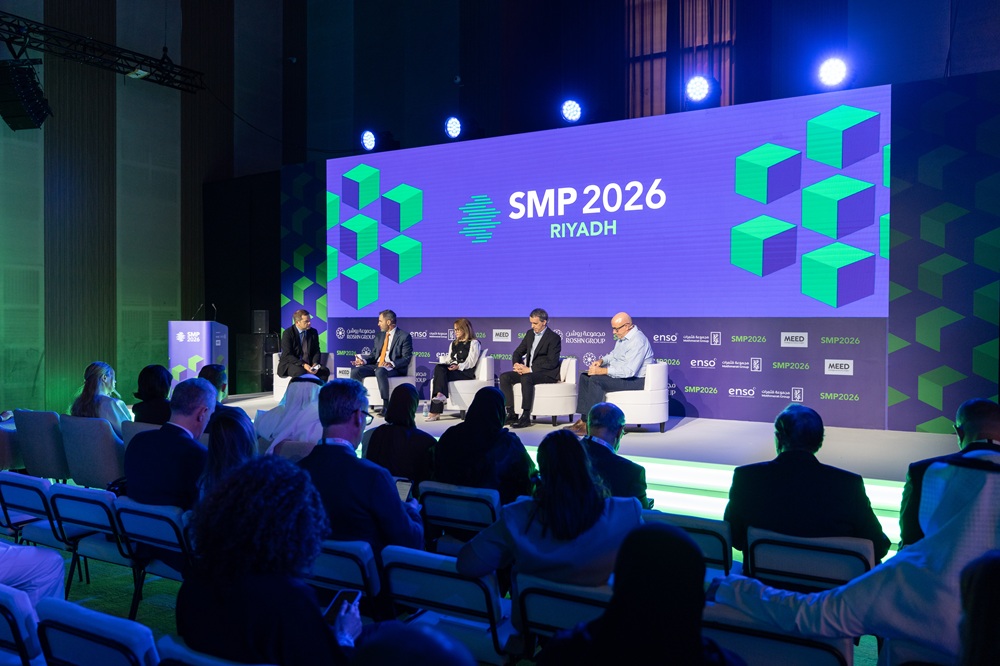
Speaking on a panel at the Shaping Mega Projects conference in Riyadh on 29 September, Olivier Crasson, president of AlBawani Construction Company, said the compressed timeline left firms little time to prepare once contracts are awarded.

"Imagine if you only have two years and a little bit to deliver major assets," he said. "If you don't have your pre-agreements with your supply chain, and the supply chain is usually coming from abroad as well, it's better to be involved earlier."
Crasson said contractors did not need to be promised the work to be consulted. "They don't necessarily need to be awarded, but at least to be consulted beforehand," he said. "We don't have small contracts anymore in the kingdom. All the projects are in billions, so this requires from the contractor big preparatory work with the lenders, partners and equity providers."
He said early contractor involvement had been used on Saudi projects but was "not yet a habit". He added that an earlier start would also allow firms to build local manufacturing capacity. "The earlier you start, the earlier you can start building factories to supply goods and services to the project," he said. "If you are late, you have no choice but to go abroad."
Capacity constraint
Melinda Wenn, programme director for Expo 2030 Riyadh at Bechtel, said capacity was one of four priorities for the programme, alongside sequencing, quality and integration.
"We have all these mega projects going at the same time, so we are all pulling from the same source," she said. "We are looking at people, at materials and at the same supply chain. This is where I can see the challenge."
Wenn, who previously worked on the Riyadh Metro, said sequencing had to be settled at the masterplanning and design stage. "If you're already in the construction phase and you realise that the sequencing is not there, or your packages don't work, it's going to be too late," she said.
Design clarity
John Gillen, global design principal at Aedas, said a clear brief from the outset gave project teams focus. "Clarity and strong leadership, giving clear directions, makes a huge difference in achieving the timeline," he said.
Gillen said contractor input could also shorten programmes. On a project of about 1 million square metres his firm is working on, the contractor helped change the structural system to accelerate the programme. "There's added value, but sometimes it's overlooked," he said.
John Coghlan, principal at C&E Legal Solutions, said the legal framework had to support delivery rather than conflict. "The challenge is to make sure the parties are focused on delivering the project on time and on budget, as opposed to being adversarial," he said. "The governing law is the umbrella under which all of the contracts sit, and it applies from day one."
You might also like...
Bankability key to Saudi PPP pipeline
02 October 2026

Financing hinders progress at major Iraqi refinery project
02 October 2026

Saudi pre-budget leans on borrowing to fund projects
02 October 2026
Jordan begins prequalifcation for Shallala wastewater plant
02 October 2026

A MEED Subscription...
Subscribe or upgrade your current MEED.com package to support your strategic planning with the MENA region’s best source of business information. Proceed to our online shop below to find out more about the features in each package.
Take advantage of our introductory offers below for new subscribers and purchase your access today! If you are an existing client, please reach out to your account manager.